

12 Dynamics, Range, and Severity of Hydrological …
243
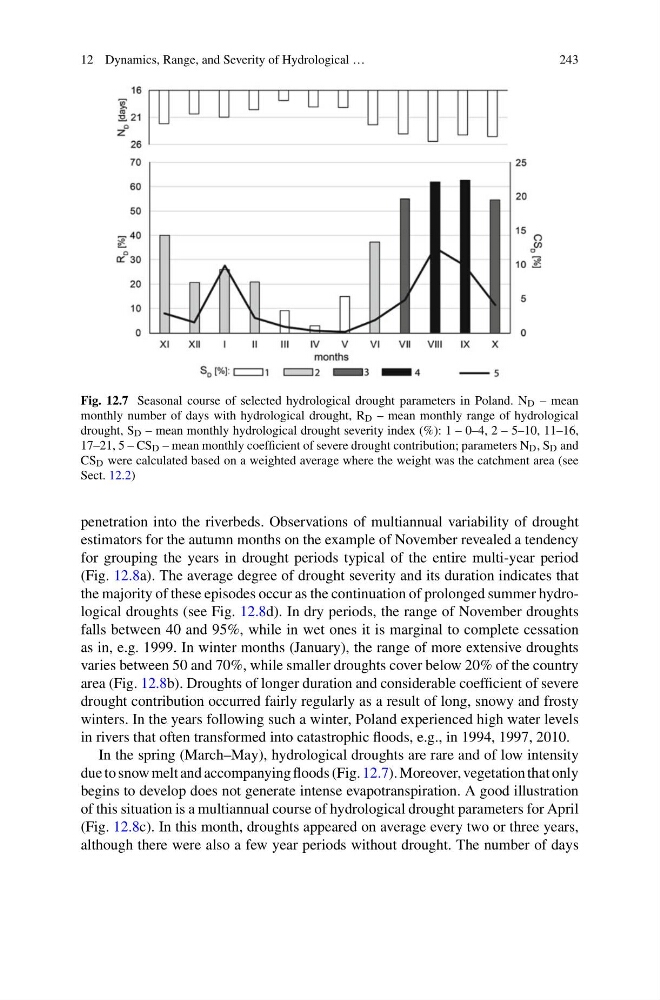
Fig. 12.7 Seasonal course of selected hydrological drought parameters in Poland. N D – mean
monthly number of days with hydrological drought, R D – mean monthly range of hydrological
drought, S D – mean monthly hydrological drought severity index (%): 1 – 0–4, 2 – 5–10, 11–16,
17–21, 5 – CS D – mean monthly coefficient of severe drought contribution; parameters N D , S D and
CS D were calculated based on a weighted average where the weight was the catchment area (see
Sect. 12.2)
penetration into the riverbeds. Observations of multiannual variability of drought
estimators for the autumn months on the example of November revealed a tendency
for grouping the years in drought periods typical of the entire multi-year period
(Fig. 12.8a). The average degree of drought severity and its duration indicates that
the majority of these episodes occur as the continuation of prolonged summer hydrological droughts (see Fig. 12.8d). In dry periods, the range of November droughts
falls between 40 and 95%, while in wet ones it is marginal to complete cessation
as in, e.g. 1999. In winter months (January), the range of more extensive droughts
varies between 50 and 70%, while smaller droughts cover below 20% of the country
area (Fig. 12.8b). Droughts of longer duration and considerable coefficient of severe
drought contribution occurred fairly regularly as a result of long, snowy and frosty
winters. In the years following such a winter, Poland experienced high water levels
in rivers that often transformed into catastrophic floods, e.g., in 1994, 1997, 2010.
In the spring (March–May), hydrological droughts are rare and of low intensity
due to snow melt and accompanying floods (Fig. 12.7). Moreover, vegetation that only
begins to develop does not generate intense evapotranspiration. A good illustration
of this situation is a multiannual course of hydrological drought parameters for April
(Fig. 12.8c). In this month, droughts appeared on average every two or three years,
although there were also a few year periods without drought. The number of days
243
Fig. 12.7 Seasonal course of selected hydrological drought parameters in Poland. N D – mean
monthly number of days with hydrological drought, R D – mean monthly range of hydrological
drought, S D – mean monthly hydrological drought severity index (%): 1 – 0–4, 2 – 5–10, 11–16,
17–21, 5 – CS D – mean monthly coefficient of severe drought contribution; parameters N D , S D and
CS D were calculated based on a weighted average where the weight was the catchment area (see
Sect. 12.2)
penetration into the riverbeds. Observations of multiannual variability of drought
estimators for the autumn months on the example of November revealed a tendency
for grouping the years in drought periods typical of the entire multi-year period
(Fig. 12.8a). The average degree of drought severity and its duration indicates that
the majority of these episodes occur as the continuation of prolonged summer hydrological droughts (see Fig. 12.8d). In dry periods, the range of November droughts
falls between 40 and 95%, while in wet ones it is marginal to complete cessation
as in, e.g. 1999. In winter months (January), the range of more extensive droughts
varies between 50 and 70%, while smaller droughts cover below 20% of the country
area (Fig. 12.8b). Droughts of longer duration and considerable coefficient of severe
drought contribution occurred fairly regularly as a result of long, snowy and frosty
winters. In the years following such a winter, Poland experienced high water levels
in rivers that often transformed into catastrophic floods, e.g., in 1994, 1997, 2010.
In the spring (March–May), hydrological droughts are rare and of low intensity
due to snow melt and accompanying floods (Fig. 12.7). Moreover, vegetation that only
begins to develop does not generate intense evapotranspiration. A good illustration
of this situation is a multiannual course of hydrological drought parameters for April
(Fig. 12.8c). In this month, droughts appeared on average every two or three years,
although there were also a few year periods without drought. The number of days