

218
E. Tomaszewski and K. Kubiak-Wójcicka
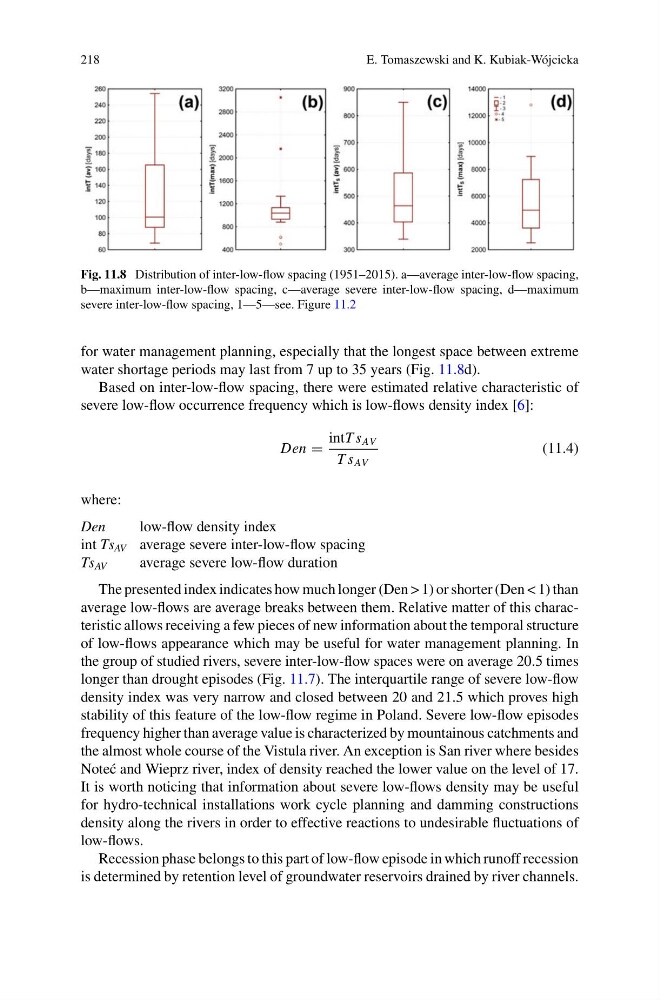
Fig. 11.8 Distribution of inter-low-flow spacing (1951–2015). a—average inter-low-flow spacing,
b—maximum inter-low-flow spacing, c—average severe inter-low-flow spacing, d—maximum
severe inter-low-flow spacing, 1—5—see. Figure 11.2
for water management planning, especially that the longest space between extreme
water shortage periods may last from 7 up to 35 years (Fig. 11.8d).
Based on inter-low-flow spacing, there were estimated relative characteristic of
severe low-flow occurrence frequency which is low-flows density index [6]:
Den =
intT s AV
T s AV
(11.4)
where:
Den
low-flow density index
int Ts AV average severe inter-low-flow spacing
Ts AV
average severe low-flow duration
The presented index indicates how much longer (Den > 1) or shorter (Den < 1) than
average low-flows are average breaks between them. Relative matter of this characteristic allows receiving a few pieces of new information about the temporal structure
of low-flows appearance which may be useful for water management planning. In
the group of studied rivers, severe inter-low-flow spaces were on average 20.5 times
longer than drought episodes (Fig. 11.7). The interquartile range of severe low-flow
density index was very narrow and closed between 20 and 21.5 which proves high
stability of this feature of the low-flow regime in Poland. Severe low-flow episodes
frequency higher than average value is characterized by mountainous catchments and
the almost whole course of the Vistula river. An exception is San river where besides
Note´ c and Wieprz river, index of density reached the lower value on the level of 17.
It is worth noticing that information about severe low-flows density may be useful
for hydro-technical installations work cycle planning and damming constructions
density along the rivers in order to effective reactions to undesirable fluctuations of
low-flows.
Recession phase belongs to this part of low-flow episode in which runoff recession
is determined by retention level of groundwater reservoirs drained by river channels.
E. Tomaszewski and K. Kubiak-Wójcicka
Fig. 11.8 Distribution of inter-low-flow spacing (1951–2015). a—average inter-low-flow spacing,
b—maximum inter-low-flow spacing, c—average severe inter-low-flow spacing, d—maximum
severe inter-low-flow spacing, 1—5—see. Figure 11.2
for water management planning, especially that the longest space between extreme
water shortage periods may last from 7 up to 35 years (Fig. 11.8d).
Based on inter-low-flow spacing, there were estimated relative characteristic of
severe low-flow occurrence frequency which is low-flows density index [6]:
Den =
intT s AV
T s AV
(11.4)
where:
Den
low-flow density index
int Ts AV average severe inter-low-flow spacing
Ts AV
average severe low-flow duration
The presented index indicates how much longer (Den > 1) or shorter (Den < 1) than
average low-flows are average breaks between them. Relative matter of this characteristic allows receiving a few pieces of new information about the temporal structure
of low-flows appearance which may be useful for water management planning. In
the group of studied rivers, severe inter-low-flow spaces were on average 20.5 times
longer than drought episodes (Fig. 11.7). The interquartile range of severe low-flow
density index was very narrow and closed between 20 and 21.5 which proves high
stability of this feature of the low-flow regime in Poland. Severe low-flow episodes
frequency higher than average value is characterized by mountainous catchments and
the almost whole course of the Vistula river. An exception is San river where besides
Note´ c and Wieprz river, index of density reached the lower value on the level of 17.
It is worth noticing that information about severe low-flows density may be useful
for hydro-technical installations work cycle planning and damming constructions
density along the rivers in order to effective reactions to undesirable fluctuations of
low-flows.
Recession phase belongs to this part of low-flow episode in which runoff recession
is determined by retention level of groundwater reservoirs drained by river channels.