

7 Studies on, the Use and Protection of Springs in Poland
131
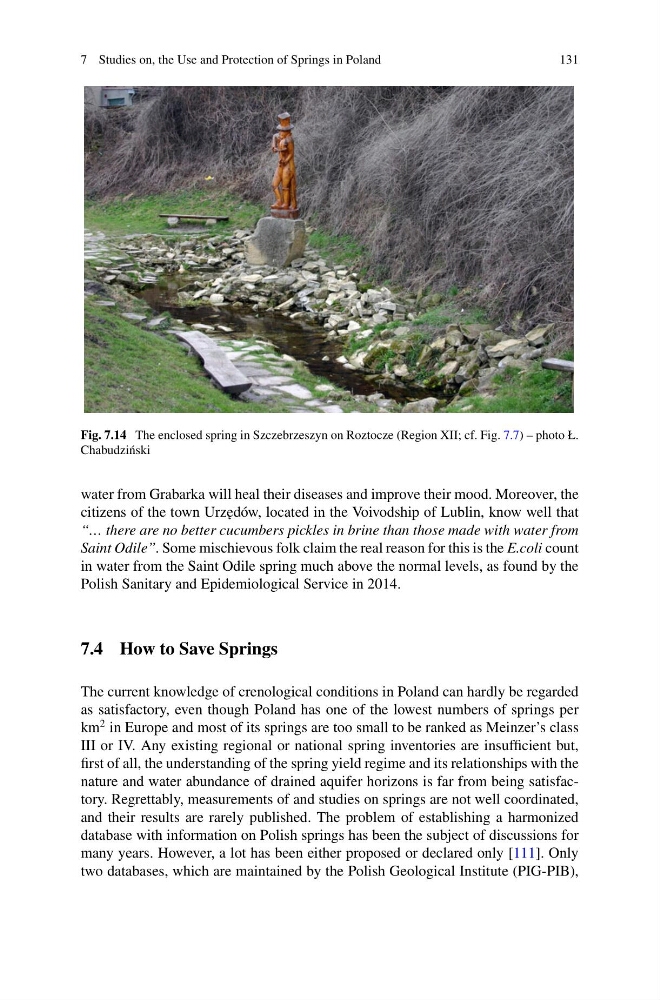
Fig. 7.14 The enclosed spring in Szczebrzeszyn on Roztocze (Region XII; cf. Fig. 7.7) – photo Ł.
Chabudzi´ nski
water from Grabarka will heal their diseases and improve their mood. Moreover, the
citizens of the town Urz˛ edów, located in the Voivodship of Lublin, know well that
“… there are no better cucumbers pickles in brine than those made with water from
Saint Odile”. Some mischievous folk claim the real reason for this is the E.coli count
in water from the Saint Odile spring much above the normal levels, as found by the
Polish Sanitary and Epidemiological Service in 2014.
7.4 How to Save Springs
The current knowledge of crenological conditions in Poland can hardly be regarded
as satisfactory, even though Poland has one of the lowest numbers of springs per
km
2 in Europe and most of its springs are too small to be ranked as Meinzer’s class
III or IV. Any existing regional or national spring inventories are insufficient but,
first of all, the understanding of the spring yield regime and its relationships with the
nature and water abundance of drained aquifer horizons is far from being satisfactory. Regrettably, measurements of and studies on springs are not well coordinated,
and their results are rarely published. The problem of establishing a harmonized
database with information on Polish springs has been the subject of discussions for
many years. However, a lot has been either proposed or declared only [111]. Only
two databases, which are maintained by the Polish Geological Institute (PIG-PIB),
131
Fig. 7.14 The enclosed spring in Szczebrzeszyn on Roztocze (Region XII; cf. Fig. 7.7) – photo Ł.
Chabudzi´ nski
water from Grabarka will heal their diseases and improve their mood. Moreover, the
citizens of the town Urz˛ edów, located in the Voivodship of Lublin, know well that
“… there are no better cucumbers pickles in brine than those made with water from
Saint Odile”. Some mischievous folk claim the real reason for this is the E.coli count
in water from the Saint Odile spring much above the normal levels, as found by the
Polish Sanitary and Epidemiological Service in 2014.
7.4 How to Save Springs
The current knowledge of crenological conditions in Poland can hardly be regarded
as satisfactory, even though Poland has one of the lowest numbers of springs per
km
2 in Europe and most of its springs are too small to be ranked as Meinzer’s class
III or IV. Any existing regional or national spring inventories are insufficient but,
first of all, the understanding of the spring yield regime and its relationships with the
nature and water abundance of drained aquifer horizons is far from being satisfactory. Regrettably, measurements of and studies on springs are not well coordinated,
and their results are rarely published. The problem of establishing a harmonized
database with information on Polish springs has been the subject of discussions for
many years. However, a lot has been either proposed or declared only [111]. Only
two databases, which are maintained by the Polish Geological Institute (PIG-PIB),