

130
P. Jokiel and Z. Michalczyk
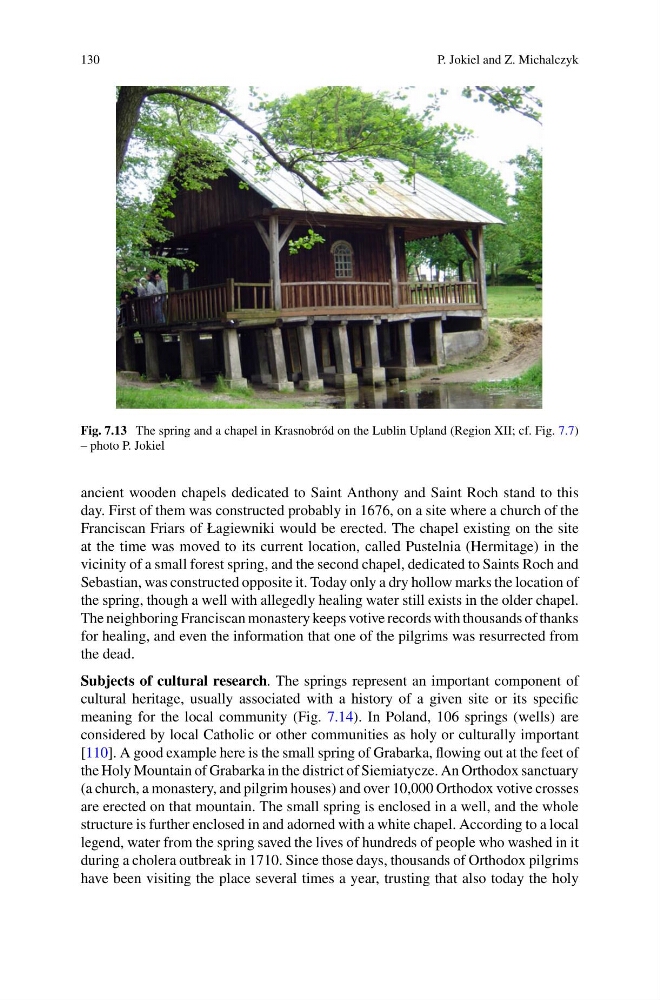
Fig. 7.13 The spring and a chapel in Krasnobród on the Lublin Upland (Region XII; cf. Fig. 7.7)
– photo P. Jokiel
ancient wooden chapels dedicated to Saint Anthony and Saint Roch stand to this
day. First of them was constructed probably in 1676, on a site where a church of the
Franciscan Friars of Łagiewniki would be erected. The chapel existing on the site
at the time was moved to its current location, called Pustelnia (Hermitage) in the
vicinity of a small forest spring, and the second chapel, dedicated to Saints Roch and
Sebastian, was constructed opposite it. Today only a dry hollow marks the location of
the spring, though a well with allegedly healing water still exists in the older chapel.
The neighboring Franciscan monastery keeps votive records with thousands of thanks
for healing, and even the information that one of the pilgrims was resurrected from
the dead.
Subjects of cultural research. The springs represent an important component of
cultural heritage, usually associated with a history of a given site or its specific
meaning for the local community (Fig. 7.14). In Poland, 106 springs (wells) are
considered by local Catholic or other communities as holy or culturally important
[110]. A good example here is the small spring of Grabarka, flowing out at the feet of
the Holy Mountain of Grabarka in the district of Siemiatycze. An Orthodox sanctuary
(a church, a monastery, and pilgrim houses) and over 10,000 Orthodox votive crosses
are erected on that mountain. The small spring is enclosed in a well, and the whole
structure is further enclosed in and adorned with a white chapel. According to a local
legend, water from the spring saved the lives of hundreds of people who washed in it
during a cholera outbreak in 1710. Since those days, thousands of Orthodox pilgrims
have been visiting the place several times a year, trusting that also today the holy
P. Jokiel and Z. Michalczyk
Fig. 7.13 The spring and a chapel in Krasnobród on the Lublin Upland (Region XII; cf. Fig. 7.7)
– photo P. Jokiel
ancient wooden chapels dedicated to Saint Anthony and Saint Roch stand to this
day. First of them was constructed probably in 1676, on a site where a church of the
Franciscan Friars of Łagiewniki would be erected. The chapel existing on the site
at the time was moved to its current location, called Pustelnia (Hermitage) in the
vicinity of a small forest spring, and the second chapel, dedicated to Saints Roch and
Sebastian, was constructed opposite it. Today only a dry hollow marks the location of
the spring, though a well with allegedly healing water still exists in the older chapel.
The neighboring Franciscan monastery keeps votive records with thousands of thanks
for healing, and even the information that one of the pilgrims was resurrected from
the dead.
Subjects of cultural research. The springs represent an important component of
cultural heritage, usually associated with a history of a given site or its specific
meaning for the local community (Fig. 7.14). In Poland, 106 springs (wells) are
considered by local Catholic or other communities as holy or culturally important
[110]. A good example here is the small spring of Grabarka, flowing out at the feet of
the Holy Mountain of Grabarka in the district of Siemiatycze. An Orthodox sanctuary
(a church, a monastery, and pilgrim houses) and over 10,000 Orthodox votive crosses
are erected on that mountain. The small spring is enclosed in a well, and the whole
structure is further enclosed in and adorned with a white chapel. According to a local
legend, water from the spring saved the lives of hundreds of people who washed in it
during a cholera outbreak in 1710. Since those days, thousands of Orthodox pilgrims
have been visiting the place several times a year, trusting that also today the holy