

6 Natural and Anthropogenic Lakes of River Valleys
95
The inflow of river water in floodplain lakes with a contrafluent type of supply
takes place through one arm of the lake, located on the lower side of the river water
(Fig. 6.4c). In the reservoirs with this type of supply, the process of slower (than
in confluent lakes) water exchange with the river is observed. In deep lake basins
(e.g., avulsion lakes), apart from confluent supply, constantly high underground water
supply is observed. These lakes belong to the profundal hydrological type (Fig. 6.4d).
There were also cases of river water inflow through two arms of the floodplain lake,
first from the lower and then from the upper water side. In the first phase of potamic
recharge, the lake water masses are pushed into the central part of the basin, and
after connecting the basin with the river by the second arm, they change direction in
accordance with the inclination of the river bed. It is a complex contrafluent–confluent
way of lakes supplying (Fig. 6.4b).
Confluent, (Latin confluentia “floating,” confluere “floating together”) recharge
of floodplain lakes takes place consequently in relation to the slope of the valley. The
supply of confluent lake basins, from the upper side of the river water, results from
the local relations between the shape of the surface of the modern meander belt and
the geometry of the river bed. Potamophase in such lakes begins when the flow of the
river, which corresponds to the shore point, is exceeded. The direction of flooding
waters in the valley and river waters is consequent, and the amount of supply to the
basins of floodplain lakes is a result of the elevation of the ceiling of the crevasse
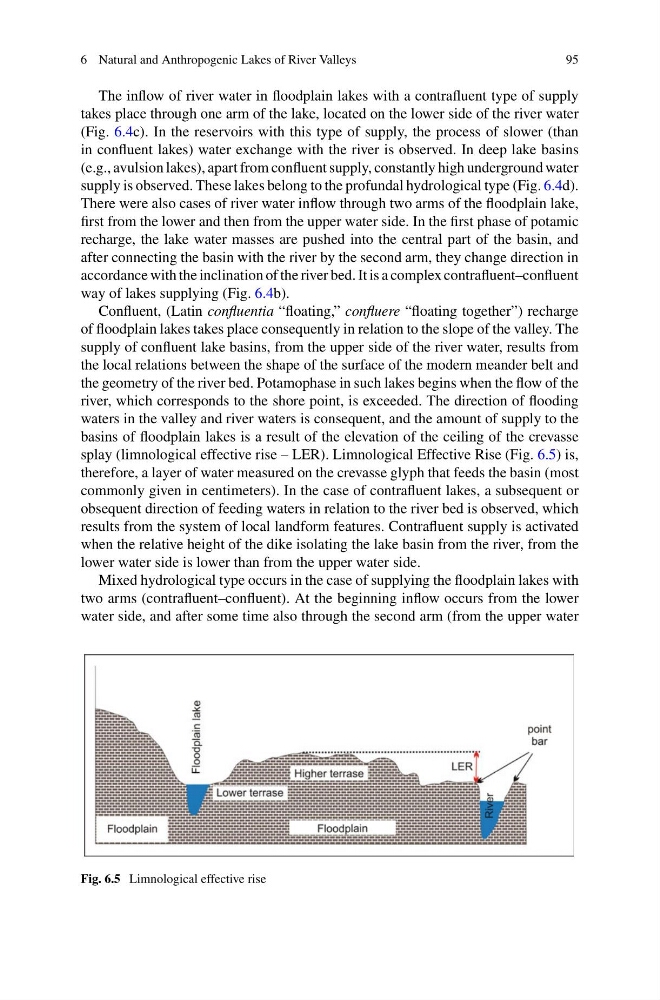
splay (limnological effective rise – LER). Limnological Effective Rise (Fig. 6.5) is,
therefore, a layer of water measured on the crevasse glyph that feeds the basin (most
commonly given in centimeters). In the case of contrafluent lakes, a subsequent or
obsequent direction of feeding waters in relation to the river bed is observed, which
results from the system of local landform features. Contrafluent supply is activated
when the relative height of the dike isolating the lake basin from the river, from the
lower water side is lower than from the upper water side.
Mixed hydrological type occurs in the case of supplying the floodplain lakes with
two arms (contrafluent–confluent). At the beginning inflow occurs from the lower
water side, and after some time also through the second arm (from the upper water
Fig. 6.5 Limnological effective rise
95
The inflow of river water in floodplain lakes with a contrafluent type of supply
takes place through one arm of the lake, located on the lower side of the river water
(Fig. 6.4c). In the reservoirs with this type of supply, the process of slower (than
in confluent lakes) water exchange with the river is observed. In deep lake basins
(e.g., avulsion lakes), apart from confluent supply, constantly high underground water
supply is observed. These lakes belong to the profundal hydrological type (Fig. 6.4d).
There were also cases of river water inflow through two arms of the floodplain lake,
first from the lower and then from the upper water side. In the first phase of potamic
recharge, the lake water masses are pushed into the central part of the basin, and
after connecting the basin with the river by the second arm, they change direction in
accordance with the inclination of the river bed. It is a complex contrafluent–confluent
way of lakes supplying (Fig. 6.4b).
Confluent, (Latin confluentia “floating,” confluere “floating together”) recharge
of floodplain lakes takes place consequently in relation to the slope of the valley. The
supply of confluent lake basins, from the upper side of the river water, results from
the local relations between the shape of the surface of the modern meander belt and
the geometry of the river bed. Potamophase in such lakes begins when the flow of the
river, which corresponds to the shore point, is exceeded. The direction of flooding
waters in the valley and river waters is consequent, and the amount of supply to the
basins of floodplain lakes is a result of the elevation of the ceiling of the crevasse
splay (limnological effective rise – LER). Limnological Effective Rise (Fig. 6.5) is,
therefore, a layer of water measured on the crevasse glyph that feeds the basin (most
commonly given in centimeters). In the case of contrafluent lakes, a subsequent or
obsequent direction of feeding waters in relation to the river bed is observed, which
results from the system of local landform features. Contrafluent supply is activated
when the relative height of the dike isolating the lake basin from the river, from the
lower water side is lower than from the upper water side.
Mixed hydrological type occurs in the case of supplying the floodplain lakes with
two arms (contrafluent–confluent). At the beginning inflow occurs from the lower
water side, and after some time also through the second arm (from the upper water
Fig. 6.5 Limnological effective rise