

water management [50]. The most important and widely used microbial indicator for
faecal contamination of water and wastewater is the species Escherichia coli,
supported by the previously more frequently considered indicator groups of faecal
coliforms and enterococci.
In many countries, the legislation of microbial parameters for wastewater reuse is
affected by different interpretations of the concept of microbiological risk; such
legislation frequently constitutes a simplification that is inadequate to exploit the full
potential of wastewater reuse in agriculture [51].
Table 3 details the dissimilarities of limits for wastewater reuse for various
regions, including consideration of different microbial indicators and threshold
levels, different methods of detection, inclusion of nematode eggs, and consideration
for different types of crops as restricted or unrestricted (herbaceous vs arboreous,
food vs feed, etc.).
Ideally, wastewater treatment could effectively and reliably reduce the microbial
risk through relatively simple and inexpensive means, justifying the use of reclaimed
water as an alternative to higher quality water and securing that supply for conservation or other uses. Wastewater from different sources generally differs to a great
extent in its physicochemical and biological characteristics, and any evaluation of
possible sustainable reuse must therefore rely on the determination of the specific
chemical and biological qualities of the water and their interactions with the field
environment and with irrigated crops.
Urban wastewater tends to harbour a higher number of microorganisms of faecal
origin and, therefore, to represent a major potential source of human pathogens.
Industrial wastewater possesses an intrinsically higher variability due to the different
processes for which it is used. In the last 20 years, many studies have focused on the
evaluation of microbiological safety in the reuse of treated wastewater for crop
irrigation. Assessments of the microbiological quality of agricultural crops irrigated
through different methods and by different types of wastewater have frequently
reported that possible health risks due to E. coli and helminth eggs were not directly
correlated with the use of wastewater for irrigation [15].
In some reported cases, crops irrigated with wastewater from various depuration
technologies were microbiologically equivalent to the crops irrigated with well
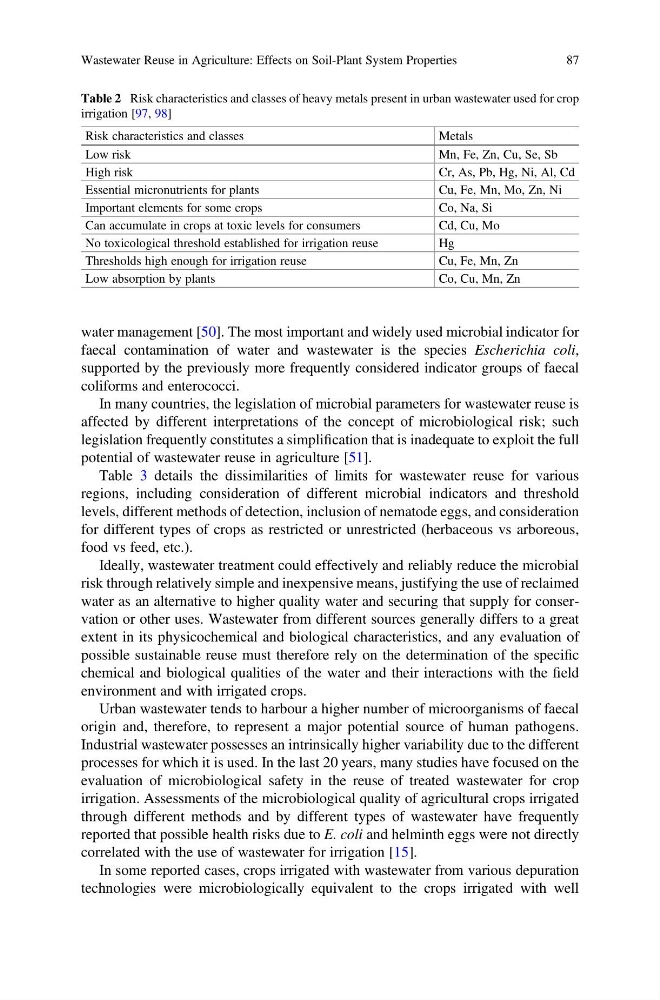
Table 2 Risk characteristics and classes of heavy metals present in urban wastewater used for crop
irrigation [97, 98]
Risk characteristics and classes
Metals
Low risk
Mn, Fe, Zn, Cu, Se, Sb
High risk
Cr, As, Pb, Hg, Ni, Al, Cd
Essential micronutrients for plants
Cu, Fe, Mn, Mo, Zn, Ni
Important elements for some crops
Co, Na, Si
Can accumulate in crops at toxic levels for consumers
Cd, Cu, Mo
No toxicological threshold established for irrigation reuse
Hg
Thresholds high enough for irrigation reuse
Cu, Fe, Mn, Zn
Low absorption by plants
Co, Cu, Mn, Zn
Wastewater Reuse in Agriculture: Effects on Soil-Plant System Properties
87
faecal contamination of water and wastewater is the species Escherichia coli,
supported by the previously more frequently considered indicator groups of faecal
coliforms and enterococci.
In many countries, the legislation of microbial parameters for wastewater reuse is
affected by different interpretations of the concept of microbiological risk; such
legislation frequently constitutes a simplification that is inadequate to exploit the full
potential of wastewater reuse in agriculture [51].
Table 3 details the dissimilarities of limits for wastewater reuse for various
regions, including consideration of different microbial indicators and threshold
levels, different methods of detection, inclusion of nematode eggs, and consideration
for different types of crops as restricted or unrestricted (herbaceous vs arboreous,
food vs feed, etc.).
Ideally, wastewater treatment could effectively and reliably reduce the microbial
risk through relatively simple and inexpensive means, justifying the use of reclaimed
water as an alternative to higher quality water and securing that supply for conservation or other uses. Wastewater from different sources generally differs to a great
extent in its physicochemical and biological characteristics, and any evaluation of
possible sustainable reuse must therefore rely on the determination of the specific
chemical and biological qualities of the water and their interactions with the field
environment and with irrigated crops.
Urban wastewater tends to harbour a higher number of microorganisms of faecal
origin and, therefore, to represent a major potential source of human pathogens.
Industrial wastewater possesses an intrinsically higher variability due to the different
processes for which it is used. In the last 20 years, many studies have focused on the
evaluation of microbiological safety in the reuse of treated wastewater for crop
irrigation. Assessments of the microbiological quality of agricultural crops irrigated
through different methods and by different types of wastewater have frequently
reported that possible health risks due to E. coli and helminth eggs were not directly
correlated with the use of wastewater for irrigation [15].
In some reported cases, crops irrigated with wastewater from various depuration
technologies were microbiologically equivalent to the crops irrigated with well
Table 2 Risk characteristics and classes of heavy metals present in urban wastewater used for crop
irrigation [97, 98]
Risk characteristics and classes
Metals
Low risk
Mn, Fe, Zn, Cu, Se, Sb
High risk
Cr, As, Pb, Hg, Ni, Al, Cd
Essential micronutrients for plants
Cu, Fe, Mn, Mo, Zn, Ni
Important elements for some crops
Co, Na, Si
Can accumulate in crops at toxic levels for consumers
Cd, Cu, Mo
No toxicological threshold established for irrigation reuse
Hg
Thresholds high enough for irrigation reuse
Cu, Fe, Mn, Zn
Low absorption by plants
Co, Cu, Mn, Zn
Wastewater Reuse in Agriculture: Effects on Soil-Plant System Properties
87