

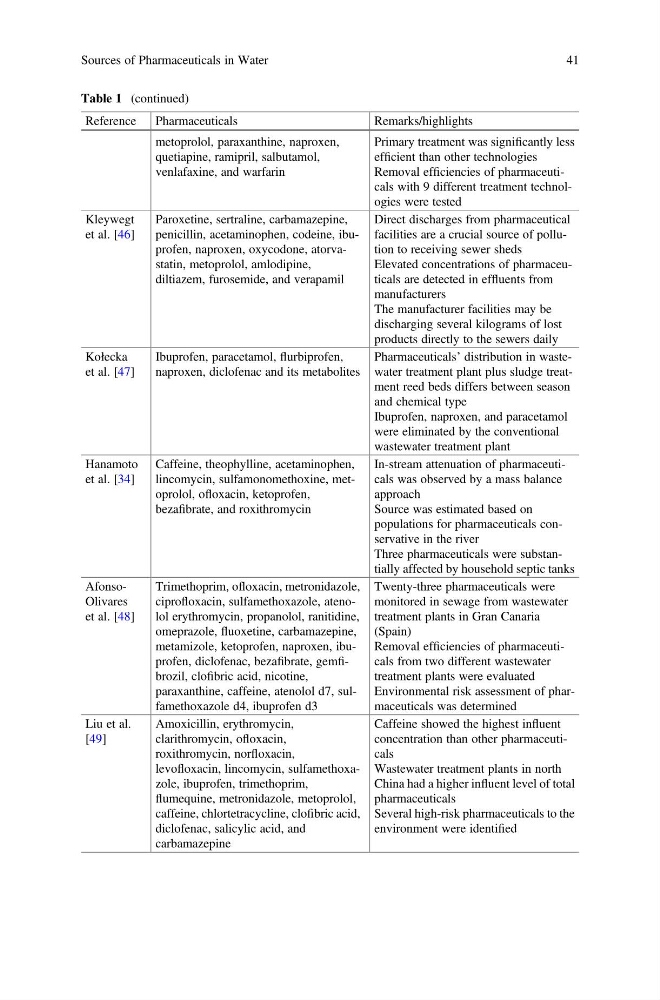
Table 1 (continued)
Reference
Pharmaceuticals
Remarks/highlights
metoprolol, paraxanthine, naproxen,
quetiapine, ramipril, salbutamol,
venlafaxine, and warfarin
Primary treatment was significantly less
efficient than other technologies
Removal efficiencies of pharmaceuticals with 9 different treatment technologies were tested
Kleywegt
et al. [46]
Paroxetine, sertraline, carbamazepine,
penicillin, acetaminophen, codeine, ibuprofen, naproxen, oxycodone, atorvastatin, metoprolol, amlodipine,
diltiazem, furosemide, and verapamil
Direct discharges from pharmaceutical
facilities are a crucial source of pollution to receiving sewer sheds
Elevated concentrations of pharmaceuticals are detected in effluents from
manufacturers
The manufacturer facilities may be
discharging several kilograms of lost
products directly to the sewers daily
Kołecka
et al. [47]
Ibuprofen, paracetamol, flurbiprofen,
naproxen, diclofenac and its metabolites
Pharmaceuticals’ distribution in wastewater treatment plant plus sludge treatment reed beds differs between season
and chemical type
Ibuprofen, naproxen, and paracetamol
were eliminated by the conventional
wastewater treatment plant
Hanamoto
et al. [34]
Caffeine, theophylline, acetaminophen,
lincomycin, sulfamonomethoxine, metoprolol, ofloxacin, ketoprofen,
bezafibrate, and roxithromycin
In-stream attenuation of pharmaceuticals was observed by a mass balance
approach
Source was estimated based on
populations for pharmaceuticals conservative in the river
Three pharmaceuticals were substantially affected by household septic tanks
AfonsoOlivares
et al. [48]
Trimethoprim, ofloxacin, metronidazole,
ciprofloxacin, sulfamethoxazole, atenolol erythromycin, propanolol, ranitidine,
omeprazole, fluoxetine, carbamazepine,
metamizole, ketoprofen, naproxen, ibuprofen, diclofenac, bezafibrate, gemfibrozil, clofibric acid, nicotine,
paraxanthine, caffeine, atenolol d7, sulfamethoxazole d4, ibuprofen d3
Twenty-three pharmaceuticals were
monitored in sewage from wastewater
treatment plants in Gran Canaria
(Spain)
Removal efficiencies of pharmaceuticals from two different wastewater
treatment plants were evaluated
Environmental risk assessment of pharmaceuticals was determined
Liu et al.
[49]
Amoxicillin, erythromycin,
clarithromycin, ofloxacin,
roxithromycin, norfloxacin,
levofloxacin, lincomycin, sulfamethoxazole, ibuprofen, trimethoprim,
flumequine, metronidazole, metoprolol,
caffeine, chlortetracycline, clofibric acid,
diclofenac, salicylic acid, and
carbamazepine
Caffeine showed the highest influent
concentration than other pharmaceuticals
Wastewater treatment plants in north
China had a higher influent level of total
pharmaceuticals
Several high-risk pharmaceuticals to the
environment were identified
Sources of Pharmaceuticals in Water
41
Reference
Pharmaceuticals
Remarks/highlights
metoprolol, paraxanthine, naproxen,
quetiapine, ramipril, salbutamol,
venlafaxine, and warfarin
Primary treatment was significantly less
efficient than other technologies
Removal efficiencies of pharmaceuticals with 9 different treatment technologies were tested
Kleywegt
et al. [46]
Paroxetine, sertraline, carbamazepine,
penicillin, acetaminophen, codeine, ibuprofen, naproxen, oxycodone, atorvastatin, metoprolol, amlodipine,
diltiazem, furosemide, and verapamil
Direct discharges from pharmaceutical
facilities are a crucial source of pollution to receiving sewer sheds
Elevated concentrations of pharmaceuticals are detected in effluents from
manufacturers
The manufacturer facilities may be
discharging several kilograms of lost
products directly to the sewers daily
Kołecka
et al. [47]
Ibuprofen, paracetamol, flurbiprofen,
naproxen, diclofenac and its metabolites
Pharmaceuticals’ distribution in wastewater treatment plant plus sludge treatment reed beds differs between season
and chemical type
Ibuprofen, naproxen, and paracetamol
were eliminated by the conventional
wastewater treatment plant
Hanamoto
et al. [34]
Caffeine, theophylline, acetaminophen,
lincomycin, sulfamonomethoxine, metoprolol, ofloxacin, ketoprofen,
bezafibrate, and roxithromycin
In-stream attenuation of pharmaceuticals was observed by a mass balance
approach
Source was estimated based on
populations for pharmaceuticals conservative in the river
Three pharmaceuticals were substantially affected by household septic tanks
AfonsoOlivares
et al. [48]
Trimethoprim, ofloxacin, metronidazole,
ciprofloxacin, sulfamethoxazole, atenolol erythromycin, propanolol, ranitidine,
omeprazole, fluoxetine, carbamazepine,
metamizole, ketoprofen, naproxen, ibuprofen, diclofenac, bezafibrate, gemfibrozil, clofibric acid, nicotine,
paraxanthine, caffeine, atenolol d7, sulfamethoxazole d4, ibuprofen d3
Twenty-three pharmaceuticals were
monitored in sewage from wastewater
treatment plants in Gran Canaria
(Spain)
Removal efficiencies of pharmaceuticals from two different wastewater
treatment plants were evaluated
Environmental risk assessment of pharmaceuticals was determined
Liu et al.
[49]
Amoxicillin, erythromycin,
clarithromycin, ofloxacin,
roxithromycin, norfloxacin,
levofloxacin, lincomycin, sulfamethoxazole, ibuprofen, trimethoprim,
flumequine, metronidazole, metoprolol,
caffeine, chlortetracycline, clofibric acid,
diclofenac, salicylic acid, and
carbamazepine
Caffeine showed the highest influent
concentration than other pharmaceuticals
Wastewater treatment plants in north
China had a higher influent level of total
pharmaceuticals
Several high-risk pharmaceuticals to the
environment were identified
Sources of Pharmaceuticals in Water
41