

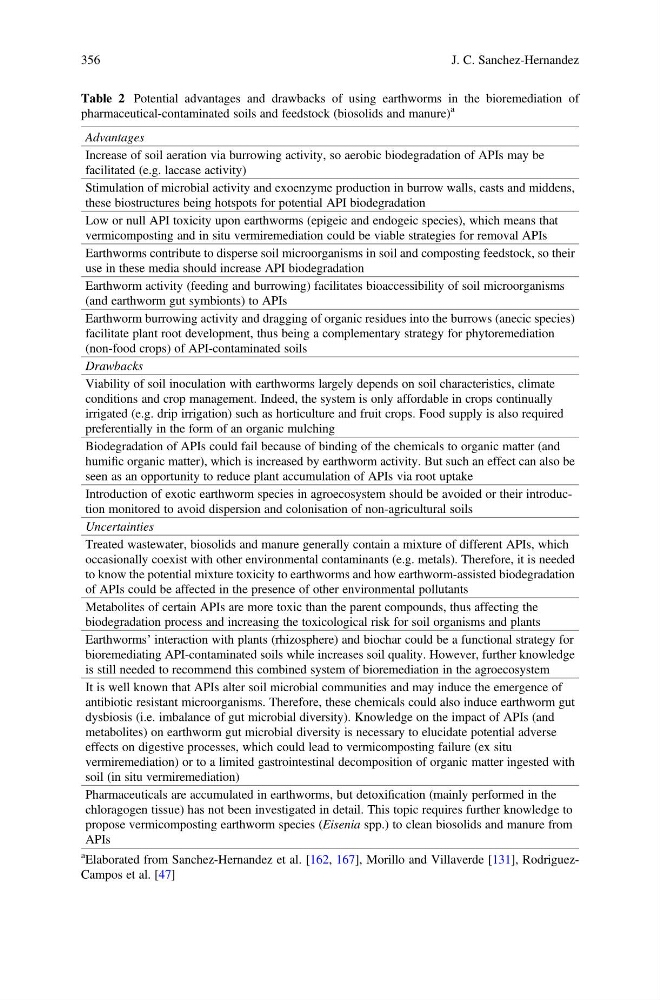
Table 2 Potential advantages and drawbacks of using earthworms in the bioremediation of
pharmaceutical-contaminated soils and feedstock (biosolids and manure)
a
Advantages
Increase of soil aeration via burrowing activity, so aerobic biodegradation of APIs may be
facilitated (e.g. laccase activity)
Stimulation of microbial activity and exoenzyme production in burrow walls, casts and middens,
these biostructures being hotspots for potential API biodegradation
Low or null API toxicity upon earthworms (epigeic and endogeic species), which means that
vermicomposting and in situ vermiremediation could be viable strategies for removal APIs
Earthworms contribute to disperse soil microorganisms in soil and composting feedstock, so their
use in these media should increase API biodegradation
Earthworm activity (feeding and burrowing) facilitates bioaccessibility of soil microorganisms
(and earthworm gut symbionts) to APIs
Earthworm burrowing activity and dragging of organic residues into the burrows (anecic species)
facilitate plant root development, thus being a complementary strategy for phytoremediation
(non-food crops) of API-contaminated soils
Drawbacks
Viability of soil inoculation with earthworms largely depends on soil characteristics, climate
conditions and crop management. Indeed, the system is only affordable in crops continually
irrigated (e.g. drip irrigation) such as horticulture and fruit crops. Food supply is also required
preferentially in the form of an organic mulching
Biodegradation of APIs could fail because of binding of the chemicals to organic matter (and
humific organic matter), which is increased by earthworm activity. But such an effect can also be
seen as an opportunity to reduce plant accumulation of APIs via root uptake
Introduction of exotic earthworm species in agroecosystem should be avoided or their introduction monitored to avoid dispersion and colonisation of non-agricultural soils
Uncertainties
Treated wastewater, biosolids and manure generally contain a mixture of different APIs, which
occasionally coexist with other environmental contaminants (e.g. metals). Therefore, it is needed
to know the potential mixture toxicity to earthworms and how earthworm-assisted biodegradation
of APIs could be affected in the presence of other environmental pollutants
Metabolites of certain APIs are more toxic than the parent compounds, thus affecting the
biodegradation process and increasing the toxicological risk for soil organisms and plants
Earthworms’ interaction with plants (rhizosphere) and biochar could be a functional strategy for
bioremediating API-contaminated soils while increases soil quality. However, further knowledge
is still needed to recommend this combined system of bioremediation in the agroecosystem
It is well known that APIs alter soil microbial communities and may induce the emergence of
antibiotic resistant microorganisms. Therefore, these chemicals could also induce earthworm gut
dysbiosis (i.e. imbalance of gut microbial diversity). Knowledge on the impact of APIs (and
metabolites) on earthworm gut microbial diversity is necessary to elucidate potential adverse
effects on digestive processes, which could lead to vermicomposting failure (ex situ
vermiremediation) or to a limited gastrointestinal decomposition of organic matter ingested with
soil (in situ vermiremediation)
Pharmaceuticals are accumulated in earthworms, but detoxification (mainly performed in the
chloragogen tissue) has not been investigated in detail. This topic requires further knowledge to
propose vermicomposting earthworm species (Eisenia spp.) to clean biosolids and manure from
APIs
a Elaborated from Sanchez-Hernandez et al. [162, 167], Morillo and Villaverde [131], RodriguezCampos et al. [47]
356
J. C. Sanchez-Hernandez
pharmaceutical-contaminated soils and feedstock (biosolids and manure)
a
Advantages
Increase of soil aeration via burrowing activity, so aerobic biodegradation of APIs may be
facilitated (e.g. laccase activity)
Stimulation of microbial activity and exoenzyme production in burrow walls, casts and middens,
these biostructures being hotspots for potential API biodegradation
Low or null API toxicity upon earthworms (epigeic and endogeic species), which means that
vermicomposting and in situ vermiremediation could be viable strategies for removal APIs
Earthworms contribute to disperse soil microorganisms in soil and composting feedstock, so their
use in these media should increase API biodegradation
Earthworm activity (feeding and burrowing) facilitates bioaccessibility of soil microorganisms
(and earthworm gut symbionts) to APIs
Earthworm burrowing activity and dragging of organic residues into the burrows (anecic species)
facilitate plant root development, thus being a complementary strategy for phytoremediation
(non-food crops) of API-contaminated soils
Drawbacks
Viability of soil inoculation with earthworms largely depends on soil characteristics, climate
conditions and crop management. Indeed, the system is only affordable in crops continually
irrigated (e.g. drip irrigation) such as horticulture and fruit crops. Food supply is also required
preferentially in the form of an organic mulching
Biodegradation of APIs could fail because of binding of the chemicals to organic matter (and
humific organic matter), which is increased by earthworm activity. But such an effect can also be
seen as an opportunity to reduce plant accumulation of APIs via root uptake
Introduction of exotic earthworm species in agroecosystem should be avoided or their introduction monitored to avoid dispersion and colonisation of non-agricultural soils
Uncertainties
Treated wastewater, biosolids and manure generally contain a mixture of different APIs, which
occasionally coexist with other environmental contaminants (e.g. metals). Therefore, it is needed
to know the potential mixture toxicity to earthworms and how earthworm-assisted biodegradation
of APIs could be affected in the presence of other environmental pollutants
Metabolites of certain APIs are more toxic than the parent compounds, thus affecting the
biodegradation process and increasing the toxicological risk for soil organisms and plants
Earthworms’ interaction with plants (rhizosphere) and biochar could be a functional strategy for
bioremediating API-contaminated soils while increases soil quality. However, further knowledge
is still needed to recommend this combined system of bioremediation in the agroecosystem
It is well known that APIs alter soil microbial communities and may induce the emergence of
antibiotic resistant microorganisms. Therefore, these chemicals could also induce earthworm gut
dysbiosis (i.e. imbalance of gut microbial diversity). Knowledge on the impact of APIs (and
metabolites) on earthworm gut microbial diversity is necessary to elucidate potential adverse
effects on digestive processes, which could lead to vermicomposting failure (ex situ
vermiremediation) or to a limited gastrointestinal decomposition of organic matter ingested with
soil (in situ vermiremediation)
Pharmaceuticals are accumulated in earthworms, but detoxification (mainly performed in the
chloragogen tissue) has not been investigated in detail. This topic requires further knowledge to
propose vermicomposting earthworm species (Eisenia spp.) to clean biosolids and manure from
APIs
a Elaborated from Sanchez-Hernandez et al. [162, 167], Morillo and Villaverde [131], RodriguezCampos et al. [47]
356
J. C. Sanchez-Hernandez