

83
hydrocarbons cracked on the matrix sites can then easily diffuse into the zeolite
pores for further cracking and isomerization, thereby increasing yields of gasoline
and LPG. The acid sites of the matrix lack the selectivity of zeolites; however, they
are responsible for the bottom-cracking characteristics and coke selectivity of the
FCC catalyst. The matrix and zeolite both contribute to the activity of the FCC catalyst. The matrix sites also serve as traps for vanadium, nickel impurities, and basic
nitrogen. Matrix manufactured to perform as metal traps contains an active vanadium trapping alumina and rare earth to neutralize the detrimental effects of the
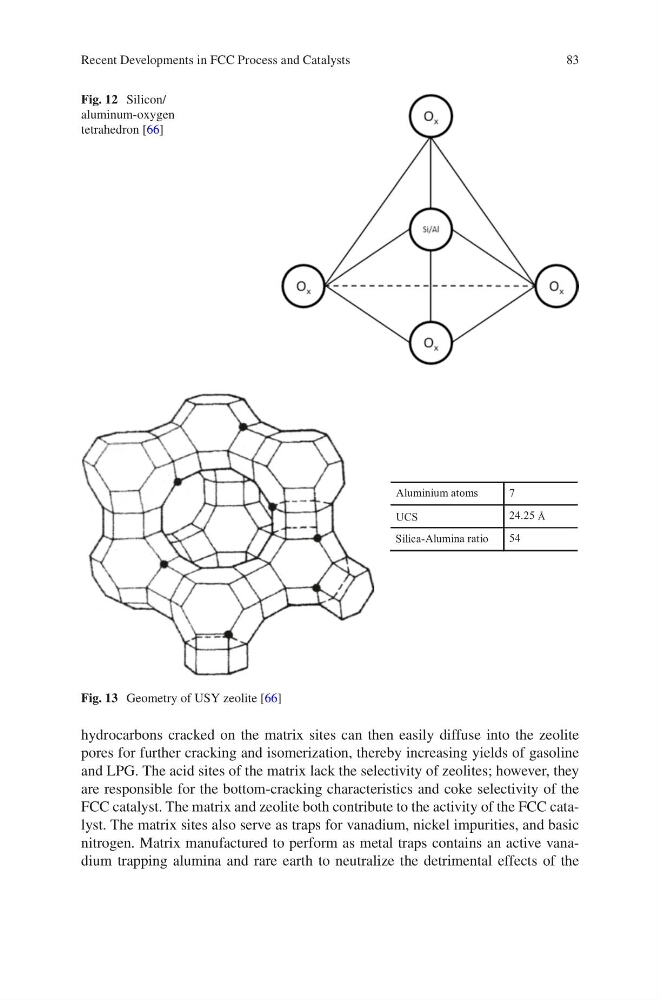
Fig. 12 Silicon/
aluminum-oxygen
tetrahedron [66]
Aluminium atoms
7
UCS
24.25 Å
Silica-Alumina ratio
54
Fig. 13 Geometry of USY zeolite [66]
Recent Developments in FCC Process and Catalysts
hydrocarbons cracked on the matrix sites can then easily diffuse into the zeolite
pores for further cracking and isomerization, thereby increasing yields of gasoline
and LPG. The acid sites of the matrix lack the selectivity of zeolites; however, they
are responsible for the bottom-cracking characteristics and coke selectivity of the
FCC catalyst. The matrix and zeolite both contribute to the activity of the FCC catalyst. The matrix sites also serve as traps for vanadium, nickel impurities, and basic
nitrogen. Matrix manufactured to perform as metal traps contains an active vanadium trapping alumina and rare earth to neutralize the detrimental effects of the
Fig. 12 Silicon/
aluminum-oxygen
tetrahedron [66]
Aluminium atoms
7
UCS
24.25 Å
Silica-Alumina ratio
54
Fig. 13 Geometry of USY zeolite [66]
Recent Developments in FCC Process and Catalysts