

723
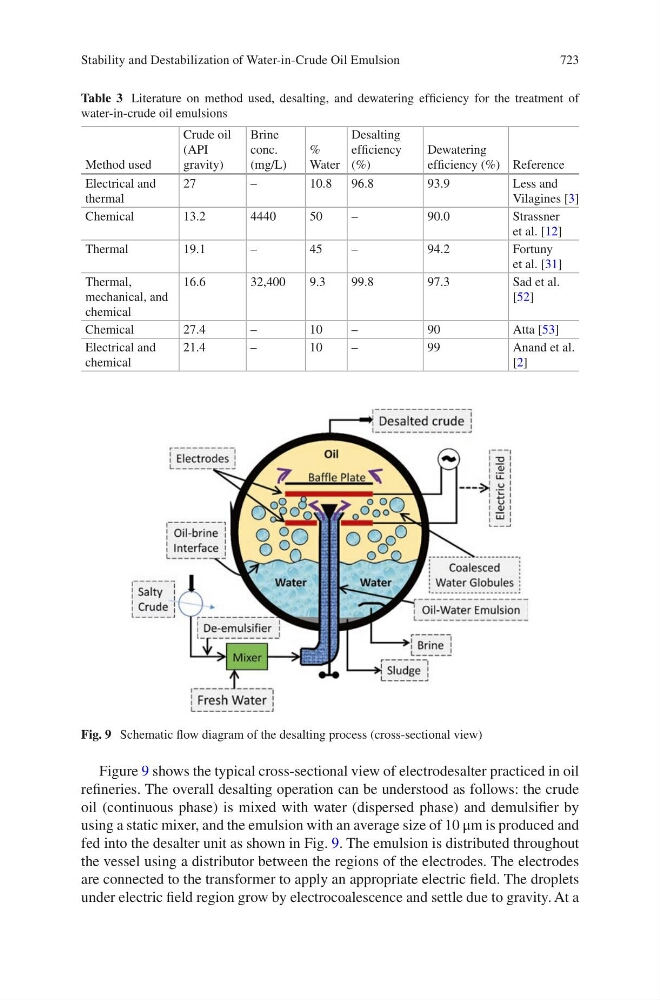
Figure 9 shows the typical cross-sectional view of electrodesalter practiced in oil
refineries. The overall desalting operation can be understood as follows: the crude
oil (continuous phase) is mixed with water (dispersed phase) and demulsifier by
using a static mixer, and the emulsion with an average size of 10 μm is produced and
fed into the desalter unit as shown in Fig. 9. The emulsion is distributed throughout
the vessel using a distributor between the regions of the electrodes. The electrodes
are connected to the transformer to apply an appropriate electric field. The droplets
under electric field region grow by electrocoalescence and settle due to gravity. At a
Table 3 Literature on method used, desalting, and dewatering efficiency for the treatment of
water-in-crude oil emulsions
Method used
Crude oil
(API
gravity)
Brine
conc.
(mg/L)
%
Water
Desalting
efficiency
(%)
Dewatering
efficiency (%) Reference
Electrical and
thermal
27
–
10.8
96.8
93.9
Less and
Vilagines [3]
Chemical
13.2
4440
50
–
90.0
Strassner
et al. [12]
Thermal
19.1
–
45
–
94.2
Fortuny
et al. [31]
Thermal,
mechanical, and
chemical
16.6
32,400
9.3
99.8
97.3
Sad et al.
[52]
Chemical
27.4
–
10
–
90
Atta [53]
Electrical and
chemical
21.4
–
10
–
99
Anand et al.
[2]
Fig. 9 Schematic flow diagram of the desalting process (cross-sectional view)
Stability and Destabilization of Water-in-Crude Oil Emulsion