

700
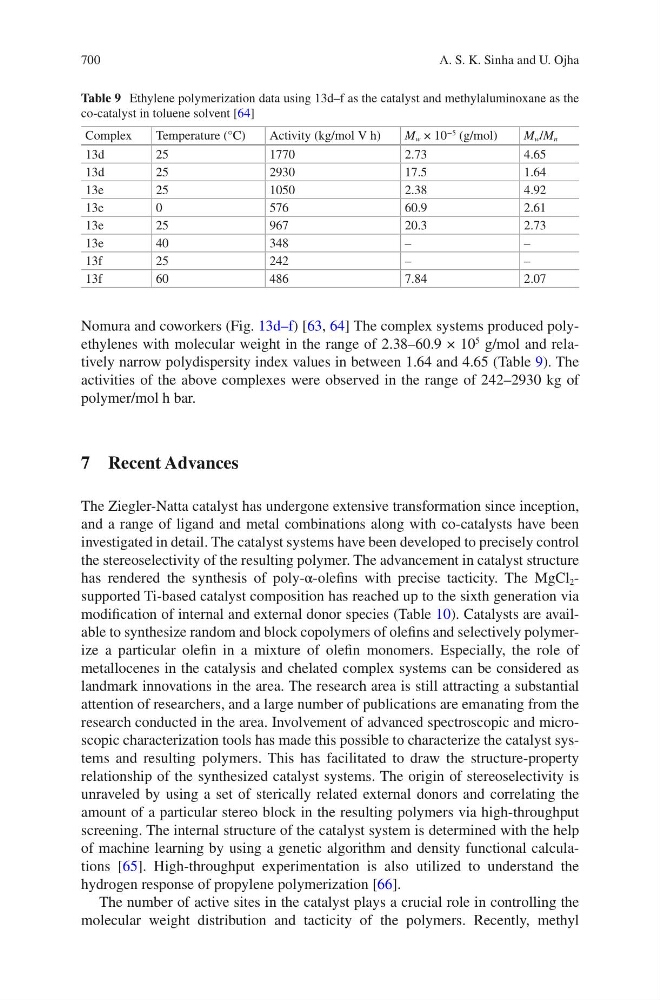
Table 9 Ethylene polymerization data using 13d–f as the catalyst and methylaluminoxane as the
co-catalyst in toluene solvent [64]
Complex
Temperature (°C)
Activity (kg/mol V h)
M w × 10
−5 (g/mol)
M w /M n
13d
25
1770
2.73
4.65
13d
25
2930
17.5
1.64
13e
25
1050
2.38
4.92
13e
0
576
60.9
2.61
13e
25
967
20.3
2.73
13e
40
348
–
–
13f
25
242
–
–
13f
60
486
7.84
2.07
Nomura and coworkers (Fig. 13d–f) [63, 64] The complex systems produced polyethylenes with molecular weight in the range of 2.38–60.9 × 10
5
g/mol and relatively narrow polydispersity index values in between 1.64 and 4.65 (Table 9). The
activities of the above complexes were observed in the range of 242–2930 kg of
polymer/mol h bar.
7 Recent Advances
The Ziegler-Natta catalyst has undergone extensive transformation since inception,
and a range of ligand and metal combinations along with co-catalysts have been
investigated in detail. The catalyst systems have been developed to precisely control
the stereoselectivity of the resulting polymer. The advancement in catalyst structure
has rendered the synthesis of poly-α-olefins with precise tacticity. The MgCl 2 -
supported Ti-based catalyst composition has reached up to the sixth generation via
modification of internal and external donor species (Table 10). Catalysts are available to synthesize random and block copolymers of olefins and selectively polymerize a particular olefin in a mixture of olefin monomers. Especially, the role of
metallocenes in the catalysis and chelated complex systems can be considered as
landmark innovations in the area. The research area is still attracting a substantial
attention of researchers, and a large number of publications are emanating from the
research conducted in the area. Involvement of advanced spectroscopic and microscopic characterization tools has made this possible to characterize the catalyst systems and resulting polymers. This has facilitated to draw the structure-property
relationship of the synthesized catalyst systems. The origin of stereoselectivity is
unraveled by using a set of sterically related external donors and correlating the
amount of a particular stereo block in the resulting polymers via high-throughput
screening. The internal structure of the catalyst system is determined with the help
of machine learning by using a genetic algorithm and density functional calculations [65]. High-throughput experimentation is also utilized to understand the
hydrogen response of propylene polymerization [66].
The number of active sites in the catalyst plays a crucial role in controlling the
molecular weight distribution and tacticity of the polymers. Recently, methyl
A. S. K. Sinha and U. Ojha