

686
These metallocene-based systems revolutionized the synthesis of stereo-controlled
poly-α-olefin using a homogenous catalyst. These catalyst systems rendered a better
control over the distribution of molecular weight and ratio of monomers in a copolymer. The properties of polypropylene synthesized using metallocene-based catalyst system also improved compared to that of first-generation Ziegler-Natta catalyst
system (Table 5) [25, 26].
The geometry around the metal center of these metallocene catalysts were presumed to be pseudotetrahedral. Subsequently, catalyst based on octahedral complex
possessing C 2 symmetry and a N-C-C-N bridge was developed that produced isotactic poly-α-olefin with mmmm-pentad content up to 80% [27]. Interestingly,
when the bridging from the above catalyst was removed, the catalyst efficiently
produced syndiotactic poly-α-olefin with rrrr-pentad amount of 96%. A close analysis of the origin of stereoregularity in these systems revealed that the insertion of
monomer is a key parameter in regulating the stereospecificity of the resulting polymer. The monomer either inserts in primary (the primary carbon is bonded to the
metal atom) or secondary (the secondary carbon is bonded to the metal center) manner (Scheme 6). The primary insertion is dominant in the bridged systems, whereas
the secondary insertion mostly occurs in case of the unbridged catalysts with octahedral geometry similar to that of the homogeneous vanadium-based catalyst.
Presence of chiral active species in catalyst is necessary to guide the stereoselection between two monomer enantiofaces during insertion in the following two ways.
Firstly, the coordination of ligands to the metals is responsible for the chirality of the
active sites. For example, the relative orientation of the two bidentate ligands in the
catalysts shown in Fig. 8 is interchangeable if the bridging is absent. However, in
presence of bridged chemical linkage, the system becomes stereorigid, and no interchange is possible. Secondly, the chirality of the tertiary carbon of the last inserted
Zr
Cl
Cl
Zr
Cl
Cl
P
P
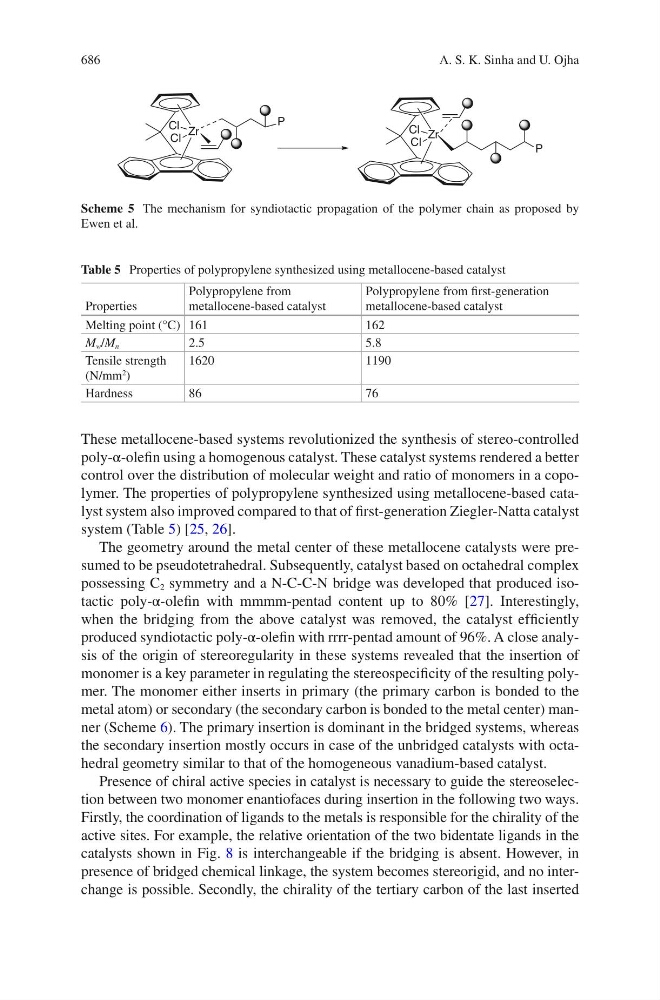
Scheme 5 The mechanism for syndiotactic propagation of the polymer chain as proposed by
Ewen et al.
Table 5 Properties of polypropylene synthesized using metallocene-based catalyst
Properties
Polypropylene from
metallocene-based catalyst
Polypropylene from first-generation
metallocene-based catalyst
Melting point (°C) 161
162
M w /M n
2.5
5.8
Tensile strength
(N/mm
2 )
1620
1190
Hardness
86
76
A. S. K. Sinha and U. Ojha