

648
2.3 Need of Green Novel Solvents
In conventional CO 2 capture process, aqueous alkanolamines solution such as MEA
or MDEA or mixture of these solvents is used as the sorbent medium. This method
is energy intensive because high energy is required in the regeneration or recovery
of solvent. Also, amines being volatile in nature result in the solvent loss during
regeneration. Besides the high energy consumption, corrosion of equipment and
degradation of the amine solvent are other major drawbacks associated with aminebased process.
In general use of organic solvents is of great concern because of their higher
volatility and higher regeneration cost. The problem gets worse if the solvent is
hazardous and sometime can increase the carbon footprint. In Paris Agreement
2015, India vows to reduce the carbon footprint by 2030 [33]. It means there is a
need to implement greener and sustainable solutions for reduction of CO 2 emissions.
To reduce the environmental hazards and to minimize the negative economic,
social, and environmental impacts, Anastas and Warner put forward 12 principle of
green chemistry in the book Green Chemistry: Theory and Practice [34]. Based on
similar principle, Gu et al. redefine the principle to attain sustainable green solvents [35].
1. Availability: A green solvent should be constantly and readily available on a
large scale.
2. Price: To ensure chemical process sustainability, the price of solvents should
be competitive.
3. Recyclability: Solvents should be recyclable.
4. Grade: To avoid complex purification step, technical grade solvents are
favored.
CLEANGAS
CO2
CO2LEAN
HEATX
STRAEM1
CO2RICH
SOLVENT
FLUEGAS
ABSORBER
STRIPPER
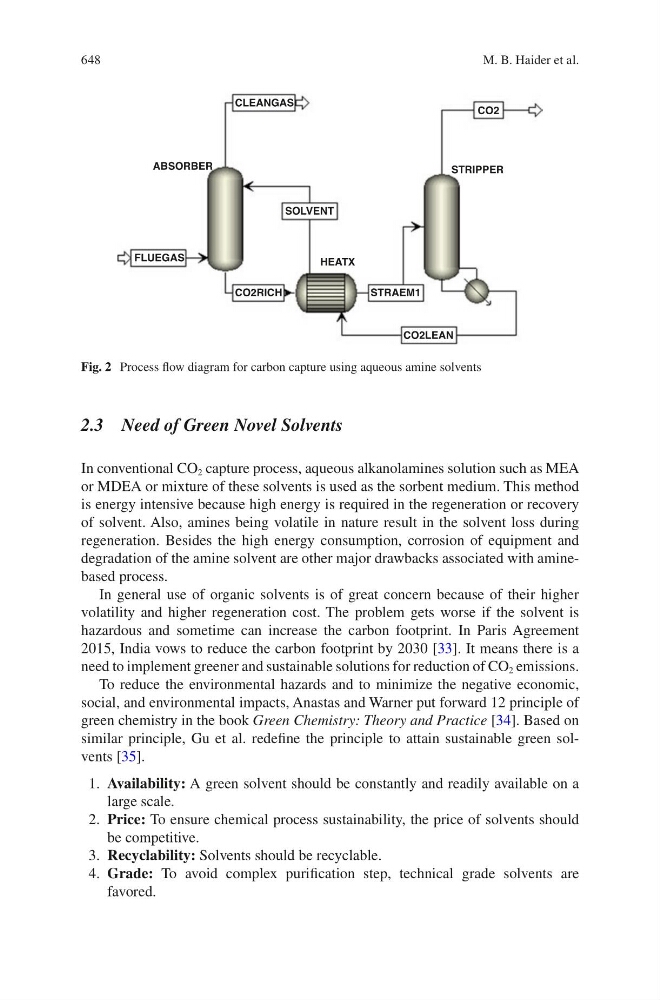
Fig. 2 Process flow diagram for carbon capture using aqueous amine solvents
M. B. Haider et al.