

510
when watch glass silica was used whereas with colloidal silica and aluminum oxide
SAPO-11 phase was obtained with tridymite as impurity. The increase in the synthesis time resulted in more acidic SAPO-11 phase due to incorporation of more Si
in framework. The high selectivity of iso-butene was obtained on higher crystalline
catalyst which provided more stable catalytic sites. Lee et al. [54] studied the effects
of metal loading methods and an optimum amount of platinum on the hydroisomerization of n-dodecane.
Different metal loading methods such as incipient wetness (IW), ion exchange
(IE), or atomic layer deposition (ALD) were used to load Pt on SAPO-11. The metal
distribution was found to be very high in case of ion exchange and atomic layer
deposition. However, a catalyst prepared with incipient wetness showed highest
conversion as well as selectivity. The low activity in case of IE and ALD samples
might be due to the presence of active metals inside the pores of catalyst which are
not accessible. Liu et al. [46] applied NiP/SAPO-11 prepared using nickel impregnation on SAPO-11, for catalytic hydrodeoxygenation of fatty acid methyl oleate
(85%) and isomerization of consecutive paraffin (15% methyl stearate) on a fixedbed continuous-flow reactor. The catalyst with 3 wt% Ni loading obtained the high
conversion of 97.8% with C 15–18 yield of 84.5%. The decrease in conversion with an
increase in Ni content is attributed to blocking of active sites by high Ni content.
The catalyst 3 wt% Ni showed 14% isomerization rate which is low due to steric
hindrance of reactants. Without Ni content also, the catalyst showed 5% isomerization rate which is due to the Brönsted acidic sites of the catalyst.
The synthetic conditions can affect its catalytic activities. Sinha et al. [47]
reported two different synthesis routes first using aqueous medium (SAPO-11(a))
and other using non-aqueous medium, i.e., ethylene glycol (SAPO (na)). The catalytic activities of the catalysts are compared with SAPO-31 (1D-12) synthesized
similar to SAPO-11. The acidity of the materials was reported in the order SAPO- 3
1(na) > SAPO-11(na) > SAPO-31(a) > SAPO-11(a). The high acidity in non-aqueous samples might be due to higher substitution of P
5+
by Si
4+
, resulting in less silica
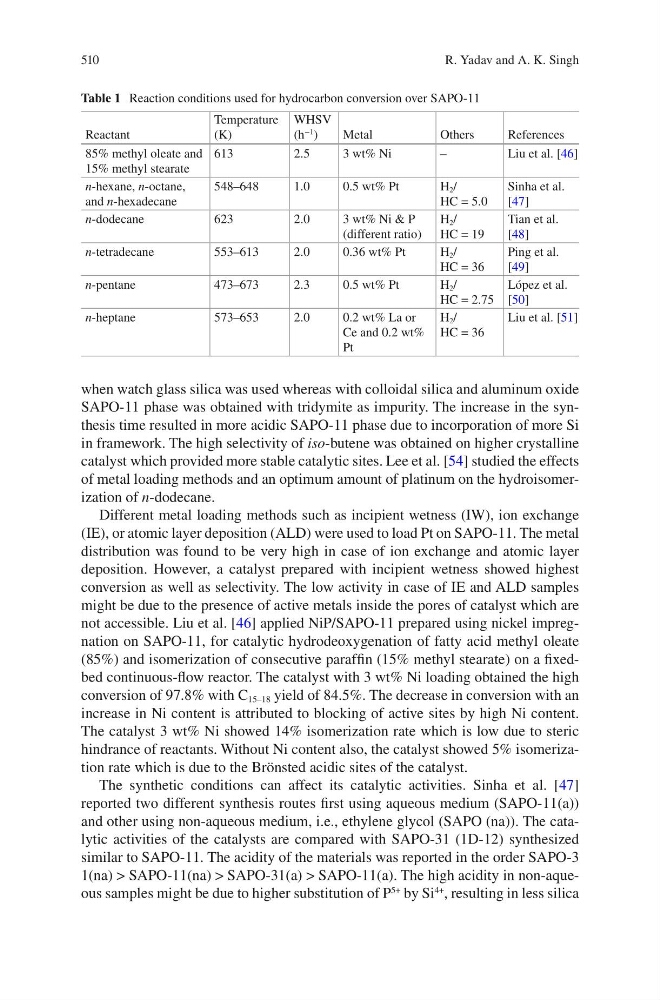
Table 1 Reaction conditions used for hydrocarbon conversion over SAPO-11
Reactant
Temperature
(K)
WHSV
(h
−1
)
Metal
Others
References
85% methyl oleate and
15% methyl stearate
613
2.5
3 wt% Ni
–
Liu et al. [46]
n-hexane, n-octane,
and n-hexadecane
548–648
1.0
0.5 wt% Pt
H 2 /
HC = 5.0
Sinha et al.
[47]
n-dodecane
623
2.0
3 wt% Ni & P
(different ratio)
H 2 /
HC = 19
Tian et al.
[48]
n-tetradecane
553–613
2.0
0.36 wt% Pt
H 2 /
HC = 36
Ping et al.
[49]
n-pentane
473–673
2.3
0.5 wt% Pt
H 2 /
HC = 2.75
López et al.
[50]
n-heptane
573–653
2.0
0.2 wt% La or
Ce and 0.2 wt%
Pt
H 2 /
HC = 36
Liu et al. [51]
R. Yadav and A. K. Singh
when watch glass silica was used whereas with colloidal silica and aluminum oxide
SAPO-11 phase was obtained with tridymite as impurity. The increase in the synthesis time resulted in more acidic SAPO-11 phase due to incorporation of more Si
in framework. The high selectivity of iso-butene was obtained on higher crystalline
catalyst which provided more stable catalytic sites. Lee et al. [54] studied the effects
of metal loading methods and an optimum amount of platinum on the hydroisomerization of n-dodecane.
Different metal loading methods such as incipient wetness (IW), ion exchange
(IE), or atomic layer deposition (ALD) were used to load Pt on SAPO-11. The metal
distribution was found to be very high in case of ion exchange and atomic layer
deposition. However, a catalyst prepared with incipient wetness showed highest
conversion as well as selectivity. The low activity in case of IE and ALD samples
might be due to the presence of active metals inside the pores of catalyst which are
not accessible. Liu et al. [46] applied NiP/SAPO-11 prepared using nickel impregnation on SAPO-11, for catalytic hydrodeoxygenation of fatty acid methyl oleate
(85%) and isomerization of consecutive paraffin (15% methyl stearate) on a fixedbed continuous-flow reactor. The catalyst with 3 wt% Ni loading obtained the high
conversion of 97.8% with C 15–18 yield of 84.5%. The decrease in conversion with an
increase in Ni content is attributed to blocking of active sites by high Ni content.
The catalyst 3 wt% Ni showed 14% isomerization rate which is low due to steric
hindrance of reactants. Without Ni content also, the catalyst showed 5% isomerization rate which is due to the Brönsted acidic sites of the catalyst.
The synthetic conditions can affect its catalytic activities. Sinha et al. [47]
reported two different synthesis routes first using aqueous medium (SAPO-11(a))
and other using non-aqueous medium, i.e., ethylene glycol (SAPO (na)). The catalytic activities of the catalysts are compared with SAPO-31 (1D-12) synthesized
similar to SAPO-11. The acidity of the materials was reported in the order SAPO- 3
1(na) > SAPO-11(na) > SAPO-31(a) > SAPO-11(a). The high acidity in non-aqueous samples might be due to higher substitution of P
5+
by Si
4+
, resulting in less silica
Table 1 Reaction conditions used for hydrocarbon conversion over SAPO-11
Reactant
Temperature
(K)
WHSV
(h
−1
)
Metal
Others
References
85% methyl oleate and
15% methyl stearate
613
2.5
3 wt% Ni
–
Liu et al. [46]
n-hexane, n-octane,
and n-hexadecane
548–648
1.0
0.5 wt% Pt
H 2 /
HC = 5.0
Sinha et al.
[47]
n-dodecane
623
2.0
3 wt% Ni & P
(different ratio)
H 2 /
HC = 19
Tian et al.
[48]
n-tetradecane
553–613
2.0
0.36 wt% Pt
H 2 /
HC = 36
Ping et al.
[49]
n-pentane
473–673
2.3
0.5 wt% Pt
H 2 /
HC = 2.75
López et al.
[50]
n-heptane
573–653
2.0
0.2 wt% La or
Ce and 0.2 wt%
Pt
H 2 /
HC = 36
Liu et al. [51]
R. Yadav and A. K. Singh