

492
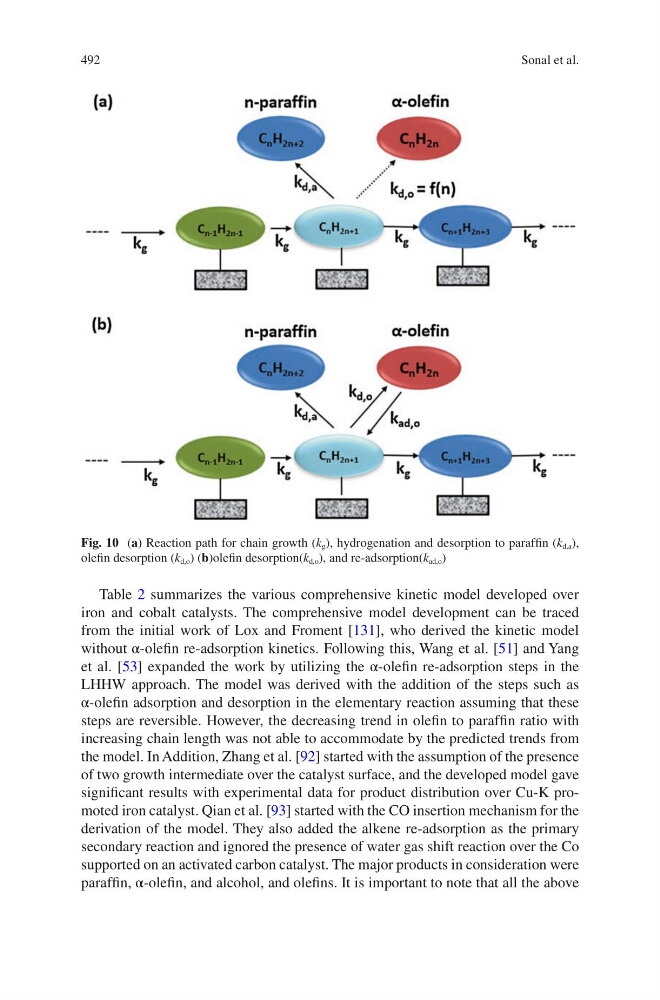
Table 2 summarizes the various comprehensive kinetic model developed over
iron and cobalt catalysts. The comprehensive model development can be traced
from the initial work of Lox and Froment [131], who derived the kinetic model
without α-olefin re-adsorption kinetics. Following this, Wang et al. [51] and Yang
et al. [53] expanded the work by utilizing the α-olefin re-adsorption steps in the
LHHW approach. The model was derived with the addition of the steps such as
α-olefin adsorption and desorption in the elementary reaction assuming that these
steps are reversible. However, the decreasing trend in olefin to paraffin ratio with
increasing chain length was not able to accommodate by the predicted trends from
the model. In Addition, Zhang et al. [92] started with the assumption of the presence
of two growth intermediate over the catalyst surface, and the developed model gave
significant results with experimental data for product distribution over Cu-K promoted iron catalyst. Qian et al. [93] started with the CO insertion mechanism for the
derivation of the model. They also added the alkene re-adsorption as the primary
secondary reaction and ignored the presence of water gas shift reaction over the Co
supported on an activated carbon catalyst. The major products in consideration were
paraffin, α-olefin, and alcohol, and olefins. It is important to note that all the above
Fig. 10 (a) Reaction path for chain growth (k g ), hydrogenation and desorption to paraffin (k d,a ),
olefin desorption (k d,o ) (b)olefin desorption(k d,o ), and re-adsorption(k ad,o )
Sonal et al.
Table 2 summarizes the various comprehensive kinetic model developed over
iron and cobalt catalysts. The comprehensive model development can be traced
from the initial work of Lox and Froment [131], who derived the kinetic model
without α-olefin re-adsorption kinetics. Following this, Wang et al. [51] and Yang
et al. [53] expanded the work by utilizing the α-olefin re-adsorption steps in the
LHHW approach. The model was derived with the addition of the steps such as
α-olefin adsorption and desorption in the elementary reaction assuming that these
steps are reversible. However, the decreasing trend in olefin to paraffin ratio with
increasing chain length was not able to accommodate by the predicted trends from
the model. In Addition, Zhang et al. [92] started with the assumption of the presence
of two growth intermediate over the catalyst surface, and the developed model gave
significant results with experimental data for product distribution over Cu-K promoted iron catalyst. Qian et al. [93] started with the CO insertion mechanism for the
derivation of the model. They also added the alkene re-adsorption as the primary
secondary reaction and ignored the presence of water gas shift reaction over the Co
supported on an activated carbon catalyst. The major products in consideration were
paraffin, α-olefin, and alcohol, and olefins. It is important to note that all the above
Fig. 10 (a) Reaction path for chain growth (k g ), hydrogenation and desorption to paraffin (k d,a ),
olefin desorption (k d,o ) (b)olefin desorption(k d,o ), and re-adsorption(k ad,o )
Sonal et al.