

336
attributed to filamentous carbon formation. The filamentous carbon can readily
react with CO 2 [20]. In another study, a Ni/Al 2 O 3 catalyst, calcined to 850 °C for
10 h to increase NiAl 2 O 4 content, was modified with addition of K, Mn, Sn and Ca
[21]. Modification with K showed a decrease in coking while modification with
other metals showed an increase in carbon deposition [21]. The order of coke formation using different type of modifiers was K < Ni < Ca < Sn < Mn [21]. Although
other possibilities exist, it is also likely that these modifiers replace Ni in NiAl 2 O 4
affecting coking characteristics of the catalyst. Proper catalyst characterization
might provide additional insight into the possibility of replacement of Ni in NiAl 2 O 4
with these modifiers. Further, Juan et al. serially increased K/Ni ratio from 0 to
0.69 in catalyst calcined to 500 °C for 2 h, and found that while the conversions of
CH 4 and CO 2 decreased by less than 40%, the carbon deposition decreased from
275 mg of C/g of catalyst to almost 0 mg of C/g of catalyst [22]. Since 2 h may not
be enough for completing the aluminate formation, it is likely that the effect of K on
coke resistance of Ni/Al 2 O 3 catalyst is more complex and may also involve better
dispersion of Ni and enhancement of its electronic properties in the presence of
potassium. Similarly, Frusteri et al. found that addition of K in Ni/MgO system
decreased carbon deposition markedly [23]. Furthermore, addition of K changed the
electronic and geometric property of the catalyst, supporting the above conclusion
that the role of potassium on the stability of catalyst may be more complex [23].
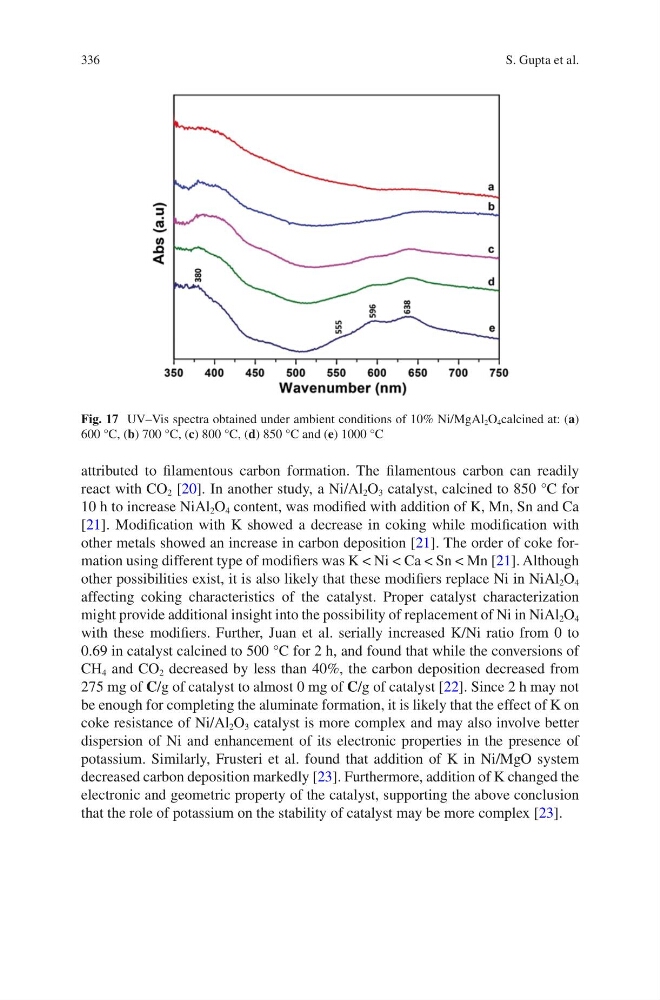
Fig. 17 UV–Vis spectra obtained under ambient conditions of 10% Ni/MgAl 2 O 4 calcined at: (a)
600 °C, (b) 700 °C, (c) 800 °C, (d) 850 °C and (e) 1000 °C
S. Gupta et al.
attributed to filamentous carbon formation. The filamentous carbon can readily
react with CO 2 [20]. In another study, a Ni/Al 2 O 3 catalyst, calcined to 850 °C for
10 h to increase NiAl 2 O 4 content, was modified with addition of K, Mn, Sn and Ca
[21]. Modification with K showed a decrease in coking while modification with
other metals showed an increase in carbon deposition [21]. The order of coke formation using different type of modifiers was K < Ni < Ca < Sn < Mn [21]. Although
other possibilities exist, it is also likely that these modifiers replace Ni in NiAl 2 O 4
affecting coking characteristics of the catalyst. Proper catalyst characterization
might provide additional insight into the possibility of replacement of Ni in NiAl 2 O 4
with these modifiers. Further, Juan et al. serially increased K/Ni ratio from 0 to
0.69 in catalyst calcined to 500 °C for 2 h, and found that while the conversions of
CH 4 and CO 2 decreased by less than 40%, the carbon deposition decreased from
275 mg of C/g of catalyst to almost 0 mg of C/g of catalyst [22]. Since 2 h may not
be enough for completing the aluminate formation, it is likely that the effect of K on
coke resistance of Ni/Al 2 O 3 catalyst is more complex and may also involve better
dispersion of Ni and enhancement of its electronic properties in the presence of
potassium. Similarly, Frusteri et al. found that addition of K in Ni/MgO system
decreased carbon deposition markedly [23]. Furthermore, addition of K changed the
electronic and geometric property of the catalyst, supporting the above conclusion
that the role of potassium on the stability of catalyst may be more complex [23].
Fig. 17 UV–Vis spectra obtained under ambient conditions of 10% Ni/MgAl 2 O 4 calcined at: (a)
600 °C, (b) 700 °C, (c) 800 °C, (d) 850 °C and (e) 1000 °C
S. Gupta et al.