

279
5.2 Polyethylene Glycols (PEGs)
With various important properties of polyethylene glycols (PEGs) such as noncorrosive and non-flammable nature and ready availability, and its easy availability
in the varied array of molecular weights in the range of 300 to 10,000,000 g/mol,
makes PEG as a green reaction media for various organic transformations [91, 167,
168]. Results for this part of the work has been mentioned in the homogeneous reusable media for C–H activation reactions (please refer Sect. 3 of this chapter). Several
review articles in the past years have reviewed the C–H activation research work
performed in PEG solvent [168]. Ruthenium-catalysed isoquinolines synthesis were
performed using PEG solvent [169, 170]. Ruthenium-catalysed synthesis of isobenzofuranones [120] was also developed in combination with Cu catalyst in PEG-400/
water (3:2) solvent system (Scheme 40) and afforded good yield with wide substrate
scope for substituted benzoic acid and electron deficient alkenes [104].
Pd(bpy)Cl2 (5 mol%)
IBX (1.5 equiv)
TFA (1.0 equiv)/DMSO (10 equiv)
H 2O, r.t., air
O
O
Ar
ArB(OH)2
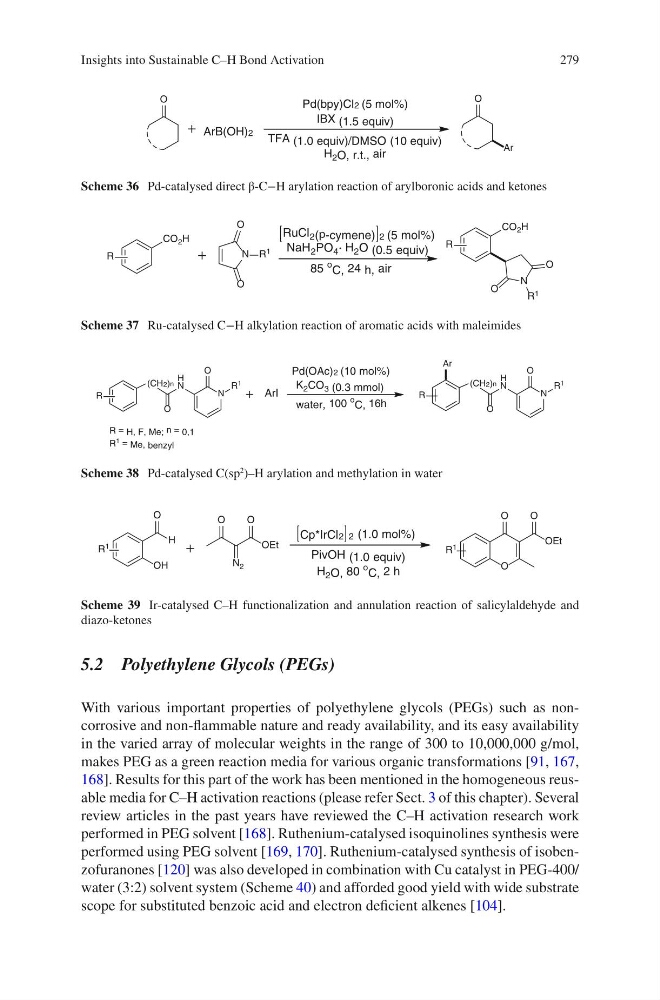
Scheme 36 Pd-catalysed direct β-C−H arylation reaction of arylboronic acids and ketones
CO 2 H
R
RuCl 2( p-cymene) 2 (5 mol%)
NaH 2 PO 4 H 2 O (0.5 equiv)
85
o C, 24 h, air
N R 1
O
O
CO 2 H
R
N
O
O
R 1
Scheme 37 Ru-catalysed C−H alkylation reaction of aromatic acids with maleimides
(CH2)n
R
K 2 CO 3 (0.3 mmol)
water, 100
o C, 16h
H
N
O
N
O
R 1
ArI
(CH2)n
R
H
N
O
N
O
R 1
Ar
Pd(OAc)2 (10 mol%)
R = H, F, Me; n = 0,1
R 1 = Me, benzyl
Scheme 38 Pd-catalysed C(sp
2 )–H arylation and methylation in water
O
R 1
Cp*IrCl2 2 (1.0 mol%)
PivOH (1.0 equiv)
H 2O, 80
o C, 2 h
H
OH
O
OEt
O
N 2
O
R 1
O
O
OEt
Scheme 39 Ir-catalysed C–H functionalization and annulation reaction of salicylaldehyde and
diazo-ketones
Insights into Sustainable C–H Bond Activation
5.2 Polyethylene Glycols (PEGs)
With various important properties of polyethylene glycols (PEGs) such as noncorrosive and non-flammable nature and ready availability, and its easy availability
in the varied array of molecular weights in the range of 300 to 10,000,000 g/mol,
makes PEG as a green reaction media for various organic transformations [91, 167,
168]. Results for this part of the work has been mentioned in the homogeneous reusable media for C–H activation reactions (please refer Sect. 3 of this chapter). Several
review articles in the past years have reviewed the C–H activation research work
performed in PEG solvent [168]. Ruthenium-catalysed isoquinolines synthesis were
performed using PEG solvent [169, 170]. Ruthenium-catalysed synthesis of isobenzofuranones [120] was also developed in combination with Cu catalyst in PEG-400/
water (3:2) solvent system (Scheme 40) and afforded good yield with wide substrate
scope for substituted benzoic acid and electron deficient alkenes [104].
Pd(bpy)Cl2 (5 mol%)
IBX (1.5 equiv)
TFA (1.0 equiv)/DMSO (10 equiv)
H 2O, r.t., air
O
O
Ar
ArB(OH)2
Scheme 36 Pd-catalysed direct β-C−H arylation reaction of arylboronic acids and ketones
CO 2 H
R
RuCl 2( p-cymene) 2 (5 mol%)
NaH 2 PO 4 H 2 O (0.5 equiv)
85
o C, 24 h, air
N R 1
O
O
CO 2 H
R
N
O
O
R 1
Scheme 37 Ru-catalysed C−H alkylation reaction of aromatic acids with maleimides
(CH2)n
R
K 2 CO 3 (0.3 mmol)
water, 100
o C, 16h
H
N
O
N
O
R 1
ArI
(CH2)n
R
H
N
O
N
O
R 1
Ar
Pd(OAc)2 (10 mol%)
R = H, F, Me; n = 0,1
R 1 = Me, benzyl
Scheme 38 Pd-catalysed C(sp
2 )–H arylation and methylation in water
O
R 1
Cp*IrCl2 2 (1.0 mol%)
PivOH (1.0 equiv)
H 2O, 80
o C, 2 h
H
OH
O
OEt
O
N 2
O
R 1
O
O
OEt
Scheme 39 Ir-catalysed C–H functionalization and annulation reaction of salicylaldehyde and
diazo-ketones
Insights into Sustainable C–H Bond Activation