

219
surfaces under similar reaction conditions. It was found that the 4 nm-sized Pd
nanoparticles showed similar activity while compared to the larger size of Pd
nanoparticles.
It was suggested that the author bridges the “materials gap” between the surface
science studies on single crystals and heterogeneous catalysis on metal NPs. Besides
using Pt and Pd as active sites, 1,3-butadiene hydrogenation reaction catalysed by
gold has also received a significant attention due to its potential to catalyse the
preferential oxidation and selectivity [88]. Bulk Au is chemically inert (as Au is one
of the noble metals), and has seldom rarely been considered to be an effective
catalyst. However, small-size gold nanoparticles have been reported to be remarkably
selective towards partially hydrogenated product during hydrogenation of alkadienes
[58, 75, 86, 88–90]. In contrast, the Au catalysts display low activity than that of the
group VIII metals and is attributed to its limited capability to dissociate H 2 [91]. The
dissociation capacity of Au depends strongly on the amount of available low
coordination sites on the Au nanoparticles and is thus facilitated with decrease in
particle size. In summary, the smaller size metal nanoparticle and metal clusters that
are having dynamic surface reorganization played a key role in adsorption and
catalytic properties. In fact, Pd nanoparticles showed lateral flexibility, which was
benefited for the breaking of olefinic bond in 1,3-butadiene and facilitated
hydrogenation reaction for the formation of butene. This was proved from the
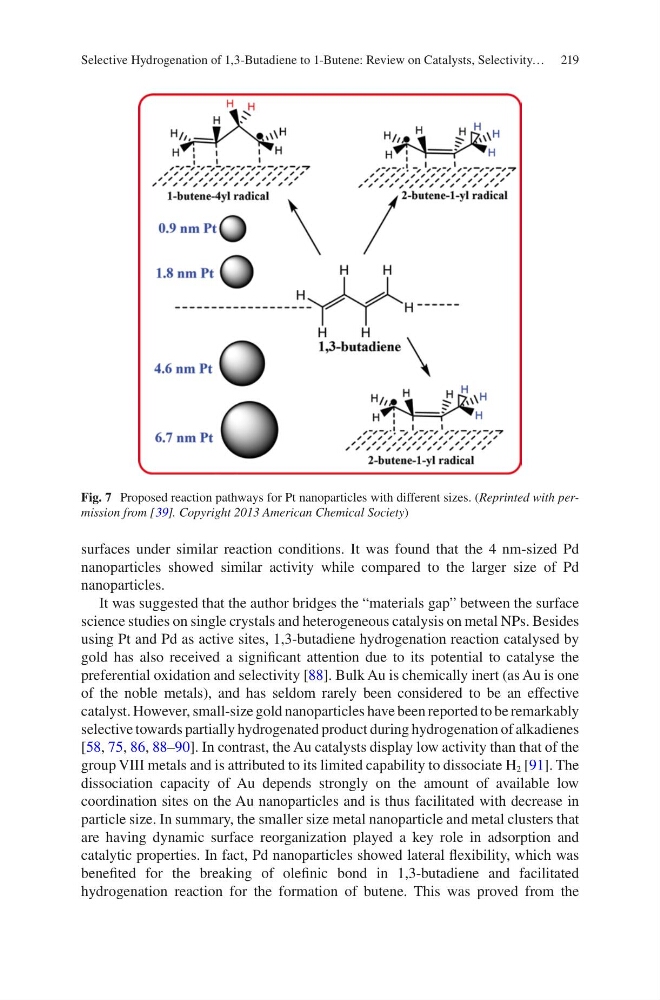
Fig. 7 Proposed reaction pathways for Pt nanoparticles with different sizes. (Reprinted with permission from [39]. Copyright 2013 American Chemical Society)
Selective Hydrogenation of 1,3-Butadiene to 1-Butene: Review on Catalysts, Selectivity…
surfaces under similar reaction conditions. It was found that the 4 nm-sized Pd
nanoparticles showed similar activity while compared to the larger size of Pd
nanoparticles.
It was suggested that the author bridges the “materials gap” between the surface
science studies on single crystals and heterogeneous catalysis on metal NPs. Besides
using Pt and Pd as active sites, 1,3-butadiene hydrogenation reaction catalysed by
gold has also received a significant attention due to its potential to catalyse the
preferential oxidation and selectivity [88]. Bulk Au is chemically inert (as Au is one
of the noble metals), and has seldom rarely been considered to be an effective
catalyst. However, small-size gold nanoparticles have been reported to be remarkably
selective towards partially hydrogenated product during hydrogenation of alkadienes
[58, 75, 86, 88–90]. In contrast, the Au catalysts display low activity than that of the
group VIII metals and is attributed to its limited capability to dissociate H 2 [91]. The
dissociation capacity of Au depends strongly on the amount of available low
coordination sites on the Au nanoparticles and is thus facilitated with decrease in
particle size. In summary, the smaller size metal nanoparticle and metal clusters that
are having dynamic surface reorganization played a key role in adsorption and
catalytic properties. In fact, Pd nanoparticles showed lateral flexibility, which was
benefited for the breaking of olefinic bond in 1,3-butadiene and facilitated
hydrogenation reaction for the formation of butene. This was proved from the
Fig. 7 Proposed reaction pathways for Pt nanoparticles with different sizes. (Reprinted with permission from [39]. Copyright 2013 American Chemical Society)
Selective Hydrogenation of 1,3-Butadiene to 1-Butene: Review on Catalysts, Selectivity…