

187
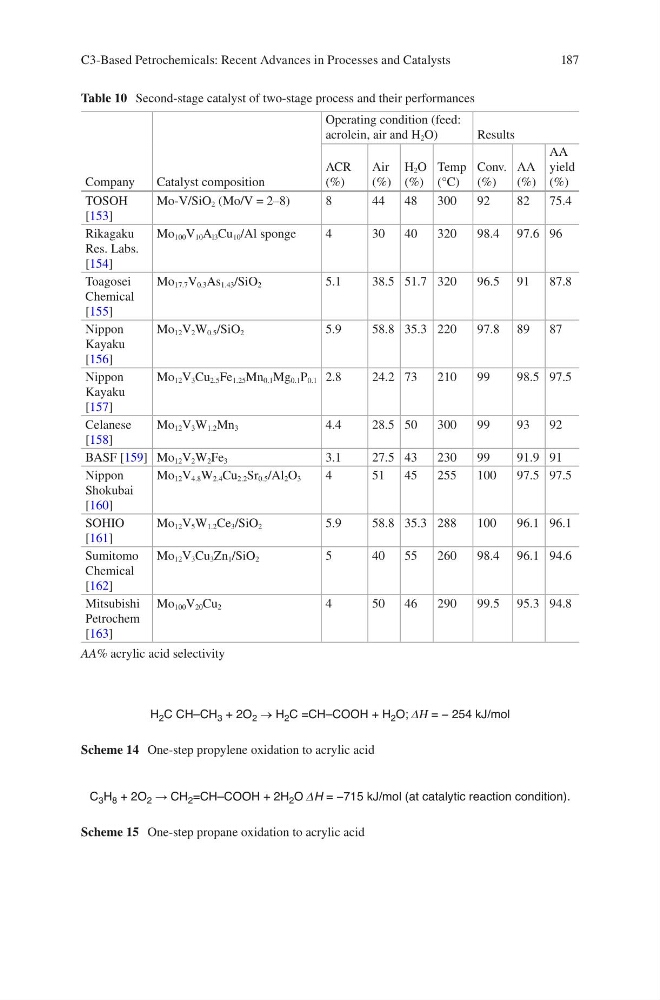
Table 10 Second-stage catalyst of two-stage process and their performances
Company
Catalyst composition
Operating condition (feed:
acrolein, air and H 2 O)
Results
ACR
(%)
Air
(%)
H 2 O
(%)
Temp
(°C)
Conv.
(%)
AA
(%)
AA
yield
(%)
TOSOH
[153]
Mo-V/SiO 2 (Mo/V = 2–8)
8
44
48
300
92
82
75.4
Rikagaku
Res. Labs.
[154]
Mo 100 V 10 A l3 Cu 10 /Al sponge
4
30
40
320
98.4 97.6 96
Toagosei
Chemical
[155]
Mo 17.7 V 0.3 As 1.43 /SiO 2
5.1
38.5 51.7 320
96.5 91
87.8
Nippon
Kayaku
[156]
Mo 12 V 2 W 0.5 /SiO 2
5.9
58.8 35.3 220
97.8 89
87
Nippon
Kayaku
[157]
Mo 12 V 3 Cu 2.5 Fe 1.25 Mn 0.1 Mg 0.1 P 0.1 2.8
24.2 73
210
99
98.5 97.5
Celanese
[158]
Mo 12 V 3 W 1.2 Mn 3
4.4
28.5 50
300
99
93
92
BASF [159] Mo 12 V 2 W 2 Fe 3
3.1
27.5 43
230
99
91.9 91
Nippon
Shokubai
[160]
Mo 12 V 4.8 W 2.4 Cu 2.2 Sr 0.5 /Al 2 O 3
4
51
45
255
100
97.5 97.5
SOHIO
[161]
Mo 12 V 5 W 1.2 Ce 3 /SiO 2
5.9
58.8 35.3 288
100
96.1 96.1
Sumitomo
Chemical
[162]
Mo 12 V 3 Cu 3 Zn 1 /SiO 2
5
40
55
260
98.4 96.1 94.6
Mitsubishi
Petrochem
[163]
Mo 100 V 20 Cu 2
4
50
46
290
99.5 95.3 94.8
AA% acrylic acid selectivity
C 3 H 8 + 2O 2 → CH 2 =CH–COOH + 2H 2 O ∆H = −715 kJ/mol (at catalytic reaction condition).
Scheme 15 One-step propane oxidation to acrylic acid
H 2 C CH–CH 3 + 2O 2 o H 2 C =CH–COOH + H 2 O; ∆Η = − 254 kJ/mol
Scheme 14 One-step propylene oxidation to acrylic acid
C3-Based Petrochemicals: Recent Advances in Processes and Catalysts
Table 10 Second-stage catalyst of two-stage process and their performances
Company
Catalyst composition
Operating condition (feed:
acrolein, air and H 2 O)
Results
ACR
(%)
Air
(%)
H 2 O
(%)
Temp
(°C)
Conv.
(%)
AA
(%)
AA
yield
(%)
TOSOH
[153]
Mo-V/SiO 2 (Mo/V = 2–8)
8
44
48
300
92
82
75.4
Rikagaku
Res. Labs.
[154]
Mo 100 V 10 A l3 Cu 10 /Al sponge
4
30
40
320
98.4 97.6 96
Toagosei
Chemical
[155]
Mo 17.7 V 0.3 As 1.43 /SiO 2
5.1
38.5 51.7 320
96.5 91
87.8
Nippon
Kayaku
[156]
Mo 12 V 2 W 0.5 /SiO 2
5.9
58.8 35.3 220
97.8 89
87
Nippon
Kayaku
[157]
Mo 12 V 3 Cu 2.5 Fe 1.25 Mn 0.1 Mg 0.1 P 0.1 2.8
24.2 73
210
99
98.5 97.5
Celanese
[158]
Mo 12 V 3 W 1.2 Mn 3
4.4
28.5 50
300
99
93
92
BASF [159] Mo 12 V 2 W 2 Fe 3
3.1
27.5 43
230
99
91.9 91
Nippon
Shokubai
[160]
Mo 12 V 4.8 W 2.4 Cu 2.2 Sr 0.5 /Al 2 O 3
4
51
45
255
100
97.5 97.5
SOHIO
[161]
Mo 12 V 5 W 1.2 Ce 3 /SiO 2
5.9
58.8 35.3 288
100
96.1 96.1
Sumitomo
Chemical
[162]
Mo 12 V 3 Cu 3 Zn 1 /SiO 2
5
40
55
260
98.4 96.1 94.6
Mitsubishi
Petrochem
[163]
Mo 100 V 20 Cu 2
4
50
46
290
99.5 95.3 94.8
AA% acrylic acid selectivity
C 3 H 8 + 2O 2 → CH 2 =CH–COOH + 2H 2 O ∆H = −715 kJ/mol (at catalytic reaction condition).
Scheme 15 One-step propane oxidation to acrylic acid
H 2 C CH–CH 3 + 2O 2 o H 2 C =CH–COOH + H 2 O; ∆Η = − 254 kJ/mol
Scheme 14 One-step propylene oxidation to acrylic acid
C3-Based Petrochemicals: Recent Advances in Processes and Catalysts