

172
4.1.2 Future Outlook of PO Production
The most obvious choice for PO production would be based on the direct selective
oxidation of propylene or propane using air or oxygen as an oxidizing agent [94].
The selective propylene oxidation using molecular oxygen for PO synthesis is often
considered as the Holy Grail in catalysis research. A number of chemical companies
and academic institutes have been working to develop this route for several years.
However, because of the unsymmetrical nature of the propylene molecule, its selective oxidation to PO is severely limited by thermodynamics [95, 96]. Oxidation
using molecular oxygen required high energy of 498 kJ/mol for dissociating O–O
double bond. Once O–O bond is dissociated, oxygen tends to accumulate negative
charge (O–), and thus preferentially attacks the weakly bound allylic hydrogen
atoms (–CH 3 ) of propylene resulting in the production of acrolein (Scheme 6).
On the other hand, overoxidation of propylene leads to thermodynamically
favored CO 2 and H 2 O molecules. Thus, to obtain industrially relevant selectivity for
PO, the rate of side reactions has to be minimized with the help of highly selective
oxidation catalyst.
AIST-Nippon Shokubai has made significant progress on the development of
selective oxidation of propylene to PO by the reaction of propylene, O 2 and H 2 using
nano gold catalyst in the same reactor [97]. As silver-based catalyst is used in the
commercial ethylene oxide production, the silver catalyst had been also explored in
the epoxidation of propylene. PO selectivity of 50–80% was achieved, while further
improvement in terms of the catalytic performances for PO production was achieved
using gold nanoparticles (NPs, 2.0–5.0 nm) [98] deposited on anatase TiO 2 or mesoporous titanium-silicate catalyst [99–101] owing to which the reductive activation
of O 2 with H 2 is obtained at milder condition.
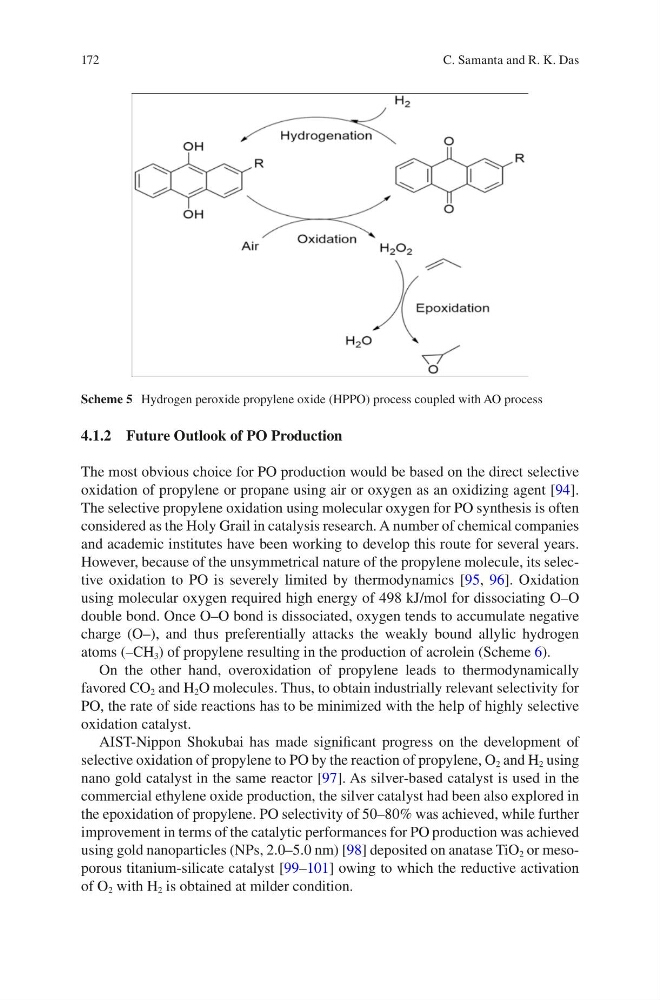
Scheme 5 Hydrogen peroxide propylene oxide (HPPO) process coupled with AO process
C. Samanta and R. K. Das
4.1.2 Future Outlook of PO Production
The most obvious choice for PO production would be based on the direct selective
oxidation of propylene or propane using air or oxygen as an oxidizing agent [94].
The selective propylene oxidation using molecular oxygen for PO synthesis is often
considered as the Holy Grail in catalysis research. A number of chemical companies
and academic institutes have been working to develop this route for several years.
However, because of the unsymmetrical nature of the propylene molecule, its selective oxidation to PO is severely limited by thermodynamics [95, 96]. Oxidation
using molecular oxygen required high energy of 498 kJ/mol for dissociating O–O
double bond. Once O–O bond is dissociated, oxygen tends to accumulate negative
charge (O–), and thus preferentially attacks the weakly bound allylic hydrogen
atoms (–CH 3 ) of propylene resulting in the production of acrolein (Scheme 6).
On the other hand, overoxidation of propylene leads to thermodynamically
favored CO 2 and H 2 O molecules. Thus, to obtain industrially relevant selectivity for
PO, the rate of side reactions has to be minimized with the help of highly selective
oxidation catalyst.
AIST-Nippon Shokubai has made significant progress on the development of
selective oxidation of propylene to PO by the reaction of propylene, O 2 and H 2 using
nano gold catalyst in the same reactor [97]. As silver-based catalyst is used in the
commercial ethylene oxide production, the silver catalyst had been also explored in
the epoxidation of propylene. PO selectivity of 50–80% was achieved, while further
improvement in terms of the catalytic performances for PO production was achieved
using gold nanoparticles (NPs, 2.0–5.0 nm) [98] deposited on anatase TiO 2 or mesoporous titanium-silicate catalyst [99–101] owing to which the reductive activation
of O 2 with H 2 is obtained at milder condition.
Scheme 5 Hydrogen peroxide propylene oxide (HPPO) process coupled with AO process
C. Samanta and R. K. Das