

168
wastewater. Because of this chlorohydrin route is disfavored for new plant start-ups
in most locations [68]. The environmental viability of a modern chlorohydrin plant
depends on its scale of production, wherein large-scale plants can be fully integrated
with chlorine/caustic plants.
In the PO/SM process (also known as EBHP process) [69–71] ethylbenzene is
used as a feedstock which is oxidized in the presence of air to produce ethylbenzene
hydroperoxide. Epoxidation of propylene with ethylbenzene hydroperoxide leads to
the formation of propylene oxide and 1-phenyl ethanol as a co-product (Scheme 2).
In the subsequent step, 1-phenyl ethanol is further dehydrated to form styrene using
titania or alumina catalyst [72]. LyondellBasell and Shell are the two major global
players for this process technology [66, 73].
In the EBHP process, every ton of PO production leads to approximately 2.5 tons
of styrene co-production [74]. Co-produced styrene is a useful chemical and is
employed as a valuable monomer in the production of a number of homopolymers
such as polystyrene (PS), expandable polystyrene (EPS), and various copolymers
such as acrylonitrile- butadiene- styrene (ABS) resins, styrene-acrylonitrile (SAN)
resin, acrylonitrile-styrene-acrylate (ASA), styrene-butadiene (SB) latexes, styrenebutadiene rubber (SBR), and unsaturated polyester resins. These products have versatile applications in packaging, construction, domestic appliances, home
furnishings, and so on. Because of this, EBHP process continues to support the PO
production.
In TBHP process [75–77] isobutane is used as a feedstock and tert-butyl alcohol
(TBA) is generated as a co-product along with propylene oxide (Scheme 3).
By employing this process, approximately 2.1 tons of TBA is produced as byproduct for each ton of PO [63]. TBA can be used in the production of two etherbased oxyfuels, methyl tertiary butyl ether (MTBE) and ethyl tertiary butyl ether
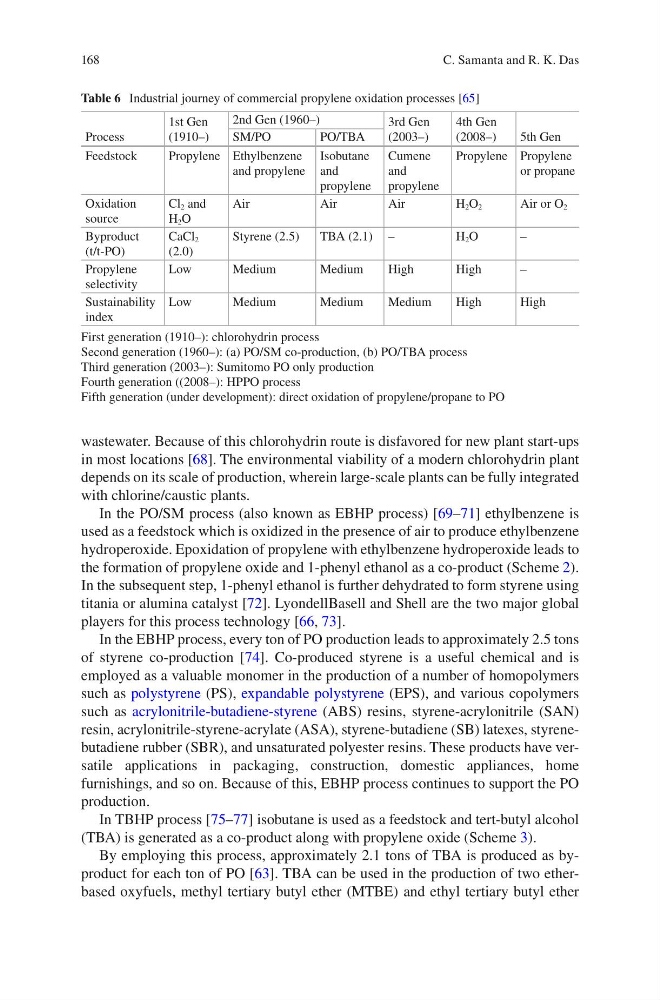
Table 6 Industrial journey of commercial propylene oxidation processes [65]
Process
1st Gen
(1910–)
2nd Gen (1960–)
3rd Gen
(2003–)
4th Gen
(2008–)
5th Gen
SM/PO
PO/TBA
Feedstock
Propylene Ethylbenzene
and propylene
Isobutane
and
propylene
Cumene
and
propylene
Propylene Propylene
or propane
Oxidation
source
Cl 2 and
H 2 O
Air
Air
Air
H 2 O 2
Air or O 2
Byproduct
(t/t-PO)
CaCl 2
(2.0)
Styrene (2.5)
TBA (2.1) –
H 2 O
–
Propylene
selectivity
Low
Medium
Medium
High
High
–
Sustainability
index
Low
Medium
Medium
Medium
High
High
First generation (1910–): chlorohydrin process
Second generation (1960–): (a) PO/SM co-production, (b) PO/TBA process
Third generation (2003–): Sumitomo PO only production
Fourth generation ((2008–): HPPO process
Fifth generation (under development): direct oxidation of propylene/propane to PO
C. Samanta and R. K. Das
wastewater. Because of this chlorohydrin route is disfavored for new plant start-ups
in most locations [68]. The environmental viability of a modern chlorohydrin plant
depends on its scale of production, wherein large-scale plants can be fully integrated
with chlorine/caustic plants.
In the PO/SM process (also known as EBHP process) [69–71] ethylbenzene is
used as a feedstock which is oxidized in the presence of air to produce ethylbenzene
hydroperoxide. Epoxidation of propylene with ethylbenzene hydroperoxide leads to
the formation of propylene oxide and 1-phenyl ethanol as a co-product (Scheme 2).
In the subsequent step, 1-phenyl ethanol is further dehydrated to form styrene using
titania or alumina catalyst [72]. LyondellBasell and Shell are the two major global
players for this process technology [66, 73].
In the EBHP process, every ton of PO production leads to approximately 2.5 tons
of styrene co-production [74]. Co-produced styrene is a useful chemical and is
employed as a valuable monomer in the production of a number of homopolymers
such as polystyrene (PS), expandable polystyrene (EPS), and various copolymers
such as acrylonitrile- butadiene- styrene (ABS) resins, styrene-acrylonitrile (SAN)
resin, acrylonitrile-styrene-acrylate (ASA), styrene-butadiene (SB) latexes, styrenebutadiene rubber (SBR), and unsaturated polyester resins. These products have versatile applications in packaging, construction, domestic appliances, home
furnishings, and so on. Because of this, EBHP process continues to support the PO
production.
In TBHP process [75–77] isobutane is used as a feedstock and tert-butyl alcohol
(TBA) is generated as a co-product along with propylene oxide (Scheme 3).
By employing this process, approximately 2.1 tons of TBA is produced as byproduct for each ton of PO [63]. TBA can be used in the production of two etherbased oxyfuels, methyl tertiary butyl ether (MTBE) and ethyl tertiary butyl ether
Table 6 Industrial journey of commercial propylene oxidation processes [65]
Process
1st Gen
(1910–)
2nd Gen (1960–)
3rd Gen
(2003–)
4th Gen
(2008–)
5th Gen
SM/PO
PO/TBA
Feedstock
Propylene Ethylbenzene
and propylene
Isobutane
and
propylene
Cumene
and
propylene
Propylene Propylene
or propane
Oxidation
source
Cl 2 and
H 2 O
Air
Air
Air
H 2 O 2
Air or O 2
Byproduct
(t/t-PO)
CaCl 2
(2.0)
Styrene (2.5)
TBA (2.1) –
H 2 O
–
Propylene
selectivity
Low
Medium
Medium
High
High
–
Sustainability
index
Low
Medium
Medium
Medium
High
High
First generation (1910–): chlorohydrin process
Second generation (1960–): (a) PO/SM co-production, (b) PO/TBA process
Third generation (2003–): Sumitomo PO only production
Fourth generation ((2008–): HPPO process
Fifth generation (under development): direct oxidation of propylene/propane to PO
C. Samanta and R. K. Das