

130
1.3 Toluene Alkylation with Methanol to Styrene
Styrene is the most important part of the value chain of the modern petrochemical
industry, and its market is continuously growing at a rate of 4% per year. Its demand
has grown from around 20,000 kilotons in 2000 to around 28,000 kilotons in 2010
[145]. The demand for synthetic styrene-butadiene rubber (SBR) increased during
World War II, and this prompted the rapid development of technology and the
expansion of its capacity. The process for styrene was first developed by Dow
Chemical in the 1930s in the USA and BASF company in Germany, and this effort
consummated in the commissioning of several large-scale production facilities and
styrene became an important raw material in the chemical industry. Today, polystyrene is the most important polymer synthesized from polystyrene. Styrene is also
the building block for several other polymers and co-polymers like styrene- butadiene
rubber (SBR), styrene-acrylonitrile (SAN) plastic, acrylonitrile-butadiene-styrene
(ABS) plastic, expanded polystyrene foam (EPS), and unsaturated polyester resins.
A number of products are produced across a wide range of industries by using the
aforementioned materials as there is no direct end use for styrene. Many of these
products can be recycled and offer very good insulation qualities. These products
can be used in packaging, electronics for consumer applications, construction,
transportation, and medical applications. The conventional processes for styrene
production are given below.
1.3.1 Conventional Process for Production of Styrene
Currently, styrene is produced on an industrial scale by employing two major processes: (1) Dehydrogenation of ethylbenzene (EB) in an adiabatic system developed
by ABBLummus/UOP, which is also known as the Classic SM™ process, and (2)
SMPO process developed by SHELL.
The other processes for production of styrene are, e.g., STEX process by Toray
in which styrene is extracted from pyrolysis gasoline and the isothermal dehydrogenation of ethyl benzene (EB) by Lurgi [146]. EB required for the dehydrogenation
is produced by alkylation of benzene with ethylene in the liquid phase. Some of the
EB producing processes are the EBMax™ by Mobil–Raytheon and EBOne™ by
UOP (Fig. 10).
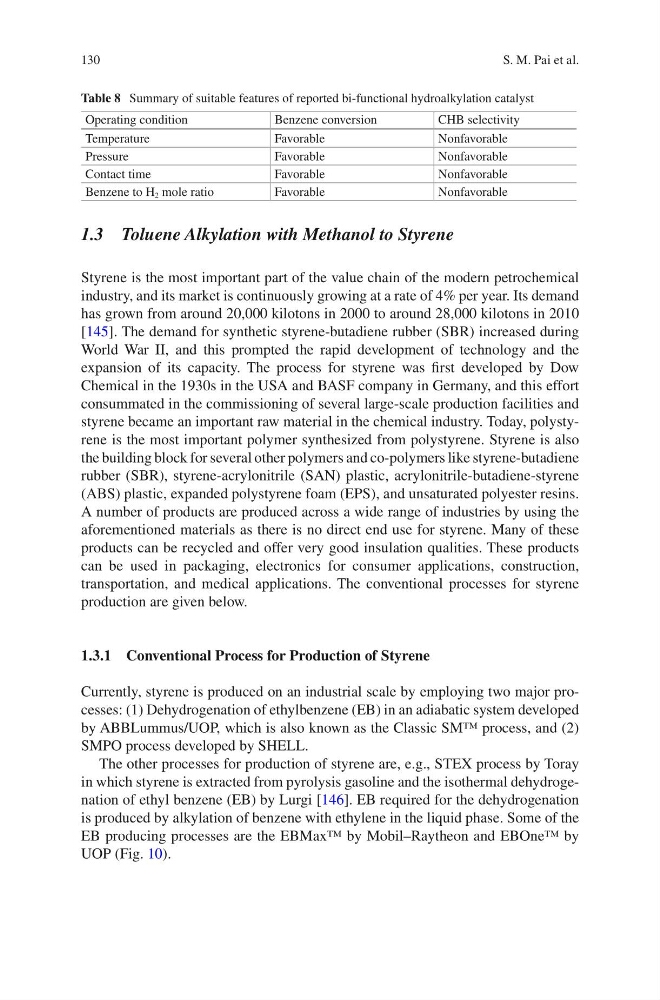
Table 8 Summary of suitable features of reported bi-functional hydroalkylation catalyst
Operating condition
Benzene conversion
CHB selectivity
Temperature
Favorable
Nonfavorable
Pressure
Favorable
Nonfavorable
Contact time
Favorable
Nonfavorable
Benzene to H 2 mole ratio
Favorable
Nonfavorable
S. M. Pai et al.
1.3 Toluene Alkylation with Methanol to Styrene
Styrene is the most important part of the value chain of the modern petrochemical
industry, and its market is continuously growing at a rate of 4% per year. Its demand
has grown from around 20,000 kilotons in 2000 to around 28,000 kilotons in 2010
[145]. The demand for synthetic styrene-butadiene rubber (SBR) increased during
World War II, and this prompted the rapid development of technology and the
expansion of its capacity. The process for styrene was first developed by Dow
Chemical in the 1930s in the USA and BASF company in Germany, and this effort
consummated in the commissioning of several large-scale production facilities and
styrene became an important raw material in the chemical industry. Today, polystyrene is the most important polymer synthesized from polystyrene. Styrene is also
the building block for several other polymers and co-polymers like styrene- butadiene
rubber (SBR), styrene-acrylonitrile (SAN) plastic, acrylonitrile-butadiene-styrene
(ABS) plastic, expanded polystyrene foam (EPS), and unsaturated polyester resins.
A number of products are produced across a wide range of industries by using the
aforementioned materials as there is no direct end use for styrene. Many of these
products can be recycled and offer very good insulation qualities. These products
can be used in packaging, electronics for consumer applications, construction,
transportation, and medical applications. The conventional processes for styrene
production are given below.
1.3.1 Conventional Process for Production of Styrene
Currently, styrene is produced on an industrial scale by employing two major processes: (1) Dehydrogenation of ethylbenzene (EB) in an adiabatic system developed
by ABBLummus/UOP, which is also known as the Classic SM™ process, and (2)
SMPO process developed by SHELL.
The other processes for production of styrene are, e.g., STEX process by Toray
in which styrene is extracted from pyrolysis gasoline and the isothermal dehydrogenation of ethyl benzene (EB) by Lurgi [146]. EB required for the dehydrogenation
is produced by alkylation of benzene with ethylene in the liquid phase. Some of the
EB producing processes are the EBMax™ by Mobil–Raytheon and EBOne™ by
UOP (Fig. 10).
Table 8 Summary of suitable features of reported bi-functional hydroalkylation catalyst
Operating condition
Benzene conversion
CHB selectivity
Temperature
Favorable
Nonfavorable
Pressure
Favorable
Nonfavorable
Contact time
Favorable
Nonfavorable
Benzene to H 2 mole ratio
Favorable
Nonfavorable
S. M. Pai et al.