

104
cracking and isomerization, which reduces the propylene yield. The stability of
ZSM-5 is prolonged by treating the zeolite with phosphorus. The phosphate species
react with the active sites to form an adduct in which the phosphate ions force the
aluminum ion into an octahedral lattice formed by hydroxyl bridges. This process is
reversible prior to heat treatment and calcination of the zeolite. Post calcination,
some loss in crystallinity and formation of extra framework aluminum are observed.
The porosity and accessibility are decreased when the ZSM-5 is fresh in the unit and
the extra framework aluminum catalyzes the bimolecular cracking. However, in
subsequent cycles of operation, net olefin formation is greater and coke formation is
lower than untreated ZSM-5.
8 Resid Processing
The source of hydrocarbon feed for the FCC unit, i.e., the crude oil, has been
observed to be getting heavier in terms of API and contaminated with asphaltenes
and metal complexes. This results in a lower yield of gas oil and greater volume of
resid during distillation. Hence, the volume of vacuum gas oil obtained per barrel of
crude is steadily reducing, and the amount of resid hydrocarbons is on the rise.
Resid processing facilities (hydrocracker, delayed coker, etc.) are limited by their
capacities, whereas the FCC units worldwide are running underutilized. New
emerging FCC unit designs featuring superior metallurgy, higher capacity of gas
concentration facilities, and flexible coke burning are able to co-process this excess
resid along with vacuum gas oil.
To upgrade resid hydrocarbons, the proper design of the FCC catalyst is a critical
part of the overall process optimization. Minimizing diffusional limitations of the
catalyst pores coupled with higher acid site density so that large molecules found in
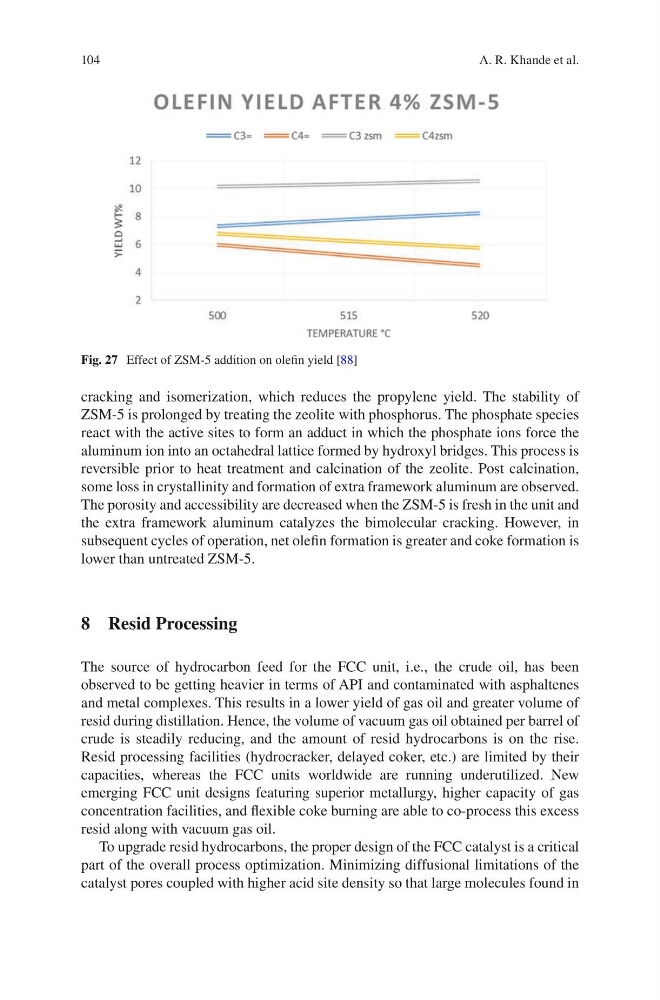
Fig. 27 Effect of ZSM-5 addition on olefin yield [88]
A. R. Khande et al.
cracking and isomerization, which reduces the propylene yield. The stability of
ZSM-5 is prolonged by treating the zeolite with phosphorus. The phosphate species
react with the active sites to form an adduct in which the phosphate ions force the
aluminum ion into an octahedral lattice formed by hydroxyl bridges. This process is
reversible prior to heat treatment and calcination of the zeolite. Post calcination,
some loss in crystallinity and formation of extra framework aluminum are observed.
The porosity and accessibility are decreased when the ZSM-5 is fresh in the unit and
the extra framework aluminum catalyzes the bimolecular cracking. However, in
subsequent cycles of operation, net olefin formation is greater and coke formation is
lower than untreated ZSM-5.
8 Resid Processing
The source of hydrocarbon feed for the FCC unit, i.e., the crude oil, has been
observed to be getting heavier in terms of API and contaminated with asphaltenes
and metal complexes. This results in a lower yield of gas oil and greater volume of
resid during distillation. Hence, the volume of vacuum gas oil obtained per barrel of
crude is steadily reducing, and the amount of resid hydrocarbons is on the rise.
Resid processing facilities (hydrocracker, delayed coker, etc.) are limited by their
capacities, whereas the FCC units worldwide are running underutilized. New
emerging FCC unit designs featuring superior metallurgy, higher capacity of gas
concentration facilities, and flexible coke burning are able to co-process this excess
resid along with vacuum gas oil.
To upgrade resid hydrocarbons, the proper design of the FCC catalyst is a critical
part of the overall process optimization. Minimizing diffusional limitations of the
catalyst pores coupled with higher acid site density so that large molecules found in
Fig. 27 Effect of ZSM-5 addition on olefin yield [88]
A. R. Khande et al.