

68
SDGs in ways that best fit their particular
environments.
As these conditions are explored, the Santa
Cruz County CAP report and related efforts serve
as examples. While the journey to help localize
the SDGs will be unique across communities, the
conditions considered here offer an orienting
framework as a way to achieve universal
wellbeing.
6.2
Santa Cruz County
Background and the CAP’s
History
Santa Cruz County is situated alongside the
Pacific Ocean on the central coast of California,
just south of San Francisco. Of the state’s 58
counties, Santa Cruz County ranks in the lower
half population-wise, with nearly 276,000 residents (U.S. Census Bureau 2019). Santa Cruz
County is composed of four cities—Capitola,
Santa Cruz, Scotts Valley, and Watsonville—and
its unincorporated areas. While the tech industry
of Silicon Valley is just to the north, technology is
not a significant part of the local economy. Many
local people may be employed in Silicon Valley
and may bring home their tech salaries, but the
primary drivers of Santa Cruz County’s economy
include higher education, tourism, and agriculture (Applied Survey Research 2017).
The Community Assessment Project was
established in 1994 by leading local entities,
most notably the United Way of Santa Cruz
County (United Way), with the initial idea coming from Dominican Santa Cruz Hospital. CAP
serves the community by guiding plans and processes, examining quality-of-life domains, tracking well-being indicators, and establishing and
monitoring community-generated goals. Using
these data, Santa Cruz County government, along
with other organizations and agencies, seeks to
improve the quality of life for all residents. The
long-standing success of this community initiative can be attributed to the significant pillars of
strong leadership and a commitment to sustainability and innovation.
The CAP showcases how organizations and
institutions in Santa Cruz County can work
together for the common good of all residents in
their respective jurisdictions. It is fundamental to
have stable and competent leadership sustaining
this effort. Since the CAP’s inception, the United
Way has been the valuable backbone organization for the project, with ASR serving as its
research partner. Other organizations have
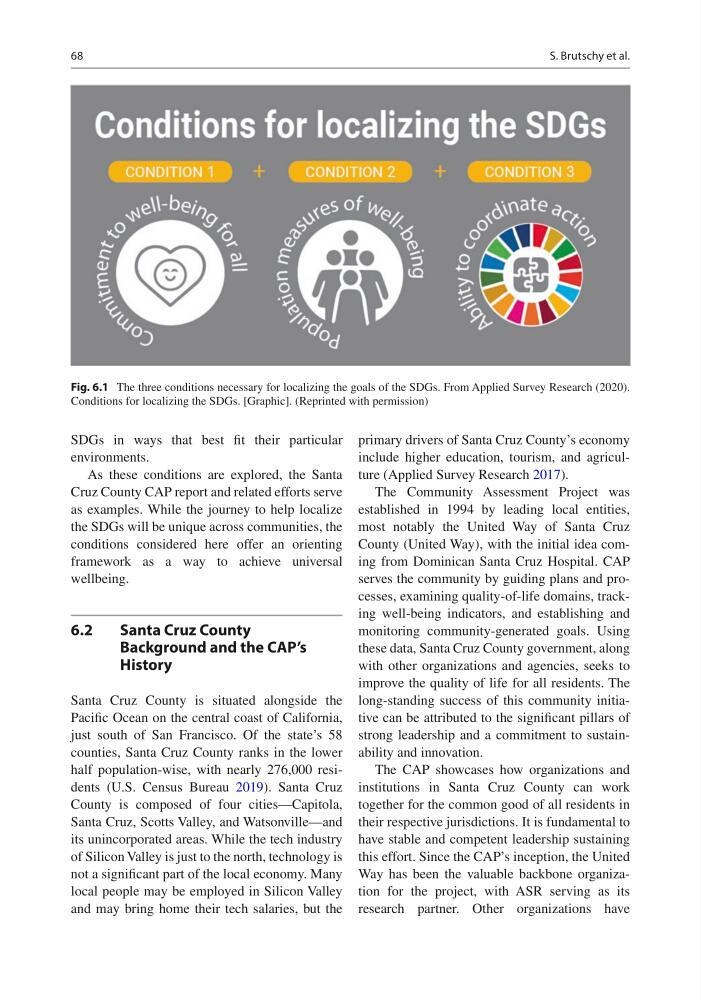
Fig. 6.1 The three conditions necessary for localizing the goals of the SDGs. From Applied Survey Research (2020).
Conditions for localizing the SDGs. [Graphic]. (Reprinted with permission)
S. Brutschy et al.
SDGs in ways that best fit their particular
environments.
As these conditions are explored, the Santa
Cruz County CAP report and related efforts serve
as examples. While the journey to help localize
the SDGs will be unique across communities, the
conditions considered here offer an orienting
framework as a way to achieve universal
wellbeing.
6.2
Santa Cruz County
Background and the CAP’s
History
Santa Cruz County is situated alongside the
Pacific Ocean on the central coast of California,
just south of San Francisco. Of the state’s 58
counties, Santa Cruz County ranks in the lower
half population-wise, with nearly 276,000 residents (U.S. Census Bureau 2019). Santa Cruz
County is composed of four cities—Capitola,
Santa Cruz, Scotts Valley, and Watsonville—and
its unincorporated areas. While the tech industry
of Silicon Valley is just to the north, technology is
not a significant part of the local economy. Many
local people may be employed in Silicon Valley
and may bring home their tech salaries, but the
primary drivers of Santa Cruz County’s economy
include higher education, tourism, and agriculture (Applied Survey Research 2017).
The Community Assessment Project was
established in 1994 by leading local entities,
most notably the United Way of Santa Cruz
County (United Way), with the initial idea coming from Dominican Santa Cruz Hospital. CAP
serves the community by guiding plans and processes, examining quality-of-life domains, tracking well-being indicators, and establishing and
monitoring community-generated goals. Using
these data, Santa Cruz County government, along
with other organizations and agencies, seeks to
improve the quality of life for all residents. The
long-standing success of this community initiative can be attributed to the significant pillars of
strong leadership and a commitment to sustainability and innovation.
The CAP showcases how organizations and
institutions in Santa Cruz County can work
together for the common good of all residents in
their respective jurisdictions. It is fundamental to
have stable and competent leadership sustaining
this effort. Since the CAP’s inception, the United
Way has been the valuable backbone organization for the project, with ASR serving as its
research partner. Other organizations have
Fig. 6.1 The three conditions necessary for localizing the goals of the SDGs. From Applied Survey Research (2020).
Conditions for localizing the SDGs. [Graphic]. (Reprinted with permission)
S. Brutschy et al.