

304
R. Bruggemann et al.
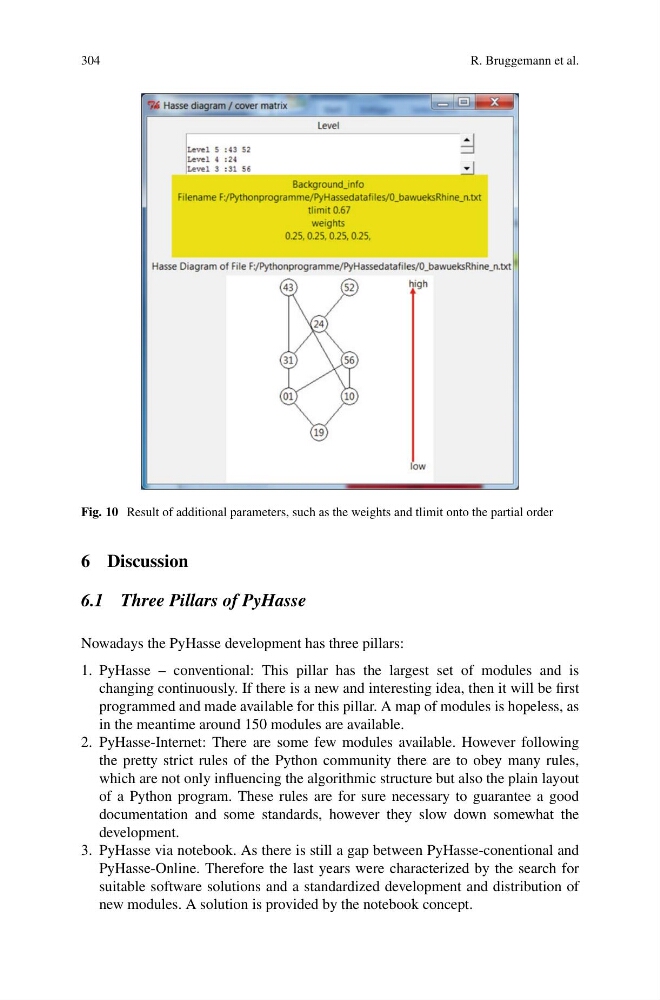
Fig. 10 Result of additional parameters, such as the weights and tlimit onto the partial order
6 Discussion
6.1 Three Pillars of PyHasse
Nowadays the PyHasse development has three pillars:
1. PyHasse – conventional: This pillar has the largest set of modules and is
changing continuously. If there is a new and interesting idea, then it will be first
programmed and made available for this pillar. A map of modules is hopeless, as
in the meantime around 150 modules are available.
2. PyHasse-Internet: There are some few modules available. However following
the pretty strict rules of the Python community there are to obey many rules,
which are not only influencing the algorithmic structure but also the plain layout
of a Python program. These rules are for sure necessary to guarantee a good
documentation and some standards, however they slow down somewhat the
development.
3. PyHasse via notebook. As there is still a gap between PyHasse-conentional and
PyHasse-Online. Therefore the last years were characterized by the search for
suitable software solutions and a standardized development and distribution of
new modules. A solution is provided by the notebook concept.
R. Bruggemann et al.
Fig. 10 Result of additional parameters, such as the weights and tlimit onto the partial order
6 Discussion
6.1 Three Pillars of PyHasse
Nowadays the PyHasse development has three pillars:
1. PyHasse – conventional: This pillar has the largest set of modules and is
changing continuously. If there is a new and interesting idea, then it will be first
programmed and made available for this pillar. A map of modules is hopeless, as
in the meantime around 150 modules are available.
2. PyHasse-Internet: There are some few modules available. However following
the pretty strict rules of the Python community there are to obey many rules,
which are not only influencing the algorithmic structure but also the plain layout
of a Python program. These rules are for sure necessary to guarantee a good
documentation and some standards, however they slow down somewhat the
development.
3. PyHasse via notebook. As there is still a gap between PyHasse-conentional and
PyHasse-Online. Therefore the last years were characterized by the search for
suitable software solutions and a standardized development and distribution of
new modules. A solution is provided by the notebook concept.