

Introduction into Sampling Theory, Applying Partial Order Concepts
145
Table 5 Units and all the their possible LEs
Set
X
Y
LE1
LE2
LE3
LE4
LE5
LE6
LE7
LE8
a
0
1
d
d
d
e
d
d
d
e
b
2
1
c
c
e
d
b
b
e
d
c
1
2
b
e
c
c
c
e
b
b
d
3
3
e
b
b
b
e
c
c
c
e
0
4
a
a
a
a
a
a
a
a
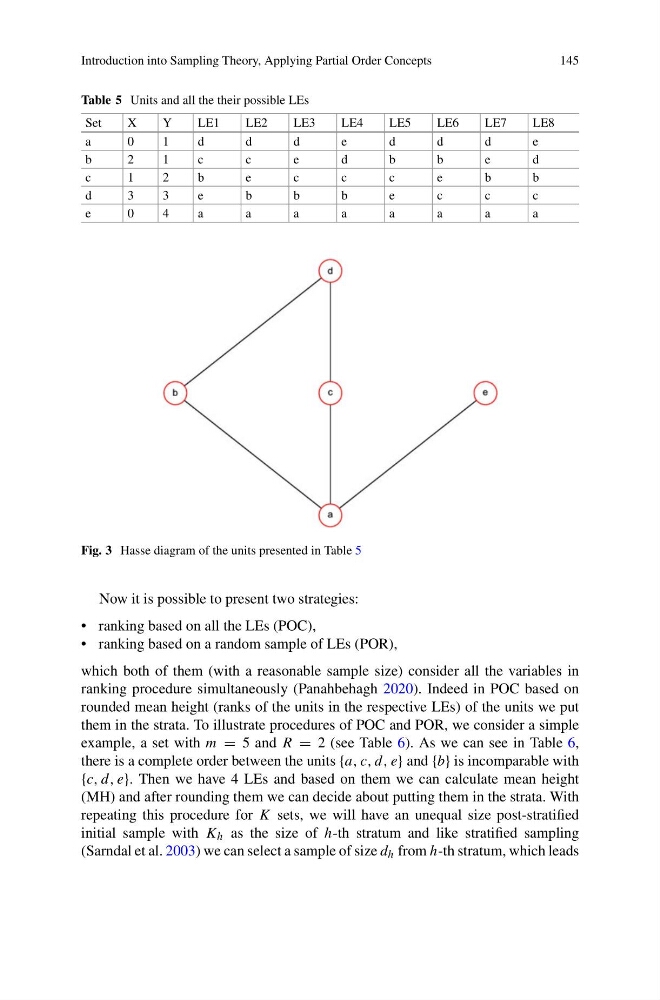
Fig. 3 Hasse diagram of the units presented in Table 5
Now it is possible to present two strategies:
• ranking based on all the LEs (POC),
• ranking based on a random sample of LEs (POR),
which both of them (with a reasonable sample size) consider all the variables in
ranking procedure simultaneously (Panahbehagh 2020). Indeed in POC based on
rounded mean height (ranks of the units in the respective LEs) of the units we put
them in the strata. To illustrate procedures of POC and POR, we consider a simple
example, a set with m = 5 and R = 2 (see Table 6). As we can see in Table 6,
there is a complete order between the units {a, c, d, e} and {b} is incomparable with
{c, d, e}. Then we have 4 LEs and based on them we can calculate mean height
(MH) and after rounding them we can decide about putting them in the strata. With
repeating this procedure for K sets, we will have an unequal size post-stratified
initial sample with K h as the size of h-th stratum and like stratified sampling
(Sarndal et al. 2003) we can select a sample of size d h from h-th stratum, which leads
145
Table 5 Units and all the their possible LEs
Set
X
Y
LE1
LE2
LE3
LE4
LE5
LE6
LE7
LE8
a
0
1
d
d
d
e
d
d
d
e
b
2
1
c
c
e
d
b
b
e
d
c
1
2
b
e
c
c
c
e
b
b
d
3
3
e
b
b
b
e
c
c
c
e
0
4
a
a
a
a
a
a
a
a
Fig. 3 Hasse diagram of the units presented in Table 5
Now it is possible to present two strategies:
• ranking based on all the LEs (POC),
• ranking based on a random sample of LEs (POR),
which both of them (with a reasonable sample size) consider all the variables in
ranking procedure simultaneously (Panahbehagh 2020). Indeed in POC based on
rounded mean height (ranks of the units in the respective LEs) of the units we put
them in the strata. To illustrate procedures of POC and POR, we consider a simple
example, a set with m = 5 and R = 2 (see Table 6). As we can see in Table 6,
there is a complete order between the units {a, c, d, e} and {b} is incomparable with
{c, d, e}. Then we have 4 LEs and based on them we can calculate mean height
(MH) and after rounding them we can decide about putting them in the strata. With
repeating this procedure for K sets, we will have an unequal size post-stratified
initial sample with K h as the size of h-th stratum and like stratified sampling
(Sarndal et al. 2003) we can select a sample of size d h from h-th stratum, which leads