

4.4. THE FUNDAMENTAL THEOREM OF CALCULUS
251
y = v(t)
a
b
A 1
A 2
A 3
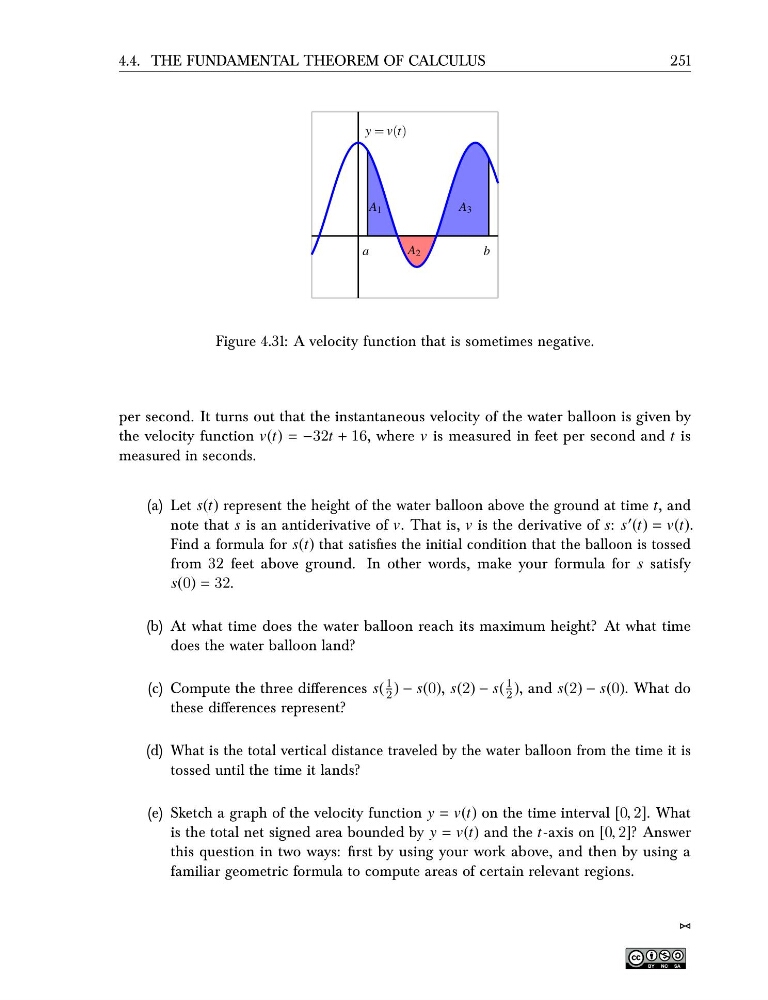
Figure 4.31: A velocity function that is sometimes negative.
per second. It turns out that the instantaneous velocity of the water balloon is given by
the velocity function v(t) = −32t + 16, where v is measured in feet per second and t is
measured in seconds.
(a) Let s(t) represent the height of the water balloon above the ground at time t, and
note that s is an antiderivative of v. That is, v is the derivative of s: s ′ (t) = v(t).
Find a formula for s(t) that satisfies the initial condition that the balloon is tossed
from 32 feet above ground. In other words, make your formula for s satisfy
s(0) = 32.
(b) At what time does the water balloon reach its maximum height? At what time
does the water balloon land?
(c) Compute the three differences s(
1
2 ) − s(0), s(2) − s(
1
2 ), and s(2) − s(0). What do
these differences represent?
(d) What is the total vertical distance traveled by the water balloon from the time it is
tossed until the time it lands?
(e) Sketch a graph of the velocity function y = v(t) on the time interval [0, 2]. What
is the total net signed area bounded by y = v(t) and the t-axis on [0, 2]? Answer
this question in two ways: first by using your work above, and then by using a
familiar geometric formula to compute areas of certain relevant regions.
⊲⊳
251
y = v(t)
a
b
A 1
A 2
A 3
Figure 4.31: A velocity function that is sometimes negative.
per second. It turns out that the instantaneous velocity of the water balloon is given by
the velocity function v(t) = −32t + 16, where v is measured in feet per second and t is
measured in seconds.
(a) Let s(t) represent the height of the water balloon above the ground at time t, and
note that s is an antiderivative of v. That is, v is the derivative of s: s ′ (t) = v(t).
Find a formula for s(t) that satisfies the initial condition that the balloon is tossed
from 32 feet above ground. In other words, make your formula for s satisfy
s(0) = 32.
(b) At what time does the water balloon reach its maximum height? At what time
does the water balloon land?
(c) Compute the three differences s(
1
2 ) − s(0), s(2) − s(
1
2 ), and s(2) − s(0). What do
these differences represent?
(d) What is the total vertical distance traveled by the water balloon from the time it is
tossed until the time it lands?
(e) Sketch a graph of the velocity function y = v(t) on the time interval [0, 2]. What
is the total net signed area bounded by y = v(t) and the t-axis on [0, 2]? Answer
this question in two ways: first by using your work above, and then by using a
familiar geometric formula to compute areas of certain relevant regions.
⊲⊳