

2.7. DERIVATIVES OF FUNCTIONS GIVEN IMPLICITLY
147
1
2
3
-1
1
2
x
y
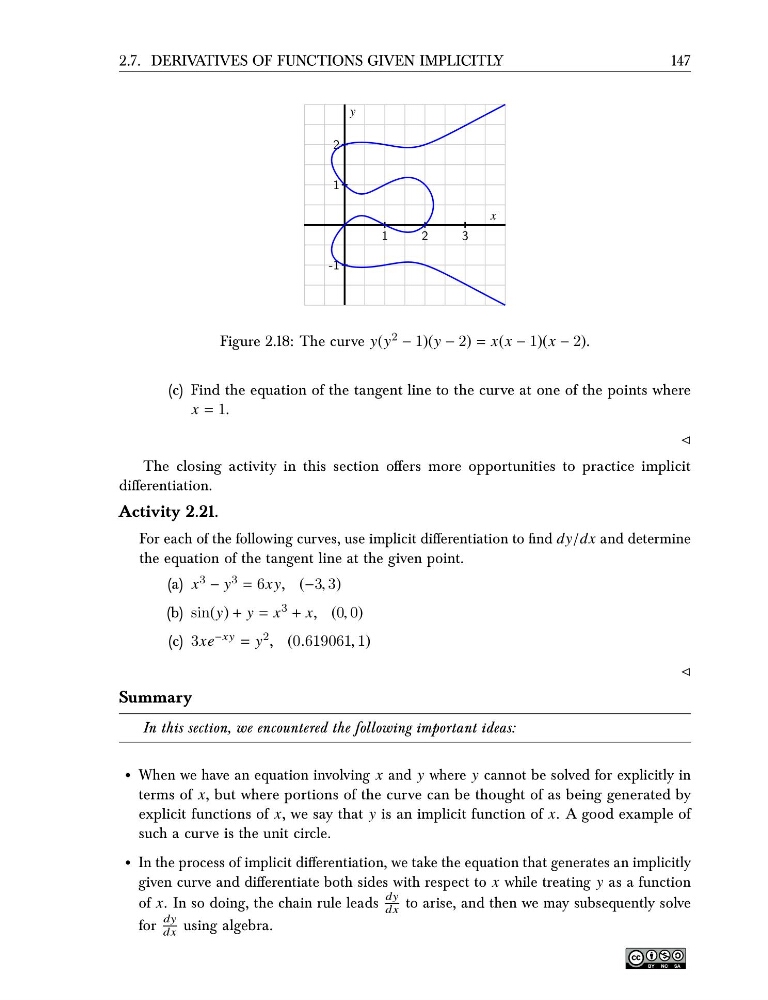
Figure 2.18: The curve y(y 2 − 1)(y − 2) = x(x − 1)(x − 2).
(c) Find the equation of the tangent line to the curve at one of the points where
x = 1.
⊳
The closing activity in this section offers more opportunities to practice implicit
differentiation.
Activity 2.21.
For each of the following curves, use implicit differentiation to find dy/dx and determine
the equation of the tangent line at the given point.
(a) x 3 − y 3 = 6xy, (−3, 3)
(b) sin(y) + y = x 3 + x, (0, 0)
(c) 3xe −xy = y 2 , (0.619061, 1)
⊳
Summary
In this section, we encountered the following important ideas:
• When we have an equation involving x and y where y cannot be solved for explicitly in
terms of x, but where portions of the curve can be thought of as being generated by
explicit functions of x, we say that y is an implicit function of x. A good example of
such a curve is the unit circle.
• In the process of implicit differentiation, we take the equation that generates an implicitly
given curve and differentiate both sides with respect to x while treating y as a function
of x. In so doing, the chain rule leads
dy
dx to arise, and then we may subsequently solve
for
dy
dx using algebra.
147
1
2
3
-1
1
2
x
y
Figure 2.18: The curve y(y 2 − 1)(y − 2) = x(x − 1)(x − 2).
(c) Find the equation of the tangent line to the curve at one of the points where
x = 1.
⊳
The closing activity in this section offers more opportunities to practice implicit
differentiation.
Activity 2.21.
For each of the following curves, use implicit differentiation to find dy/dx and determine
the equation of the tangent line at the given point.
(a) x 3 − y 3 = 6xy, (−3, 3)
(b) sin(y) + y = x 3 + x, (0, 0)
(c) 3xe −xy = y 2 , (0.619061, 1)
⊳
Summary
In this section, we encountered the following important ideas:
• When we have an equation involving x and y where y cannot be solved for explicitly in
terms of x, but where portions of the curve can be thought of as being generated by
explicit functions of x, we say that y is an implicit function of x. A good example of
such a curve is the unit circle.
• In the process of implicit differentiation, we take the equation that generates an implicitly
given curve and differentiate both sides with respect to x while treating y as a function
of x. In so doing, the chain rule leads
dy
dx to arise, and then we may subsequently solve
for
dy
dx using algebra.