

These basec omponents are reacted with epichlorohydrin to form resins
of varying viscosity and molecular weight. The subsequent molecular
orientation is predicated on the hardener systemse mployedt oe ffect the
cure or solidification of the resin. The hardening systems selected willdictate
the followingproperties of the cureds ystem:
1. Chemical and thermal resistance
2. Physical properties
3. Moisture tolerance
4. Workability
5. Safety during use
Of the three systems enumerated, the bisphenol Ae poxy has been the
most popular followed by the bisphenol F, sometimes referred to as an epoxy
Novolac resin. The epoxy phenol Novolac is ah igher viscosity resin that
requires varioust ypes of diluents or resin blends for formulating mortars,
grouts, ands omem onolithic surfacings. The bisphenol Ar esin uses the
following types of hardeners:
1. Aliphatic amines
2. Modified aliphatic amines
3. Aromatic amines
4. Others
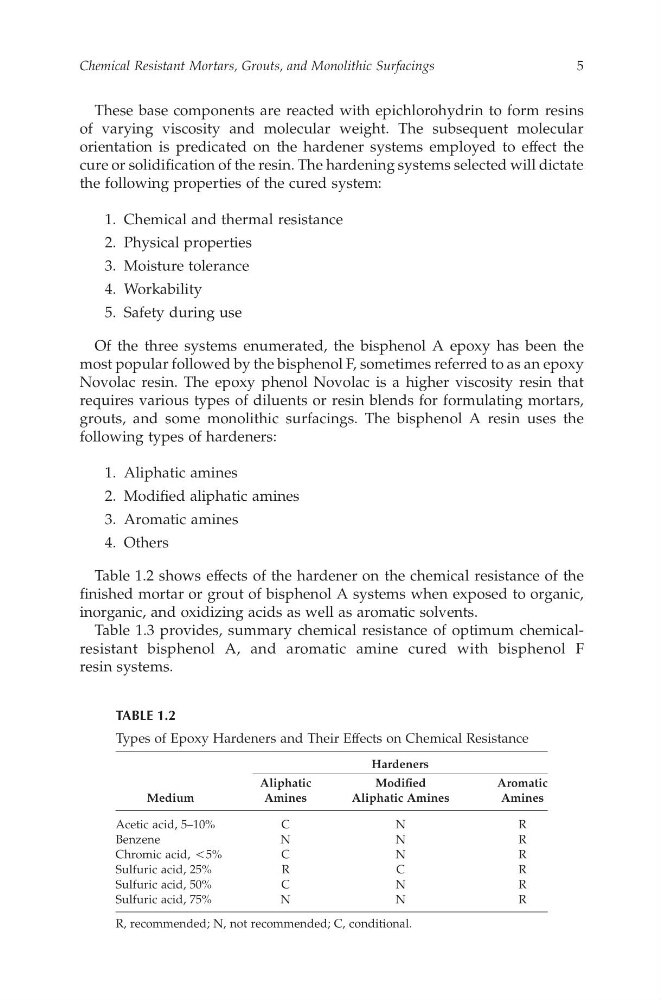
Table 1.2 shows effects of the hardener on the chemical resistance of the
finished mortaro rg rout of bisphenol As ystems when exposed to organic,
inorganic, and oxidizinga cids as wella sa romatic solvents.
Table 1.3 provides, summary chemical resistance of optimum chemicalresistantb isphenol A, anda romatica mine curedw ithb isphenol F
resin systems.
TABLE 1.2
Types of Epoxy Hardeners and Their Effects on Chemical Resistance
Hardeners
Medium
Aliphatic
Amines
Modified
Aliphatic Amines
Aromatic
Amines
Acetic acid, 5–10%
CN
R
Benzene
NN
R
Chromic acid, ! 5%
CN
R
Sulfuric acid, 25%
RC
R
Sulfuric acid, 50%
CN
R
Sulfuric acid, 75%
NN
R
R, recommended; N, not recommended; C, conditional.
Chemical Resistant Mortars, Grouts, and Monolithic Surfacings
5
CAT8247—CHAPTER 1—6/10/2006—11:58—SRIDHAR—XML MODEL B–pp. 1–42
of varying viscosity and molecular weight. The subsequent molecular
orientation is predicated on the hardener systemse mployedt oe ffect the
cure or solidification of the resin. The hardening systems selected willdictate
the followingproperties of the cureds ystem:
1. Chemical and thermal resistance
2. Physical properties
3. Moisture tolerance
4. Workability
5. Safety during use
Of the three systems enumerated, the bisphenol Ae poxy has been the
most popular followed by the bisphenol F, sometimes referred to as an epoxy
Novolac resin. The epoxy phenol Novolac is ah igher viscosity resin that
requires varioust ypes of diluents or resin blends for formulating mortars,
grouts, ands omem onolithic surfacings. The bisphenol Ar esin uses the
following types of hardeners:
1. Aliphatic amines
2. Modified aliphatic amines
3. Aromatic amines
4. Others
Table 1.2 shows effects of the hardener on the chemical resistance of the
finished mortaro rg rout of bisphenol As ystems when exposed to organic,
inorganic, and oxidizinga cids as wella sa romatic solvents.
Table 1.3 provides, summary chemical resistance of optimum chemicalresistantb isphenol A, anda romatica mine curedw ithb isphenol F
resin systems.
TABLE 1.2
Types of Epoxy Hardeners and Their Effects on Chemical Resistance
Hardeners
Medium
Aliphatic
Amines
Modified
Aliphatic Amines
Aromatic
Amines
Acetic acid, 5–10%
CN
R
Benzene
NN
R
Chromic acid, ! 5%
CN
R
Sulfuric acid, 25%
RC
R
Sulfuric acid, 50%
CN
R
Sulfuric acid, 75%
NN
R
R, recommended; N, not recommended; C, conditional.
Chemical Resistant Mortars, Grouts, and Monolithic Surfacings
5
CAT8247—CHAPTER 1—6/10/2006—11:58—SRIDHAR—XML MODEL B–pp. 1–42