

The maximum allowable operating temperature is 5728 F( 3008 C). These
resins are available for operation at cryogenic temperatures.
As econd high-temperature formulation with aluminumcan be operated
up to 12008 F(6498 C). This high-temperature type requires baking for agood
cure. It is also water repellent.
The silicone resins can be used in contactw ith dilute acidsa nd alkalies,
alcohols, animal and vegetable oils, and lubrication oils.T heya re also
resistant to aliphatic hydrocarbons, but aromatic solventss uch as benzene,
toluene, gasoline, and chlorinated solvents willc ause excessive swelling.
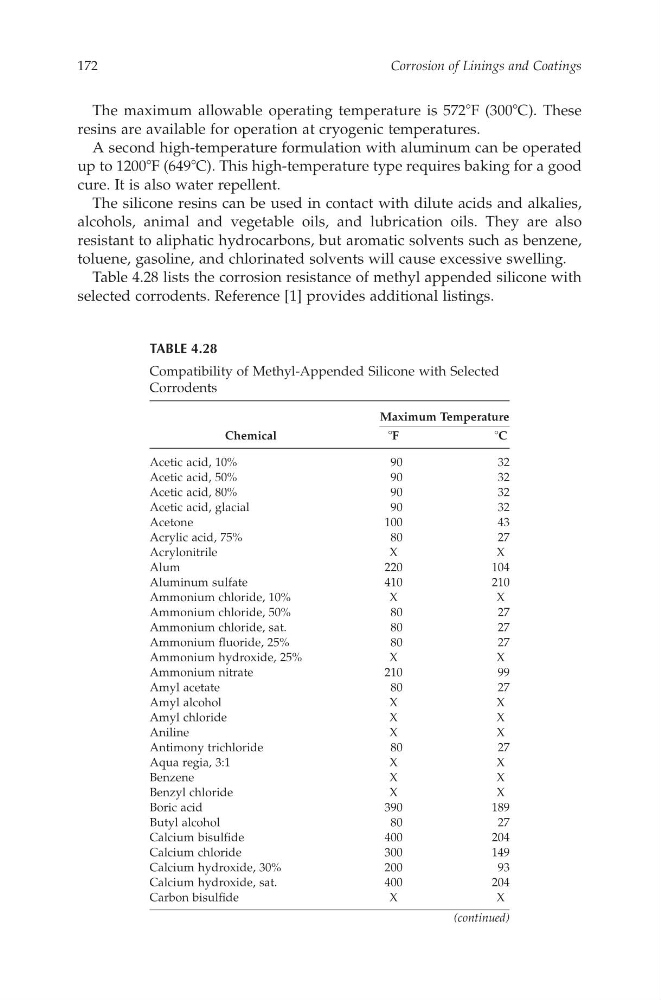
Table 4.28 lists the corrosion resistance of methyl appended silicone with
selected corrodents. Reference [1] provides additional listings.
TABLE 4.28
Compatibility of Methyl-Appended Silicone with Selected
Corrodents
Maximum Te mperature
Chemical
8 F
8 C
Acetic acid, 10%
90
32
Acetic acid, 50%
90
32
Acetic acid, 80%
90
32
Acetic acid, glacial
90
32
Acetone
100
43
Acrylic acid, 75%
80
27
Acrylonitrile
XX
Alum
220
104
Aluminums ulfate
410
210
Ammonium chloride, 10%
XX
Ammonium chloride, 50%
80
27
Ammonium chloride, sat.
80
27
Ammonium fluoride, 25%
80
27
Ammonium hydroxide, 25%
XX
Ammonium nitrate
210
99
Amyl acetate
80
27
Amyl alcohol
XX
Amyl chloride
XX
Aniline
XX
Antimony trichloride8 02 7
Aqua regia, 3:1
XX
Benzene
XX
Benzyl chloride
XX
Boric acid
390
189
Butyl alcohol
80
27
Calcium bisulfide
400
204
Calcium chloride
300
149
Calcium hydroxide, 30%
200
93
Calcium hydroxide, sat.
400
204
Carbon bisulfide
XX
(continued)
Corrosion of Linings and Coatings
172
CAT8247—CHAPTER 4—17/10/2006—14:36—SRIDHAR—XML MODEL B–pp. 69–174
resins are available for operation at cryogenic temperatures.
As econd high-temperature formulation with aluminumcan be operated
up to 12008 F(6498 C). This high-temperature type requires baking for agood
cure. It is also water repellent.
The silicone resins can be used in contactw ith dilute acidsa nd alkalies,
alcohols, animal and vegetable oils, and lubrication oils.T heya re also
resistant to aliphatic hydrocarbons, but aromatic solventss uch as benzene,
toluene, gasoline, and chlorinated solvents willc ause excessive swelling.
Table 4.28 lists the corrosion resistance of methyl appended silicone with
selected corrodents. Reference [1] provides additional listings.
TABLE 4.28
Compatibility of Methyl-Appended Silicone with Selected
Corrodents
Maximum Te mperature
Chemical
8 F
8 C
Acetic acid, 10%
90
32
Acetic acid, 50%
90
32
Acetic acid, 80%
90
32
Acetic acid, glacial
90
32
Acetone
100
43
Acrylic acid, 75%
80
27
Acrylonitrile
XX
Alum
220
104
Aluminums ulfate
410
210
Ammonium chloride, 10%
XX
Ammonium chloride, 50%
80
27
Ammonium chloride, sat.
80
27
Ammonium fluoride, 25%
80
27
Ammonium hydroxide, 25%
XX
Ammonium nitrate
210
99
Amyl acetate
80
27
Amyl alcohol
XX
Amyl chloride
XX
Aniline
XX
Antimony trichloride8 02 7
Aqua regia, 3:1
XX
Benzene
XX
Benzyl chloride
XX
Boric acid
390
189
Butyl alcohol
80
27
Calcium bisulfide
400
204
Calcium chloride
300
149
Calcium hydroxide, 30%
200
93
Calcium hydroxide, sat.
400
204
Carbon bisulfide
XX
(continued)
Corrosion of Linings and Coatings
172
CAT8247—CHAPTER 4—17/10/2006—14:36—SRIDHAR—XML MODEL B–pp. 69–174