

23
The same reactants can produce different products under different conditions.
Factors that influence the rate of a chemical reaction include the concentration and
temperature of reactants, the solvent, their dispersion as well as physical state of
reactants, and the presence of a catalyst.
Dilute sulfuric acid and ethanol are converted to diethyl ether at a temperature of
around 100 °C whereas at 180 °C, ethylene is formed as the major product. The
reaction rates normally increase as the concentration of the reactants enhances.
The phase and surface area play major role in a chemical reaction. The reaction
rate in a single homogeneous solution depends on concentration and temperature. If
the reaction is heterogeneous, rate of reaction depends on the surface area of the
more condensed phase.
Consider a reaction with the general equation:
a
b
c
d
A B
C D
+
→ +
The rate of reaction can be expressed as
Rate of reaction
A B
= [ ] [ ]
k
m
n
Where k is rate constant; m and n are reaction order to be derived from experimental
measurement.
The overall order of reaction is the sum of all the exponents (i.e., m + n).
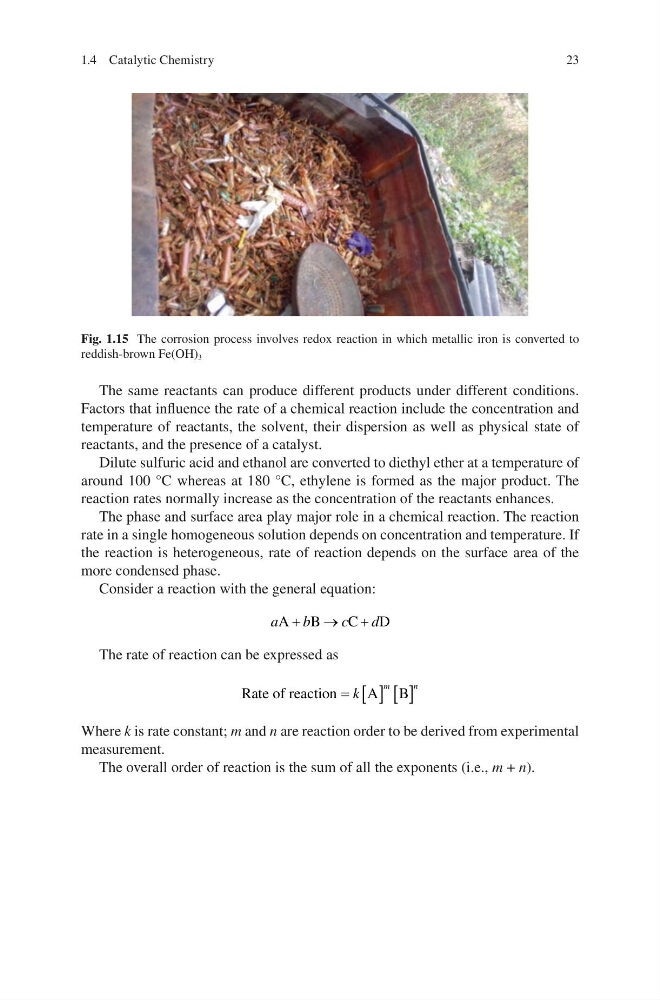
Fig. 1.15 The corrosion process involves redox reaction in which metallic iron is converted to
reddish-brown Fe(OH) 3
1.4 Catalytic Chemistry
The same reactants can produce different products under different conditions.
Factors that influence the rate of a chemical reaction include the concentration and
temperature of reactants, the solvent, their dispersion as well as physical state of
reactants, and the presence of a catalyst.
Dilute sulfuric acid and ethanol are converted to diethyl ether at a temperature of
around 100 °C whereas at 180 °C, ethylene is formed as the major product. The
reaction rates normally increase as the concentration of the reactants enhances.
The phase and surface area play major role in a chemical reaction. The reaction
rate in a single homogeneous solution depends on concentration and temperature. If
the reaction is heterogeneous, rate of reaction depends on the surface area of the
more condensed phase.
Consider a reaction with the general equation:
a
b
c
d
A B
C D
+
→ +
The rate of reaction can be expressed as
Rate of reaction
A B
= [ ] [ ]
k
m
n
Where k is rate constant; m and n are reaction order to be derived from experimental
measurement.
The overall order of reaction is the sum of all the exponents (i.e., m + n).
Fig. 1.15 The corrosion process involves redox reaction in which metallic iron is converted to
reddish-brown Fe(OH) 3
1.4 Catalytic Chemistry