

271
Occupational skin diseases arrive depending on the occupation, work condition
and the victim. The victim can be worker, client, or simply a passer-by.
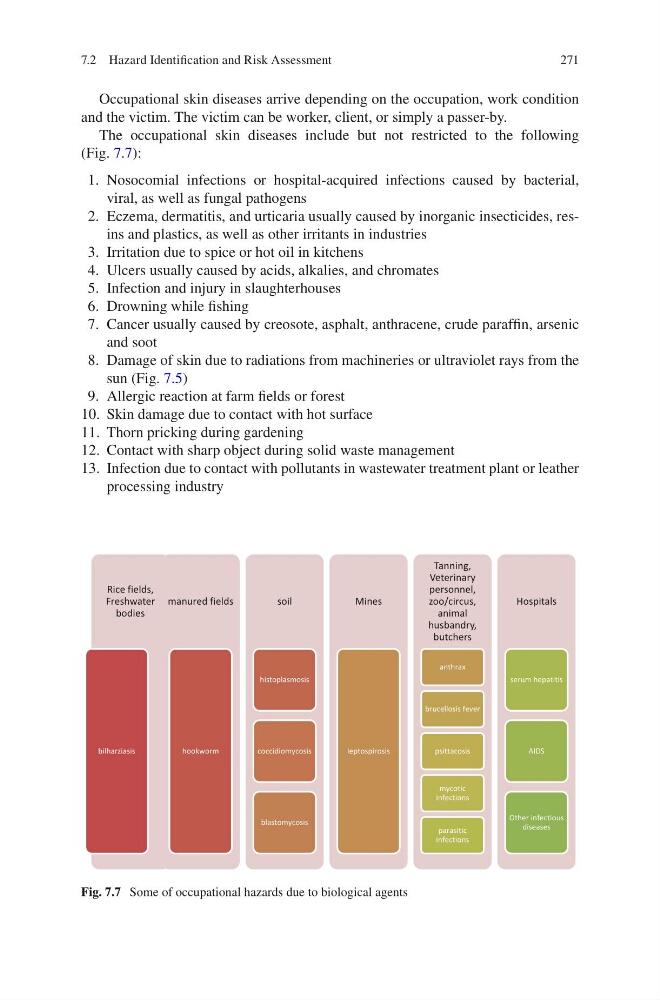
The occupational skin diseases include but not restricted to the following
(Fig. 7.7):
1. Nosocomial infections or hospital-acquired infections caused by bacterial,
viral, as well as fungal pathogens
2. Eczema, dermatitis, and urticaria usually caused by inorganic insecticides, resins and plastics, as well as other irritants in industries
3. Irritation due to spice or hot oil in kitchens
4. Ulcers usually caused by acids, alkalies, and chromates
5. Infection and injury in slaughterhouses
6. Drowning while fishing
7. Cancer usually caused by creosote, asphalt, anthracene, crude paraffin, arsenic
and soot
8. Damage of skin due to radiations from machineries or ultraviolet rays from the
sun (Fig. 7.5)
9. Allergic reaction at farm fields or forest
10. Skin damage due to contact with hot surface
11. Thorn pricking during gardening
12. Contact with sharp object during solid waste management
13. Infection due to contact with pollutants in wastewater treatment plant or leather
processing industry
Rice fields,
Freshwater
bodies
bilharziasis
manured fields
hookworm
soil
histoplasmosis
coccidiomycosis
blastomycosis
Mines
leptospirosis
Tanning,
Veterinary
personnel,
zoo/circus,
animal
husbandry,
butchers
anthrax
brucellosis fever
psittacosis
mycotic
infections
parasitic
infections
Hospitals
serum hepatitis
AIDS
Other infectious
diseases
Fig. 7.7 Some of occupational hazards due to biological agents
7.2 Hazard Identification and Risk Assessment
Occupational skin diseases arrive depending on the occupation, work condition
and the victim. The victim can be worker, client, or simply a passer-by.
The occupational skin diseases include but not restricted to the following
(Fig. 7.7):
1. Nosocomial infections or hospital-acquired infections caused by bacterial,
viral, as well as fungal pathogens
2. Eczema, dermatitis, and urticaria usually caused by inorganic insecticides, resins and plastics, as well as other irritants in industries
3. Irritation due to spice or hot oil in kitchens
4. Ulcers usually caused by acids, alkalies, and chromates
5. Infection and injury in slaughterhouses
6. Drowning while fishing
7. Cancer usually caused by creosote, asphalt, anthracene, crude paraffin, arsenic
and soot
8. Damage of skin due to radiations from machineries or ultraviolet rays from the
sun (Fig. 7.5)
9. Allergic reaction at farm fields or forest
10. Skin damage due to contact with hot surface
11. Thorn pricking during gardening
12. Contact with sharp object during solid waste management
13. Infection due to contact with pollutants in wastewater treatment plant or leather
processing industry
Rice fields,
Freshwater
bodies
bilharziasis
manured fields
hookworm
soil
histoplasmosis
coccidiomycosis
blastomycosis
Mines
leptospirosis
Tanning,
Veterinary
personnel,
zoo/circus,
animal
husbandry,
butchers
anthrax
brucellosis fever
psittacosis
mycotic
infections
parasitic
infections
Hospitals
serum hepatitis
AIDS
Other infectious
diseases
Fig. 7.7 Some of occupational hazards due to biological agents
7.2 Hazard Identification and Risk Assessment