

182
• Toxins
• Physical agents
– Electromagnetic fields
– Heat
– Radiation
– Force
• Medically induced
– Medicine
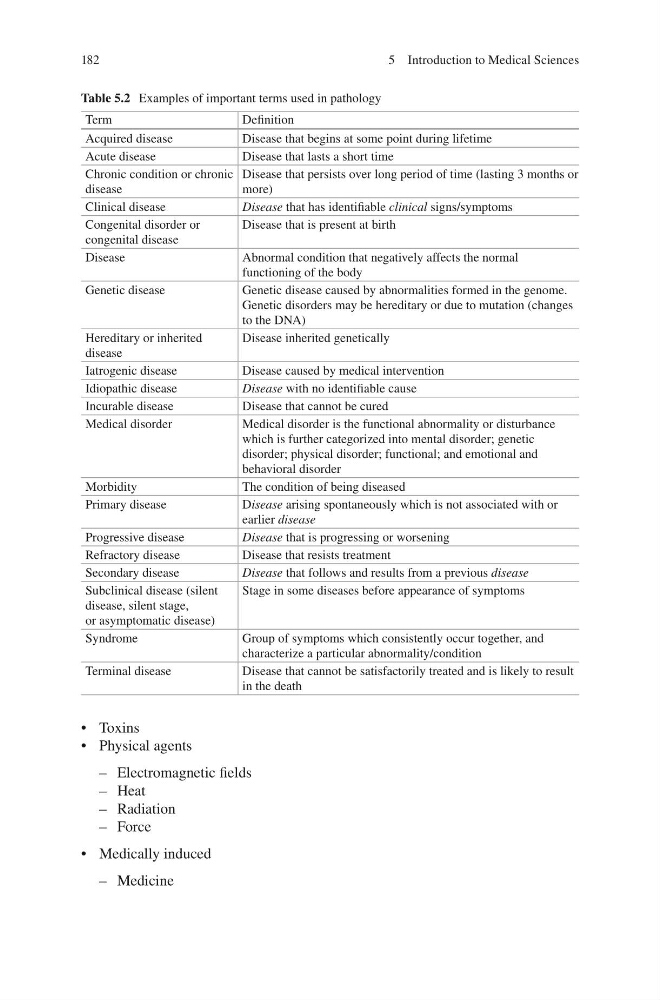
Table 5.2 Examples of important terms used in pathology
Term
Definition
Acquired disease
Disease that begins at some point during lifetime
Acute disease
Disease that lasts a short time
Chronic condition or chronic
disease
Disease that persists over long period of time (lasting 3 months or
more)
Clinical disease
Disease that has identifiable clinical signs/symptoms
Congenital disorder or
congenital disease
Disease that is present at birth
Disease
Abnormal condition that negatively affects the normal
functioning of the body
Genetic disease
Genetic disease caused by abnormalities formed in the genome.
Genetic disorders may be hereditary or due to mutation (changes
to the DNA)
Hereditary or inherited
disease
Disease inherited genetically
Iatrogenic disease
Disease caused by medical intervention
Idiopathic disease
Disease with no identifiable cause
Incurable disease
Disease that cannot be cured
Medical disorder
Medical disorder is the functional abnormality or disturbance
which is further categorized into mental disorder; genetic
disorder; physical disorder; functional; and emotional and
behavioral disorder
Morbidity
The condition of being diseased
Primary disease
Disease arising spontaneously which is not associated with or
earlier disease
Progressive disease
Disease that is progressing or worsening
Refractory disease
Disease that resists treatment
Secondary disease
Disease that follows and results from a previous disease
Subclinical disease (silent
disease, silent stage,
or asymptomatic disease)
Stage in some diseases before appearance of symptoms
Syndrome
Group of symptoms which consistently occur together, and
characterize a particular abnormality/condition
Terminal disease
Disease that cannot be satisfactorily treated and is likely to result
in the death
5 Introduction to Medical Sciences
• Toxins
• Physical agents
– Electromagnetic fields
– Heat
– Radiation
– Force
• Medically induced
– Medicine
Table 5.2 Examples of important terms used in pathology
Term
Definition
Acquired disease
Disease that begins at some point during lifetime
Acute disease
Disease that lasts a short time
Chronic condition or chronic
disease
Disease that persists over long period of time (lasting 3 months or
more)
Clinical disease
Disease that has identifiable clinical signs/symptoms
Congenital disorder or
congenital disease
Disease that is present at birth
Disease
Abnormal condition that negatively affects the normal
functioning of the body
Genetic disease
Genetic disease caused by abnormalities formed in the genome.
Genetic disorders may be hereditary or due to mutation (changes
to the DNA)
Hereditary or inherited
disease
Disease inherited genetically
Iatrogenic disease
Disease caused by medical intervention
Idiopathic disease
Disease with no identifiable cause
Incurable disease
Disease that cannot be cured
Medical disorder
Medical disorder is the functional abnormality or disturbance
which is further categorized into mental disorder; genetic
disorder; physical disorder; functional; and emotional and
behavioral disorder
Morbidity
The condition of being diseased
Primary disease
Disease arising spontaneously which is not associated with or
earlier disease
Progressive disease
Disease that is progressing or worsening
Refractory disease
Disease that resists treatment
Secondary disease
Disease that follows and results from a previous disease
Subclinical disease (silent
disease, silent stage,
or asymptomatic disease)
Stage in some diseases before appearance of symptoms
Syndrome
Group of symptoms which consistently occur together, and
characterize a particular abnormality/condition
Terminal disease
Disease that cannot be satisfactorily treated and is likely to result
in the death
5 Introduction to Medical Sciences