

159
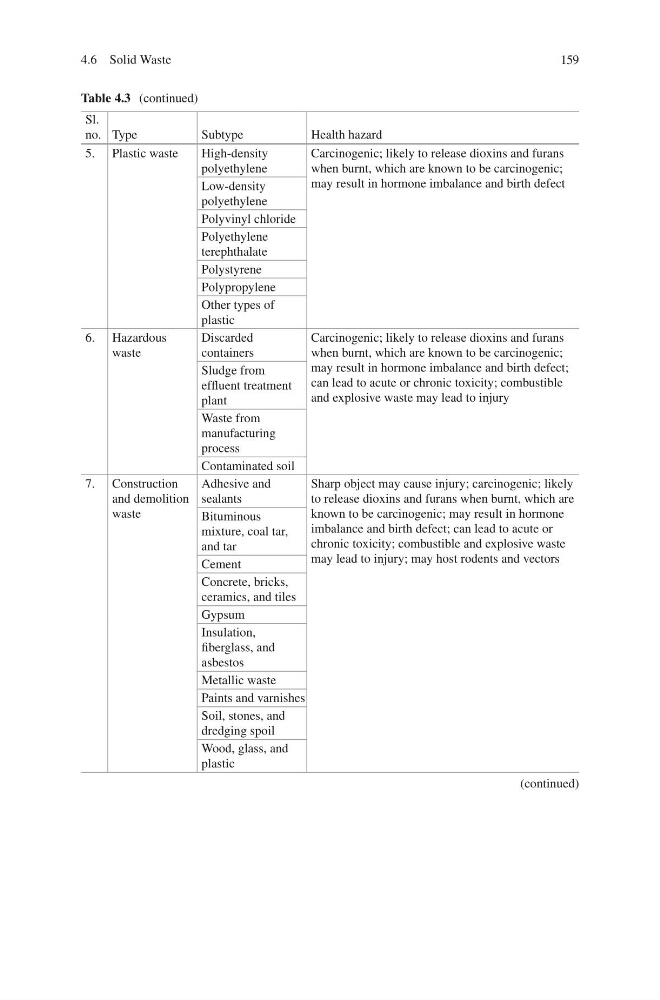
Table 4.3 (continued)
Sl.
no. Type
Subtype
Health hazard
5. Plastic waste
High-density
polyethylene
Carcinogenic; likely to release dioxins and furans
when burnt, which are known to be carcinogenic;
may result in hormone imbalance and birth defect
Low-density
polyethylene
Polyvinyl chloride
Polyethylene
terephthalate
Polystyrene
Polypropylene
Other types of
plastic
6. Hazardous
waste
Discarded
containers
Carcinogenic; likely to release dioxins and furans
when burnt, which are known to be carcinogenic;
may result in hormone imbalance and birth defect;
can lead to acute or chronic toxicity; combustible
and explosive waste may lead to injury
Sludge from
effluent treatment
plant
Waste from
manufacturing
process
Contaminated soil
7. Construction
and demolition
waste
Adhesive and
sealants
Sharp object may cause injury; carcinogenic; likely
to release dioxins and furans when burnt, which are
known to be carcinogenic; may result in hormone
imbalance and birth defect; can lead to acute or
chronic toxicity; combustible and explosive waste
may lead to injury; may host rodents and vectors
Bituminous
mixture, coal tar,
and tar
Cement
Concrete, bricks,
ceramics, and tiles
Gypsum
Insulation,
fiberglass, and
asbestos
Metallic waste
Paints and varnishes
Soil, stones, and
dredging spoil
Wood, glass, and
plastic
(continued)
4.6 Solid Waste
Table 4.3 (continued)
Sl.
no. Type
Subtype
Health hazard
5. Plastic waste
High-density
polyethylene
Carcinogenic; likely to release dioxins and furans
when burnt, which are known to be carcinogenic;
may result in hormone imbalance and birth defect
Low-density
polyethylene
Polyvinyl chloride
Polyethylene
terephthalate
Polystyrene
Polypropylene
Other types of
plastic
6. Hazardous
waste
Discarded
containers
Carcinogenic; likely to release dioxins and furans
when burnt, which are known to be carcinogenic;
may result in hormone imbalance and birth defect;
can lead to acute or chronic toxicity; combustible
and explosive waste may lead to injury
Sludge from
effluent treatment
plant
Waste from
manufacturing
process
Contaminated soil
7. Construction
and demolition
waste
Adhesive and
sealants
Sharp object may cause injury; carcinogenic; likely
to release dioxins and furans when burnt, which are
known to be carcinogenic; may result in hormone
imbalance and birth defect; can lead to acute or
chronic toxicity; combustible and explosive waste
may lead to injury; may host rodents and vectors
Bituminous
mixture, coal tar,
and tar
Cement
Concrete, bricks,
ceramics, and tiles
Gypsum
Insulation,
fiberglass, and
asbestos
Metallic waste
Paints and varnishes
Soil, stones, and
dredging spoil
Wood, glass, and
plastic
(continued)
4.6 Solid Waste