

118
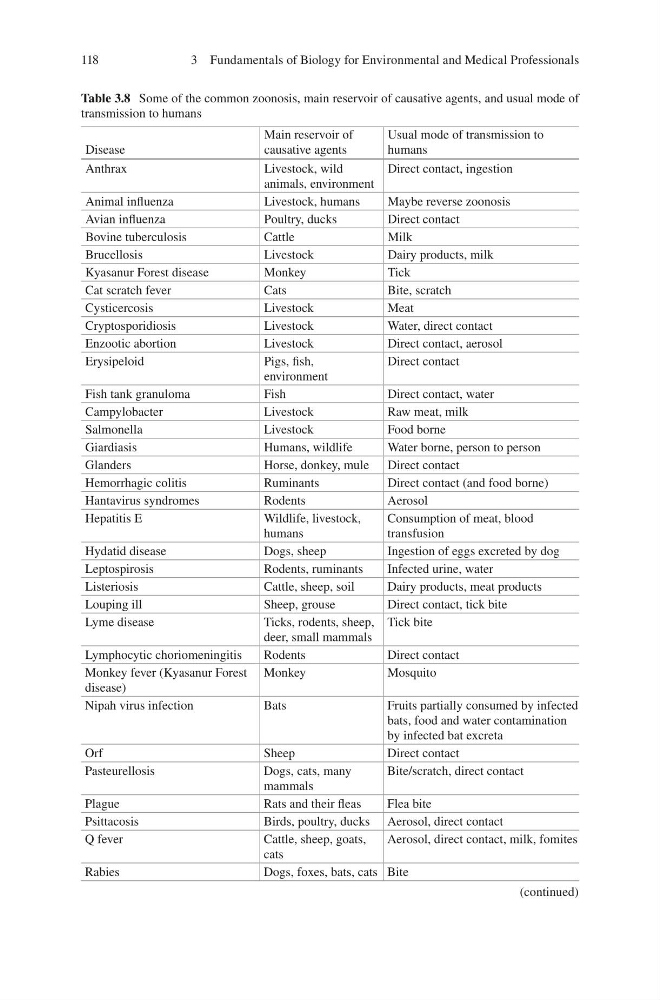
Table 3.8 Some of the common zoonosis, main reservoir of causative agents, and usual mode of
transmission to humans
Disease
Main reservoir of
causative agents
Usual mode of transmission to
humans
Anthrax
Livestock, wild
animals, environment
Direct contact, ingestion
Animal influenza
Livestock, humans
Maybe reverse zoonosis
Avian influenza
Poultry, ducks
Direct contact
Bovine tuberculosis
Cattle
Milk
Brucellosis
Livestock
Dairy products, milk
Kyasanur Forest disease
Monkey
Tick
Cat scratch fever
Cats
Bite, scratch
Cysticercosis
Livestock
Meat
Cryptosporidiosis
Livestock
Water, direct contact
Enzootic abortion
Livestock
Direct contact, aerosol
Erysipeloid
Pigs, fish,
environment
Direct contact
Fish tank granuloma
Fish
Direct contact, water
Campylobacter
Livestock
Raw meat, milk
Salmonella
Livestock
Food borne
Giardiasis
Humans, wildlife
Water borne, person to person
Glanders
Horse, donkey, mule Direct contact
Hemorrhagic colitis
Ruminants
Direct contact (and food borne)
Hantavirus syndromes
Rodents
Aerosol
Hepatitis E
Wildlife, livestock,
humans
Consumption of meat, blood
transfusion
Hydatid disease
Dogs, sheep
Ingestion of eggs excreted by dog
Leptospirosis
Rodents, ruminants
Infected urine, water
Listeriosis
Cattle, sheep, soil
Dairy products, meat products
Louping ill
Sheep, grouse
Direct contact, tick bite
Lyme disease
Ticks, rodents, sheep,
deer, small mammals
Tick bite
Lymphocytic choriomeningitis
Rodents
Direct contact
Monkey fever (Kyasanur Forest
disease)
Monkey
Mosquito
Nipah virus infection
Bats
Fruits partially consumed by infected
bats, food and water contamination
by infected bat excreta
Orf
Sheep
Direct contact
Pasteurellosis
Dogs, cats, many
mammals
Bite/scratch, direct contact
Plague
Rats and their fleas
Flea bite
Psittacosis
Birds, poultry, ducks Aerosol, direct contact
Q fever
Cattle, sheep, goats,
cats
Aerosol, direct contact, milk, fomites
Rabies
Dogs, foxes, bats, cats Bite
(continued)
3 Fundamentals of Biology for Environmental and Medical Professionals
Table 3.8 Some of the common zoonosis, main reservoir of causative agents, and usual mode of
transmission to humans
Disease
Main reservoir of
causative agents
Usual mode of transmission to
humans
Anthrax
Livestock, wild
animals, environment
Direct contact, ingestion
Animal influenza
Livestock, humans
Maybe reverse zoonosis
Avian influenza
Poultry, ducks
Direct contact
Bovine tuberculosis
Cattle
Milk
Brucellosis
Livestock
Dairy products, milk
Kyasanur Forest disease
Monkey
Tick
Cat scratch fever
Cats
Bite, scratch
Cysticercosis
Livestock
Meat
Cryptosporidiosis
Livestock
Water, direct contact
Enzootic abortion
Livestock
Direct contact, aerosol
Erysipeloid
Pigs, fish,
environment
Direct contact
Fish tank granuloma
Fish
Direct contact, water
Campylobacter
Livestock
Raw meat, milk
Salmonella
Livestock
Food borne
Giardiasis
Humans, wildlife
Water borne, person to person
Glanders
Horse, donkey, mule Direct contact
Hemorrhagic colitis
Ruminants
Direct contact (and food borne)
Hantavirus syndromes
Rodents
Aerosol
Hepatitis E
Wildlife, livestock,
humans
Consumption of meat, blood
transfusion
Hydatid disease
Dogs, sheep
Ingestion of eggs excreted by dog
Leptospirosis
Rodents, ruminants
Infected urine, water
Listeriosis
Cattle, sheep, soil
Dairy products, meat products
Louping ill
Sheep, grouse
Direct contact, tick bite
Lyme disease
Ticks, rodents, sheep,
deer, small mammals
Tick bite
Lymphocytic choriomeningitis
Rodents
Direct contact
Monkey fever (Kyasanur Forest
disease)
Monkey
Mosquito
Nipah virus infection
Bats
Fruits partially consumed by infected
bats, food and water contamination
by infected bat excreta
Orf
Sheep
Direct contact
Pasteurellosis
Dogs, cats, many
mammals
Bite/scratch, direct contact
Plague
Rats and their fleas
Flea bite
Psittacosis
Birds, poultry, ducks Aerosol, direct contact
Q fever
Cattle, sheep, goats,
cats
Aerosol, direct contact, milk, fomites
Rabies
Dogs, foxes, bats, cats Bite
(continued)
3 Fundamentals of Biology for Environmental and Medical Professionals