

109
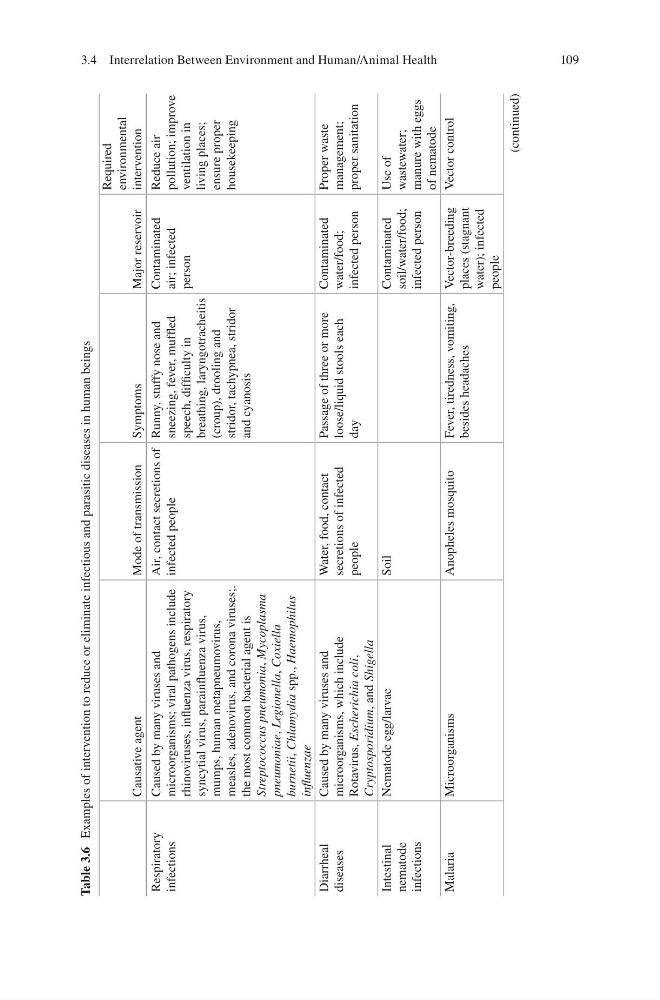
Table 3.6 Examples of intervention to reduce or eliminate infectious and parasitic diseases in human beings
Causative agent
Mode of transmission
Symptoms
Major reservoir
Required
environmental
intervention
Respiratory
infections
Caused by many viruses and
microorganisms; viral pathogens include
rhinoviruses, influenza virus, respiratory
syncytial virus, parainfluenza virus,
mumps, human metapneumovirus,
measles, adenovirus, and corona viruses;.
the most common bacterial agent is
Streptococcus pneumonia, Mycoplasma
pneumoniae, Legionella, Coxiella
burnetii, Chlamydia
spp., Haemophilus
influenzae
Air, contact secretions of
infected people
Runny, stuffy nose and
sneezing, fever, muffled
speech, difficulty in
breathing, laryngotracheitis
(croup), drooling and
stridor, tachypnea, stridor
and cyanosis
Contaminated
air; infected
person
Reduce air
pollution; improve
ventilation in
living places;
ensure proper
housekeeping
Diarrheal
diseases
Caused by many viruses and
microorganisms, which include
Rotavirus, Escherichia coli,
Cryptosporidium,
and Shigella
Water, food, contact
secretions of infected
people
Passage of three or more
loose/liquid stools each
day
Contaminated
water/food;
infected person
Proper waste
management;
proper sanitation
Intestinal
nematode
infections
Nematode egg/larvae
Soil
Contaminated
soil/water/food;
infected person
Use of
wastewater;
manure with eggs
of nematode
Malaria
Microorganisms
Anopheles mosquito
Fever, tiredness, vomiting,
besides headaches
Vector-breeding
places (stagnant
water); infected
people
Vector control
(continued)
3.4 Interrelation Between Environment and Human/Animal Health
Table 3.6 Examples of intervention to reduce or eliminate infectious and parasitic diseases in human beings
Causative agent
Mode of transmission
Symptoms
Major reservoir
Required
environmental
intervention
Respiratory
infections
Caused by many viruses and
microorganisms; viral pathogens include
rhinoviruses, influenza virus, respiratory
syncytial virus, parainfluenza virus,
mumps, human metapneumovirus,
measles, adenovirus, and corona viruses;.
the most common bacterial agent is
Streptococcus pneumonia, Mycoplasma
pneumoniae, Legionella, Coxiella
burnetii, Chlamydia
spp., Haemophilus
influenzae
Air, contact secretions of
infected people
Runny, stuffy nose and
sneezing, fever, muffled
speech, difficulty in
breathing, laryngotracheitis
(croup), drooling and
stridor, tachypnea, stridor
and cyanosis
Contaminated
air; infected
person
Reduce air
pollution; improve
ventilation in
living places;
ensure proper
housekeeping
Diarrheal
diseases
Caused by many viruses and
microorganisms, which include
Rotavirus, Escherichia coli,
Cryptosporidium,
and Shigella
Water, food, contact
secretions of infected
people
Passage of three or more
loose/liquid stools each
day
Contaminated
water/food;
infected person
Proper waste
management;
proper sanitation
Intestinal
nematode
infections
Nematode egg/larvae
Soil
Contaminated
soil/water/food;
infected person
Use of
wastewater;
manure with eggs
of nematode
Malaria
Microorganisms
Anopheles mosquito
Fever, tiredness, vomiting,
besides headaches
Vector-breeding
places (stagnant
water); infected
people
Vector control
(continued)
3.4 Interrelation Between Environment and Human/Animal Health