

105
Protozoa
Protozoa are single-celled organisms that reproduce by binary fission. Protozoa
ingest solid organics for food. Since protozoa are larger than bacteria by one to two
orders of magnitude, the protozoa diet includes bacteria and colloidal organics.
Most of protozoa are strict aerobes (organism able to live only in the presence of
free oxygen). Like heterotrophic bacteria, they obtain both energy and material for
growth and reproduction from the same organic food source.
Algae
Algae are autotrophic (organism capable of make its own food from inorganic nutrients using light [photosynthesis] or chemical energy [chemosynthesis]), photosynthetic organism.
A portal of entry is the place through which microorganisms get into susceptible
host such as the respiratory tract, the skin, the gastrointestinal tracts, and mucous
membranes. A portal of exit is the place from where microorganisms leave the host.
Virus
Viruses are small intracellular parasites that contain ribonucleic acid (RNA) or
DNA genome bounded by a protein coating. They replicate only inside the living
cells of organism. They are characterized by a long co-evolution of virus as well as
host. Propagation of viruses depends on host cells supplying the complex metabolic
as well as biosynthetic machinery of cells (Gelderblom 1996). Viruses spread disease by cell lysis or disruption of healthy homeostasis. Cell lysis is the breaking
open that leads to death of the cell. In multicellular organism, death of many cells
affects the whole organism. Disruption of homeostasis (the state of steady internal
conditions conserved by living things) can affect health of individuals.
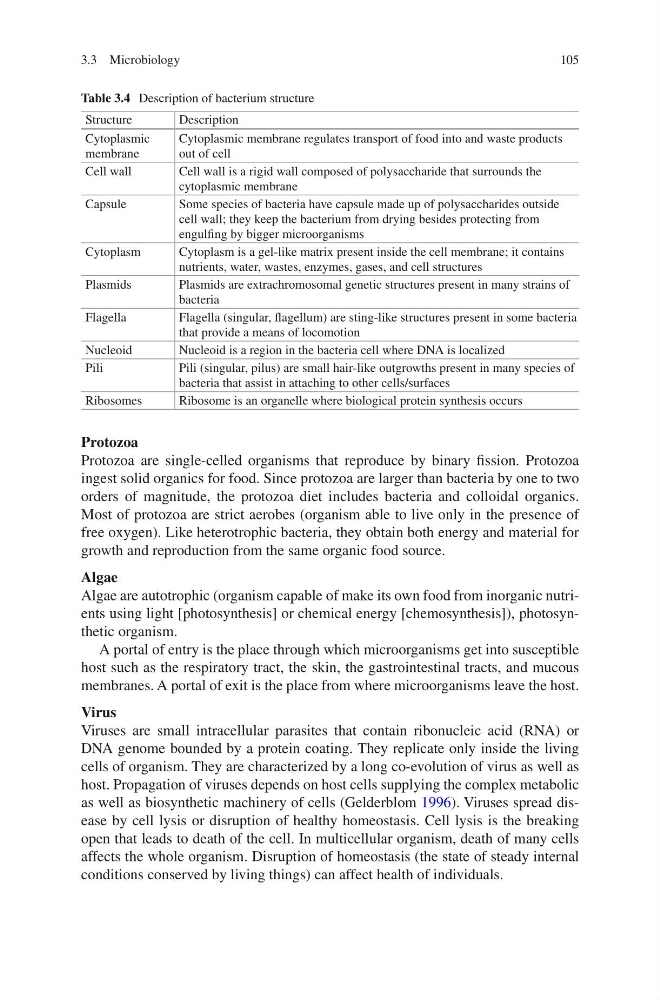
Table 3.4 Description of bacterium structure
Structure
Description
Cytoplasmic
membrane
Cytoplasmic membrane regulates transport of food into and waste products
out of cell
Cell wall
Cell wall is a rigid wall composed of polysaccharide that surrounds the
cytoplasmic membrane
Capsule
Some species of bacteria have capsule made up of polysaccharides outside
cell wall; they keep the bacterium from drying besides protecting from
engulfing by bigger microorganisms
Cytoplasm
Cytoplasm is a gel-like matrix present inside the cell membrane; it contains
nutrients, water, wastes, enzymes, gases, and cell structures
Plasmids
Plasmids are extrachromosomal genetic structures present in many strains of
bacteria
Flagella
Flagella (singular, flagellum) are sting-like structures present in some bacteria
that provide a means of locomotion
Nucleoid
Nucleoid is a region in the bacteria cell where DNA is localized
Pili
Pili (singular, pilus) are small hair-like outgrowths present in many species of
bacteria that assist in attaching to other cells/surfaces
Ribosomes
Ribosome is an organelle where biological protein synthesis occurs
3.3 Microbiology
Protozoa
Protozoa are single-celled organisms that reproduce by binary fission. Protozoa
ingest solid organics for food. Since protozoa are larger than bacteria by one to two
orders of magnitude, the protozoa diet includes bacteria and colloidal organics.
Most of protozoa are strict aerobes (organism able to live only in the presence of
free oxygen). Like heterotrophic bacteria, they obtain both energy and material for
growth and reproduction from the same organic food source.
Algae
Algae are autotrophic (organism capable of make its own food from inorganic nutrients using light [photosynthesis] or chemical energy [chemosynthesis]), photosynthetic organism.
A portal of entry is the place through which microorganisms get into susceptible
host such as the respiratory tract, the skin, the gastrointestinal tracts, and mucous
membranes. A portal of exit is the place from where microorganisms leave the host.
Virus
Viruses are small intracellular parasites that contain ribonucleic acid (RNA) or
DNA genome bounded by a protein coating. They replicate only inside the living
cells of organism. They are characterized by a long co-evolution of virus as well as
host. Propagation of viruses depends on host cells supplying the complex metabolic
as well as biosynthetic machinery of cells (Gelderblom 1996). Viruses spread disease by cell lysis or disruption of healthy homeostasis. Cell lysis is the breaking
open that leads to death of the cell. In multicellular organism, death of many cells
affects the whole organism. Disruption of homeostasis (the state of steady internal
conditions conserved by living things) can affect health of individuals.
Table 3.4 Description of bacterium structure
Structure
Description
Cytoplasmic
membrane
Cytoplasmic membrane regulates transport of food into and waste products
out of cell
Cell wall
Cell wall is a rigid wall composed of polysaccharide that surrounds the
cytoplasmic membrane
Capsule
Some species of bacteria have capsule made up of polysaccharides outside
cell wall; they keep the bacterium from drying besides protecting from
engulfing by bigger microorganisms
Cytoplasm
Cytoplasm is a gel-like matrix present inside the cell membrane; it contains
nutrients, water, wastes, enzymes, gases, and cell structures
Plasmids
Plasmids are extrachromosomal genetic structures present in many strains of
bacteria
Flagella
Flagella (singular, flagellum) are sting-like structures present in some bacteria
that provide a means of locomotion
Nucleoid
Nucleoid is a region in the bacteria cell where DNA is localized
Pili
Pili (singular, pilus) are small hair-like outgrowths present in many species of
bacteria that assist in attaching to other cells/surfaces
Ribosomes
Ribosome is an organelle where biological protein synthesis occurs
3.3 Microbiology