

84
2.8 Thermal Physics
Thermal physics is the study of heat. Heat is generated naturally and artificially.
Heat transfer has much applications, but uncontrolled heat can lead to disasters and
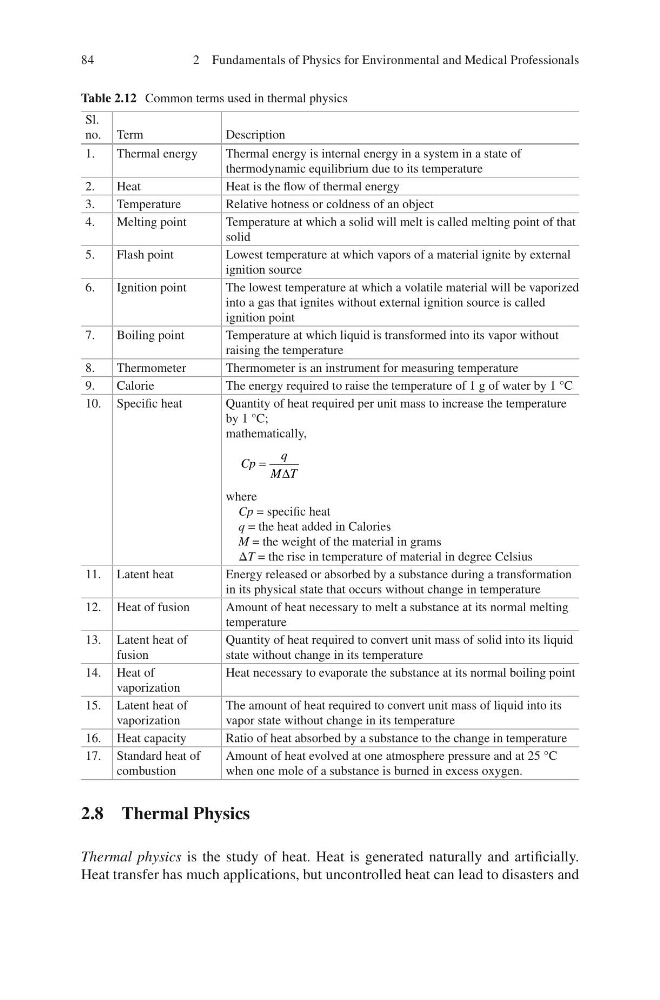
Table 2.12 Common terms used in thermal physics
Sl.
no. Term
Description
1.
Thermal energy
Thermal energy is internal energy in a system in a state of
thermodynamic equilibrium due to its temperature
2.
Heat
Heat is the flow of thermal energy
3.
Temperature
Relative hotness or coldness of an object
4.
Melting point
Temperature at which a solid will melt is called melting point of that
solid
5.
Flash point
Lowest temperature at which vapors of a material ignite by external
ignition source
6.
Ignition point
The lowest temperature at which a volatile material will be vaporized
into a gas that ignites without external ignition source is called
ignition point
7.
Boiling point
Temperature at which liquid is transformed into its vapor without
raising the temperature
8.
Thermometer
Thermometer is an instrument for measuring temperature
9.
Calorie
The energy required to raise the temperature of 1 g of water by 1 °C
10. Specific heat
Quantity of heat required per unit mass to increase the temperature
by 1 °C;
mathematically,
Cp
q
M T
= ∆
where
Cp = specific heat
q = the heat added in Calories
M = the weight of the material in grams
ΔT = the rise in temperature of material in degree Celsius
11. Latent heat
Energy released or absorbed by a substance during a transformation
in its physical state that occurs without change in temperature
12. Heat of fusion
Amount of heat necessary to melt a substance at its normal melting
temperature
13. Latent heat of
fusion
Quantity of heat required to convert unit mass of solid into its liquid
state without change in its temperature
14. Heat of
vaporization
Heat necessary to evaporate the substance at its normal boiling point
15. Latent heat of
vaporization
The amount of heat required to convert unit mass of liquid into its
vapor state without change in its temperature
16. Heat capacity
Ratio of heat absorbed by a substance to the change in temperature
17. Standard heat of
combustion
Amount of heat evolved at one atmosphere pressure and at 25 °C
when one mole of a substance is burned in excess oxygen.
2 Fundamentals of Physics for Environmental and Medical Professionals
2.8 Thermal Physics
Thermal physics is the study of heat. Heat is generated naturally and artificially.
Heat transfer has much applications, but uncontrolled heat can lead to disasters and
Table 2.12 Common terms used in thermal physics
Sl.
no. Term
Description
1.
Thermal energy
Thermal energy is internal energy in a system in a state of
thermodynamic equilibrium due to its temperature
2.
Heat
Heat is the flow of thermal energy
3.
Temperature
Relative hotness or coldness of an object
4.
Melting point
Temperature at which a solid will melt is called melting point of that
solid
5.
Flash point
Lowest temperature at which vapors of a material ignite by external
ignition source
6.
Ignition point
The lowest temperature at which a volatile material will be vaporized
into a gas that ignites without external ignition source is called
ignition point
7.
Boiling point
Temperature at which liquid is transformed into its vapor without
raising the temperature
8.
Thermometer
Thermometer is an instrument for measuring temperature
9.
Calorie
The energy required to raise the temperature of 1 g of water by 1 °C
10. Specific heat
Quantity of heat required per unit mass to increase the temperature
by 1 °C;
mathematically,
Cp
q
M T
= ∆
where
Cp = specific heat
q = the heat added in Calories
M = the weight of the material in grams
ΔT = the rise in temperature of material in degree Celsius
11. Latent heat
Energy released or absorbed by a substance during a transformation
in its physical state that occurs without change in temperature
12. Heat of fusion
Amount of heat necessary to melt a substance at its normal melting
temperature
13. Latent heat of
fusion
Quantity of heat required to convert unit mass of solid into its liquid
state without change in its temperature
14. Heat of
vaporization
Heat necessary to evaporate the substance at its normal boiling point
15. Latent heat of
vaporization
The amount of heat required to convert unit mass of liquid into its
vapor state without change in its temperature
16. Heat capacity
Ratio of heat absorbed by a substance to the change in temperature
17. Standard heat of
combustion
Amount of heat evolved at one atmosphere pressure and at 25 °C
when one mole of a substance is burned in excess oxygen.
2 Fundamentals of Physics for Environmental and Medical Professionals