

368
Fundamentals of Corrosion
of the glassy phosphates. Other glassy phosphates that contain calcium as
well as sodium are more effective as corrosion inhibitors. Using zinc with a
phosphate has been successful in both inhibiting corrosion and controlling
red water at dosages of 2 mg/L. The zinc phosphate treatment has been used
to eliminate rusty water, blue-green staining, and lead pickup, and to reduce
the measured corrosion rate of metals.
The choice of a particular type of phosphate to use in a corrosion control
program depends on the specific water quality. Some phosphates work better
than others in a given environment. It is usually advisable to conduct laboratory or field tests of one or more phosphate inhibitors before long-term use
is initiated. The case histories in Section 8 of the Noyes publication Corrosion
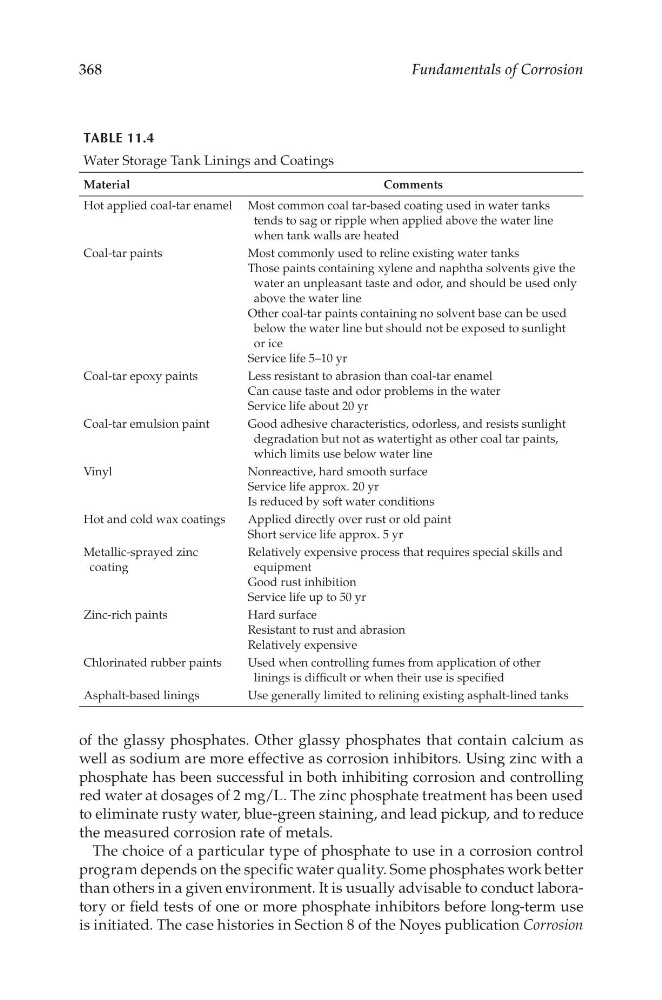
TabLE 11.4
Water Storage Tank Linings and Coatings
Material
Comments
Hot applied coal-tar enamel Most common coal tar-based coating used in water tanks
tends to sag or ripple when applied above the water line
when tank walls are heated
Coal-tar paints
Most commonly used to reline existing water tanks
Those paints containing xylene and naphtha solvents give the
water an unpleasant taste and odor, and should be used only
above the water line
Other coal-tar paints containing no solvent base can be used
below the water line but should not be exposed to sunlight
or ice
Service life 5–10 yr
Coal-tar epoxy paints
Less resistant to abrasion than coal-tar enamel
Can cause taste and odor problems in the water
Service life about 20 yr
Coal-tar emulsion paint
Good adhesive characteristics, odorless, and resists sunlight
degradation but not as watertight as other coal tar paints,
which limits use below water line
Vinyl
Nonreactive, hard smooth surface
Service life approx. 20 yr
Is reduced by soft water conditions
Hot and cold wax coatings
Applied directly over rust or old paint
Short service life approx. 5 yr
Metallic-sprayed zinc
coating
Relatively expensive process that requires special skills and
equipment
Good rust inhibition
Service life up to 50 yr
Zinc-rich paints
Hard surface
Resistant to rust and abrasion
Relatively expensive
Chlorinated rubber paints
Used when controlling fumes from application of other
linings is difficult or when their use is specified
Asphalt-based linings
Use generally limited to relining existing asphalt-lined tanks
Fundamentals of Corrosion
of the glassy phosphates. Other glassy phosphates that contain calcium as
well as sodium are more effective as corrosion inhibitors. Using zinc with a
phosphate has been successful in both inhibiting corrosion and controlling
red water at dosages of 2 mg/L. The zinc phosphate treatment has been used
to eliminate rusty water, blue-green staining, and lead pickup, and to reduce
the measured corrosion rate of metals.
The choice of a particular type of phosphate to use in a corrosion control
program depends on the specific water quality. Some phosphates work better
than others in a given environment. It is usually advisable to conduct laboratory or field tests of one or more phosphate inhibitors before long-term use
is initiated. The case histories in Section 8 of the Noyes publication Corrosion
TabLE 11.4
Water Storage Tank Linings and Coatings
Material
Comments
Hot applied coal-tar enamel Most common coal tar-based coating used in water tanks
tends to sag or ripple when applied above the water line
when tank walls are heated
Coal-tar paints
Most commonly used to reline existing water tanks
Those paints containing xylene and naphtha solvents give the
water an unpleasant taste and odor, and should be used only
above the water line
Other coal-tar paints containing no solvent base can be used
below the water line but should not be exposed to sunlight
or ice
Service life 5–10 yr
Coal-tar epoxy paints
Less resistant to abrasion than coal-tar enamel
Can cause taste and odor problems in the water
Service life about 20 yr
Coal-tar emulsion paint
Good adhesive characteristics, odorless, and resists sunlight
degradation but not as watertight as other coal tar paints,
which limits use below water line
Vinyl
Nonreactive, hard smooth surface
Service life approx. 20 yr
Is reduced by soft water conditions
Hot and cold wax coatings
Applied directly over rust or old paint
Short service life approx. 5 yr
Metallic-sprayed zinc
coating
Relatively expensive process that requires special skills and
equipment
Good rust inhibition
Service life up to 50 yr
Zinc-rich paints
Hard surface
Resistant to rust and abrasion
Relatively expensive
Chlorinated rubber paints
Used when controlling fumes from application of other
linings is difficult or when their use is specified
Asphalt-based linings
Use generally limited to relining existing asphalt-lined tanks