

192 Basic Engineering Mathematics
From equation (2), height of building,
h = 1.0724x = 1.0724(56.74) = 60.85 m.
Problem 25. The angle of depression of a ship
viewed at a particular instant from the top of a 75 m
vertical cliff is 30 ◦ . Find the distance of the ship
from the base of the cliff at this instant. The ship is
sailing away from the cliff at constant speed and 1
minute later its angle of depression from the top of
the cliff is 20 ◦ . Determine the speed of the ship in
km/h
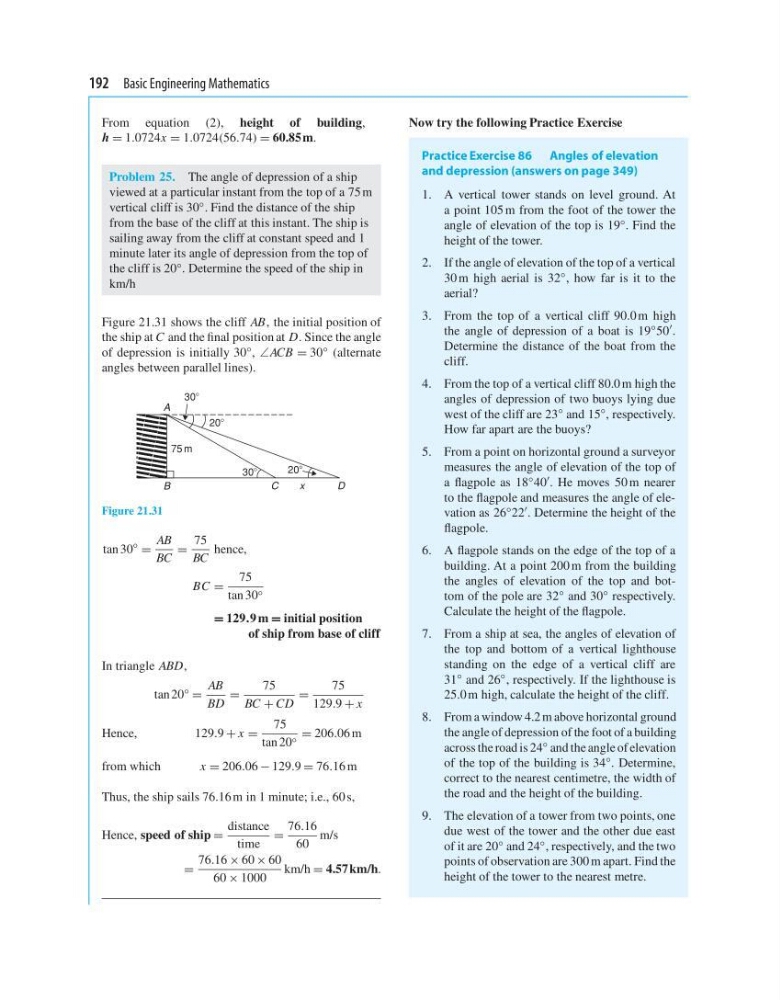
Figure 21.31 shows the cliff AB, the initial position of
the ship at C and the final position at D. Since the angle
of depression is initially 30 ◦ , ∠ACB = 30 ◦ (alternate
angles between parallel lines).
x
75 m
308
208
308
208
A
B
D
C
Figure 21.31
tan 30
◦
=
AB
BC
=
75
BC
hence,
BC =
75
tan 30 ◦
= 129.9 m = initial position
of ship from base of cliff
In triangle ABD,
tan 20 ◦ =
AB
BD
=
75
BC + CD
=
75
129.9 + x
Hence,
129.9 + x =
75
tan 20 ◦ = 206.06 m
from which
x = 206.06 − 129.9 = 76.16 m
Thus, the ship sails 76.16 m in 1 minute; i.e., 60 s,
Hence, speed of ship =
distance
time
=
76.16
60
m/s
=
76.16 × 60 × 60
60 × 1000
km/h = 4.57 km/h.
Now try the following Practice Exercise
Practice Exercise 86 Angles of elevation
and depression (answers on page 349)
1. A vertical tower stands on level ground. At
a point 105 m from the foot of the tower the
angle of elevation of the top is 19 ◦ . Find the
height of the tower.
2. If the angle of elevation of the top of a vertical
30 m high aerial is 32 ◦ , how far is it to the
aerial?
3. From the top of a vertical cliff 90.0 m high
the angle of depression of a boat is 19
◦ 50
.
Determine the distance of the boat from the
cliff.
4. From the top of a vertical cliff 80.0 m high the
angles of depression of two buoys lying due
west of the cliff are 23
◦ and 15
◦ , respectively.
How far apart are the buoys?
5. From a point on horizontal ground a surveyor
measures the angle of elevation of the top of
a flagpole as 18 ◦ 40 . He moves 50 m nearer
to the flagpole and measures the angle of elevation as 26 ◦ 22 . Determine the height of the
flagpole.
6. A flagpole stands on the edge of the top of a
building. At a point 200 m from the building
the angles of elevation of the top and bottom of the pole are 32 ◦ and 30 ◦ respectively.
Calculate the height of the flagpole.
7. From a ship at sea, the angles of elevation of
the top and bottom of a vertical lighthouse
standing on the edge of a vertical cliff are
31
◦ and 26
◦ , respectively. If the lighthouse is
25.0 m high, calculate the height of the cliff.
8. From a window 4.2 m above horizontal ground
the angle of depression of the foot of a building
across the road is 24 ◦ and the angle of elevation
of the top of the building is 34
◦ . Determine,
correct to the nearest centimetre, the width of
the road and the height of the building.
9. The elevation of a tower from two points, one
due west of the tower and the other due east
of it are 20 ◦ and 24 ◦ , respectively, and the two
points of observation are 300 m apart. Find the
height of the tower to the nearest metre.
From equation (2), height of building,
h = 1.0724x = 1.0724(56.74) = 60.85 m.
Problem 25. The angle of depression of a ship
viewed at a particular instant from the top of a 75 m
vertical cliff is 30 ◦ . Find the distance of the ship
from the base of the cliff at this instant. The ship is
sailing away from the cliff at constant speed and 1
minute later its angle of depression from the top of
the cliff is 20 ◦ . Determine the speed of the ship in
km/h
Figure 21.31 shows the cliff AB, the initial position of
the ship at C and the final position at D. Since the angle
of depression is initially 30 ◦ , ∠ACB = 30 ◦ (alternate
angles between parallel lines).
x
75 m
308
208
308
208
A
B
D
C
Figure 21.31
tan 30
◦
=
AB
BC
=
75
BC
hence,
BC =
75
tan 30 ◦
= 129.9 m = initial position
of ship from base of cliff
In triangle ABD,
tan 20 ◦ =
AB
BD
=
75
BC + CD
=
75
129.9 + x
Hence,
129.9 + x =
75
tan 20 ◦ = 206.06 m
from which
x = 206.06 − 129.9 = 76.16 m
Thus, the ship sails 76.16 m in 1 minute; i.e., 60 s,
Hence, speed of ship =
distance
time
=
76.16
60
m/s
=
76.16 × 60 × 60
60 × 1000
km/h = 4.57 km/h.
Now try the following Practice Exercise
Practice Exercise 86 Angles of elevation
and depression (answers on page 349)
1. A vertical tower stands on level ground. At
a point 105 m from the foot of the tower the
angle of elevation of the top is 19 ◦ . Find the
height of the tower.
2. If the angle of elevation of the top of a vertical
30 m high aerial is 32 ◦ , how far is it to the
aerial?
3. From the top of a vertical cliff 90.0 m high
the angle of depression of a boat is 19
◦ 50
.
Determine the distance of the boat from the
cliff.
4. From the top of a vertical cliff 80.0 m high the
angles of depression of two buoys lying due
west of the cliff are 23
◦ and 15
◦ , respectively.
How far apart are the buoys?
5. From a point on horizontal ground a surveyor
measures the angle of elevation of the top of
a flagpole as 18 ◦ 40 . He moves 50 m nearer
to the flagpole and measures the angle of elevation as 26 ◦ 22 . Determine the height of the
flagpole.
6. A flagpole stands on the edge of the top of a
building. At a point 200 m from the building
the angles of elevation of the top and bottom of the pole are 32 ◦ and 30 ◦ respectively.
Calculate the height of the flagpole.
7. From a ship at sea, the angles of elevation of
the top and bottom of a vertical lighthouse
standing on the edge of a vertical cliff are
31
◦ and 26
◦ , respectively. If the lighthouse is
25.0 m high, calculate the height of the cliff.
8. From a window 4.2 m above horizontal ground
the angle of depression of the foot of a building
across the road is 24 ◦ and the angle of elevation
of the top of the building is 34
◦ . Determine,
correct to the nearest centimetre, the width of
the road and the height of the building.
9. The elevation of a tower from two points, one
due west of the tower and the other due east
of it are 20 ◦ and 24 ◦ , respectively, and the two
points of observation are 300 m apart. Find the
height of the tower to the nearest metre.