

66
This pragmatic, conceptual, life cycle costing model included many of the realistic caveats and challenges with which later life cycle assessment models would
have to contend. These included the model’s inherent uncertainty levels, potential
lack of precision, and inability to accurately predict every event that would affect
cost over a multi-year time span. Therefore, rather than attempting to foresee all
details and contingencies and then commit to a fixed budget according to a single
scenario, Novick recommended that government funding appropriations continue
year by year.
The unstated assumption was that there would be incremental oversight by
responsible authorities to make funding changes in line with these weapons systems
annual operational requirements. He was essentially recommending a flexible and
iterative process that would create a more inclusive and therefore accurate estimation of expenses. This early picture of total costs throughout the useful service
period of a proposed system would better inform the decision-makers entrusted
with the responsibility of wisely spending tax dollars.
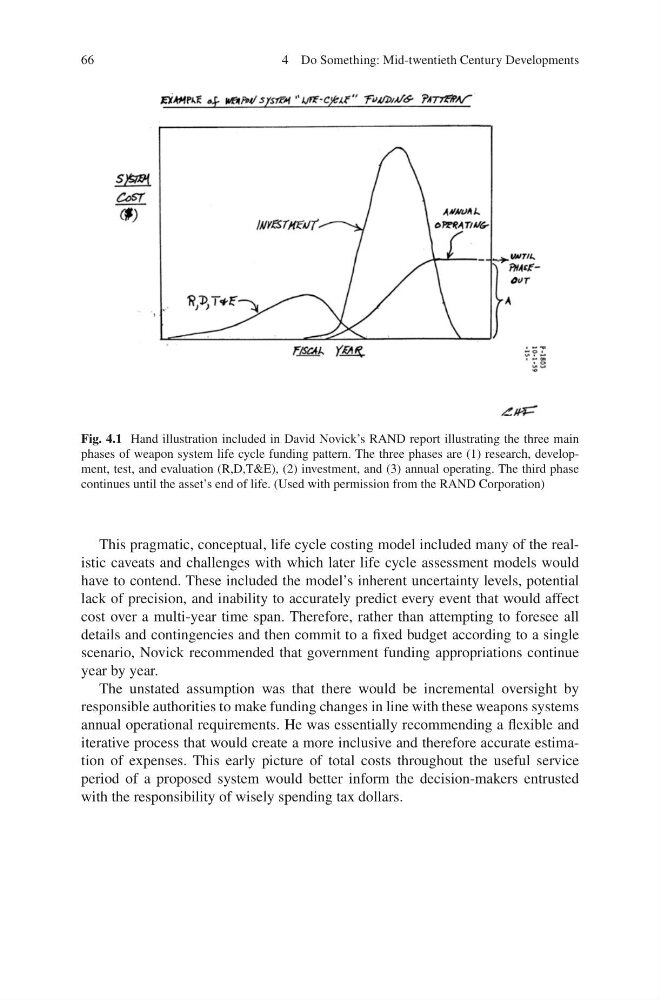
Fig. 4.1 Hand illustration included in David Novick’s RAND report illustrating the three main
phases of weapon system life cycle funding pattern. The three phases are (1) research, development, test, and evaluation (R,D,T&E), (2) investment, and (3) annual operating. The third phase
continues until the asset’s end of life. (Used with permission from the RAND Corporation)
4 Do Something: Mid-twentieth Century Developments
This pragmatic, conceptual, life cycle costing model included many of the realistic caveats and challenges with which later life cycle assessment models would
have to contend. These included the model’s inherent uncertainty levels, potential
lack of precision, and inability to accurately predict every event that would affect
cost over a multi-year time span. Therefore, rather than attempting to foresee all
details and contingencies and then commit to a fixed budget according to a single
scenario, Novick recommended that government funding appropriations continue
year by year.
The unstated assumption was that there would be incremental oversight by
responsible authorities to make funding changes in line with these weapons systems
annual operational requirements. He was essentially recommending a flexible and
iterative process that would create a more inclusive and therefore accurate estimation of expenses. This early picture of total costs throughout the useful service
period of a proposed system would better inform the decision-makers entrusted
with the responsibility of wisely spending tax dollars.
Fig. 4.1 Hand illustration included in David Novick’s RAND report illustrating the three main
phases of weapon system life cycle funding pattern. The three phases are (1) research, development, test, and evaluation (R,D,T&E), (2) investment, and (3) annual operating. The third phase
continues until the asset’s end of life. (Used with permission from the RAND Corporation)
4 Do Something: Mid-twentieth Century Developments