

152
in the atmosphere. Biogenic carbon is not an option in either of the other WBLCA
tools discussed in this chapter but is the default setting in Tally. Whether or not it is
included, it must be clearly stated.
By default Tally runs a cradle-to-grave LCA study inclusive of EN 15978 life
cycle stages A1–A3 (product), A4–A5 (construction stage), B2–B6 (use stage), C2–
C4 (end of life), and module D (reuse and recovery). To account for A4 (transportation), Tally includes default travel distances for materials being brought to the site
(Fig. 8.11). They all assume the materials are being brought to the site via truck and
include different travel distances for different materials. These estimates are not
specific to the building location entered. They serve as good estimates for an earlystage WBLCA study, but as more information is known about where products are
being sourced from, how far they will be traveling, and what vehicle they will be
transported on, these numbers should be updated accordingly. Tally also gives the
user the option to include impacts from stages A5 (construction installation) and B6
(operational energy). These include electricity, heating, and water use based on
regional grids across the United States and globally. Tally does not provide any
guidance on these measures, and they must be calculated separately and input
manually.
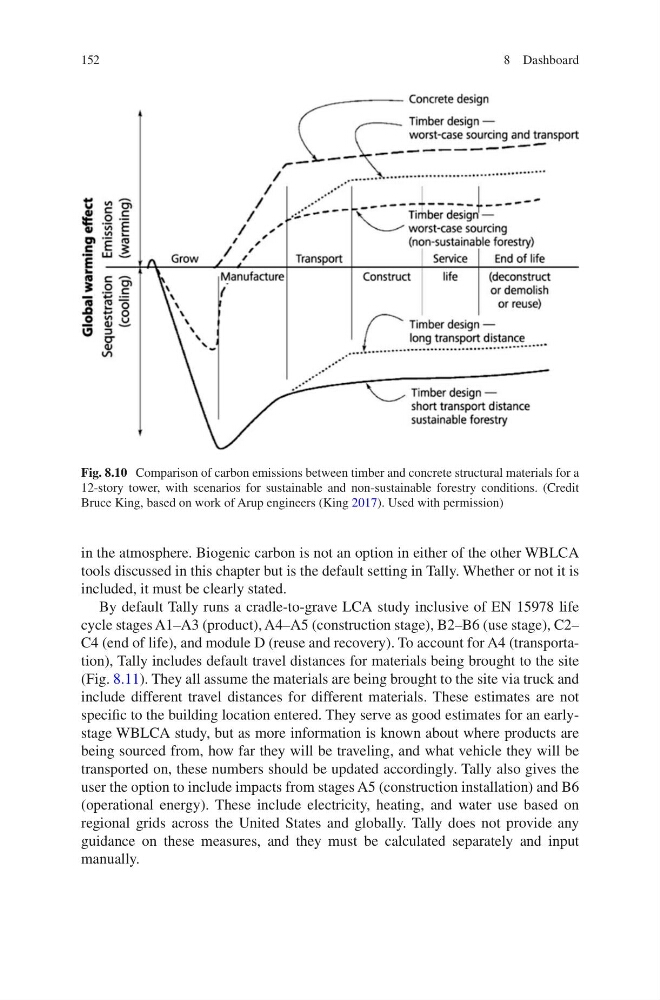
Fig. 8.10 Comparison of carbon emissions between timber and concrete structural materials for a
12-story tower, with scenarios for sustainable and non-sustainable forestry conditions. (Credit
Bruce King, based on work of Arup engineers (King 2017). Used with permission)
8 Dashboard
in the atmosphere. Biogenic carbon is not an option in either of the other WBLCA
tools discussed in this chapter but is the default setting in Tally. Whether or not it is
included, it must be clearly stated.
By default Tally runs a cradle-to-grave LCA study inclusive of EN 15978 life
cycle stages A1–A3 (product), A4–A5 (construction stage), B2–B6 (use stage), C2–
C4 (end of life), and module D (reuse and recovery). To account for A4 (transportation), Tally includes default travel distances for materials being brought to the site
(Fig. 8.11). They all assume the materials are being brought to the site via truck and
include different travel distances for different materials. These estimates are not
specific to the building location entered. They serve as good estimates for an earlystage WBLCA study, but as more information is known about where products are
being sourced from, how far they will be traveling, and what vehicle they will be
transported on, these numbers should be updated accordingly. Tally also gives the
user the option to include impacts from stages A5 (construction installation) and B6
(operational energy). These include electricity, heating, and water use based on
regional grids across the United States and globally. Tally does not provide any
guidance on these measures, and they must be calculated separately and input
manually.
Fig. 8.10 Comparison of carbon emissions between timber and concrete structural materials for a
12-story tower, with scenarios for sustainable and non-sustainable forestry conditions. (Credit
Bruce King, based on work of Arup engineers (King 2017). Used with permission)
8 Dashboard