

Plant Demand Adapted Fertilization in Organic and Precision …
157
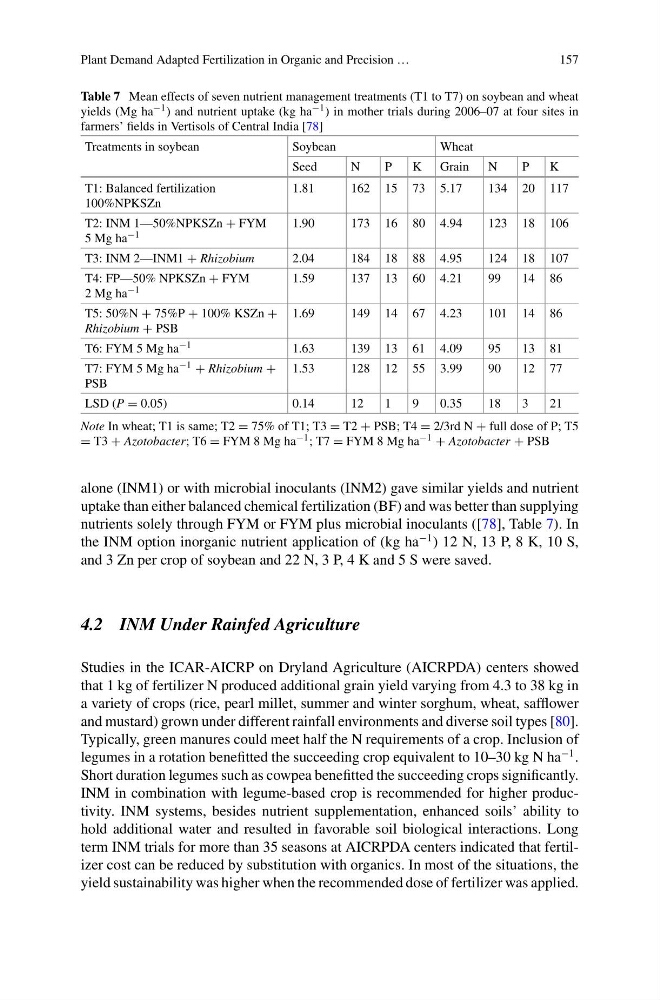
Table 7 Mean effects of seven nutrient management treatments (T1 to T7) on soybean and wheat
yields (Mg ha −1 ) and nutrient uptake (kg ha −1 ) in mother trials during 2006–07 at four sites in
farmers’ fields in Vertisols of Central India [78]
Treatments in soybean
Soybean
Wheat
Seed
N
P
K Grain
N
P
K
T1: Balanced fertilization
100%NPKSZn
1.81
162 15 73 5.17
134 20 117
T2: INM 1—50%NPKSZn + FYM
5 Mg ha −1
1.90
173 16 80 4.94
123 18 106
T3: INM 2—INM1 + Rhizobium
2.04
184 18 88 4.95
124 18 107
T4: FP—50% NPKSZn + FYM
2 Mg ha −1
1.59
137 13 60 4.21
99
14 86
T5: 50%N + 75%P + 100% KSZn +
Rhizobium + PSB
1.69
149 14 67 4.23
101 14 86
T6: FYM 5 Mg ha −1
1.63
139 13 61 4.09
95
13 81
T7: FYM 5 Mg ha −1 + Rhizobium +
PSB
1.53
128 12 55 3.99
90
12 77
LSD (P = 0.05)
0.14
12
1
9
0.35
18
3
21
Note In wheat; T1 is same; T2 = 75% of T1; T3 = T2 + PSB; T4 = 2/3rd N + full dose of P; T5
= T3 + Azotobacter; T6 = FYM 8 Mg ha −1 ; T7 = FYM 8 Mg ha −1 + Azotobacter + PSB
alone (INM1) or with microbial inoculants (INM2) gave similar yields and nutrient
uptake than either balanced chemical fertilization (BF) and was better than supplying
nutrients solely through FYM or FYM plus microbial inoculants ([78], Table 7). In
the INM option inorganic nutrient application of (kg ha
−1 ) 12 N, 13 P, 8 K, 10 S,
and 3 Zn per crop of soybean and 22 N, 3 P, 4 K and 5 S were saved.
4.2 INM Under Rainfed Agriculture
Studies in the ICAR-AICRP on Dryland Agriculture (AICRPDA) centers showed
that 1 kg of fertilizer N produced additional grain yield varying from 4.3 to 38 kg in
a variety of crops (rice, pearl millet, summer and winter sorghum, wheat, safflower
and mustard) grown under different rainfall environments and diverse soil types [80].
Typically, green manures could meet half the N requirements of a crop. Inclusion of
legumes in a rotation benefitted the succeeding crop equivalent to 10–30 kg N ha
−1 .
Short duration legumes such as cowpea benefitted the succeeding crops significantly.
INM in combination with legume-based crop is recommended for higher productivity. INM systems, besides nutrient supplementation, enhanced soils’ ability to
hold additional water and resulted in favorable soil biological interactions. Long
term INM trials for more than 35 seasons at AICRPDA centers indicated that fertilizer cost can be reduced by substitution with organics. In most of the situations, the
yield sustainability was higher when the recommended dose of fertilizer was applied.
157
Table 7 Mean effects of seven nutrient management treatments (T1 to T7) on soybean and wheat
yields (Mg ha −1 ) and nutrient uptake (kg ha −1 ) in mother trials during 2006–07 at four sites in
farmers’ fields in Vertisols of Central India [78]
Treatments in soybean
Soybean
Wheat
Seed
N
P
K Grain
N
P
K
T1: Balanced fertilization
100%NPKSZn
1.81
162 15 73 5.17
134 20 117
T2: INM 1—50%NPKSZn + FYM
5 Mg ha −1
1.90
173 16 80 4.94
123 18 106
T3: INM 2—INM1 + Rhizobium
2.04
184 18 88 4.95
124 18 107
T4: FP—50% NPKSZn + FYM
2 Mg ha −1
1.59
137 13 60 4.21
99
14 86
T5: 50%N + 75%P + 100% KSZn +
Rhizobium + PSB
1.69
149 14 67 4.23
101 14 86
T6: FYM 5 Mg ha −1
1.63
139 13 61 4.09
95
13 81
T7: FYM 5 Mg ha −1 + Rhizobium +
PSB
1.53
128 12 55 3.99
90
12 77
LSD (P = 0.05)
0.14
12
1
9
0.35
18
3
21
Note In wheat; T1 is same; T2 = 75% of T1; T3 = T2 + PSB; T4 = 2/3rd N + full dose of P; T5
= T3 + Azotobacter; T6 = FYM 8 Mg ha −1 ; T7 = FYM 8 Mg ha −1 + Azotobacter + PSB
alone (INM1) or with microbial inoculants (INM2) gave similar yields and nutrient
uptake than either balanced chemical fertilization (BF) and was better than supplying
nutrients solely through FYM or FYM plus microbial inoculants ([78], Table 7). In
the INM option inorganic nutrient application of (kg ha
−1 ) 12 N, 13 P, 8 K, 10 S,
and 3 Zn per crop of soybean and 22 N, 3 P, 4 K and 5 S were saved.
4.2 INM Under Rainfed Agriculture
Studies in the ICAR-AICRP on Dryland Agriculture (AICRPDA) centers showed
that 1 kg of fertilizer N produced additional grain yield varying from 4.3 to 38 kg in
a variety of crops (rice, pearl millet, summer and winter sorghum, wheat, safflower
and mustard) grown under different rainfall environments and diverse soil types [80].
Typically, green manures could meet half the N requirements of a crop. Inclusion of
legumes in a rotation benefitted the succeeding crop equivalent to 10–30 kg N ha
−1 .
Short duration legumes such as cowpea benefitted the succeeding crops significantly.
INM in combination with legume-based crop is recommended for higher productivity. INM systems, besides nutrient supplementation, enhanced soils’ ability to
hold additional water and resulted in favorable soil biological interactions. Long
term INM trials for more than 35 seasons at AICRPDA centers indicated that fertilizer cost can be reduced by substitution with organics. In most of the situations, the
yield sustainability was higher when the recommended dose of fertilizer was applied.