

126
L. Schorr et al.
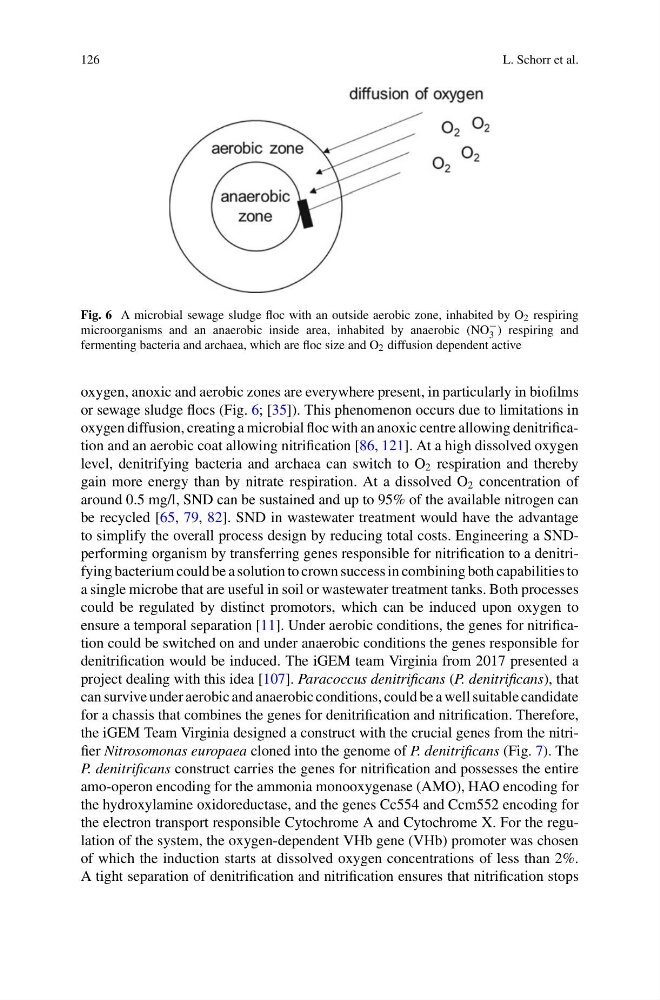
Fig. 6 A microbial sewage sludge floc with an outside aerobic zone, inhabited by O 2 respiring
microorganisms and an anaerobic inside area, inhabited by anaerobic (NO
−
3 ) respiring and
fermenting bacteria and archaea, which are floc size and O 2 diffusion dependent active
oxygen, anoxic and aerobic zones are everywhere present, in particularly in biofilms
or sewage sludge flocs (Fig. 6; [35]). This phenomenon occurs due to limitations in
oxygen diffusion, creating a microbial floc with an anoxic centre allowing denitrification and an aerobic coat allowing nitrification [86, 121]. At a high dissolved oxygen
level, denitrifying bacteria and archaea can switch to O 2 respiration and thereby
gain more energy than by nitrate respiration. At a dissolved O 2 concentration of
around 0.5 mg/l, SND can be sustained and up to 95% of the available nitrogen can
be recycled [65, 79, 82]. SND in wastewater treatment would have the advantage
to simplify the overall process design by reducing total costs. Engineering a SNDperforming organism by transferring genes responsible for nitrification to a denitrifying bacterium could be a solution to crown success in combining both capabilities to
a single microbe that are useful in soil or wastewater treatment tanks. Both processes
could be regulated by distinct promotors, which can be induced upon oxygen to
ensure a temporal separation [11]. Under aerobic conditions, the genes for nitrification could be switched on and under anaerobic conditions the genes responsible for
denitrification would be induced. The iGEM team Virginia from 2017 presented a
project dealing with this idea [107]. Paracoccus denitrificans (P. denitrificans), that
can survive under aerobic and anaerobic conditions, could be a well suitable candidate
for a chassis that combines the genes for denitrification and nitrification. Therefore,
the iGEM Team Virginia designed a construct with the crucial genes from the nitrifier Nitrosomonas europaea cloned into the genome of P. denitrificans (Fig. 7). The
P. denitrificans construct carries the genes for nitrification and possesses the entire
amo-operon encoding for the ammonia monooxygenase (AMO), HAO encoding for
the hydroxylamine oxidoreductase, and the genes Cc554 and Ccm552 encoding for
the electron transport responsible Cytochrome A and Cytochrome X. For the regulation of the system, the oxygen-dependent VHb gene (VHb) promoter was chosen
of which the induction starts at dissolved oxygen concentrations of less than 2%.
A tight separation of denitrification and nitrification ensures that nitrification stops
L. Schorr et al.
Fig. 6 A microbial sewage sludge floc with an outside aerobic zone, inhabited by O 2 respiring
microorganisms and an anaerobic inside area, inhabited by anaerobic (NO
−
3 ) respiring and
fermenting bacteria and archaea, which are floc size and O 2 diffusion dependent active
oxygen, anoxic and aerobic zones are everywhere present, in particularly in biofilms
or sewage sludge flocs (Fig. 6; [35]). This phenomenon occurs due to limitations in
oxygen diffusion, creating a microbial floc with an anoxic centre allowing denitrification and an aerobic coat allowing nitrification [86, 121]. At a high dissolved oxygen
level, denitrifying bacteria and archaea can switch to O 2 respiration and thereby
gain more energy than by nitrate respiration. At a dissolved O 2 concentration of
around 0.5 mg/l, SND can be sustained and up to 95% of the available nitrogen can
be recycled [65, 79, 82]. SND in wastewater treatment would have the advantage
to simplify the overall process design by reducing total costs. Engineering a SNDperforming organism by transferring genes responsible for nitrification to a denitrifying bacterium could be a solution to crown success in combining both capabilities to
a single microbe that are useful in soil or wastewater treatment tanks. Both processes
could be regulated by distinct promotors, which can be induced upon oxygen to
ensure a temporal separation [11]. Under aerobic conditions, the genes for nitrification could be switched on and under anaerobic conditions the genes responsible for
denitrification would be induced. The iGEM team Virginia from 2017 presented a
project dealing with this idea [107]. Paracoccus denitrificans (P. denitrificans), that
can survive under aerobic and anaerobic conditions, could be a well suitable candidate
for a chassis that combines the genes for denitrification and nitrification. Therefore,
the iGEM Team Virginia designed a construct with the crucial genes from the nitrifier Nitrosomonas europaea cloned into the genome of P. denitrificans (Fig. 7). The
P. denitrificans construct carries the genes for nitrification and possesses the entire
amo-operon encoding for the ammonia monooxygenase (AMO), HAO encoding for
the hydroxylamine oxidoreductase, and the genes Cc554 and Ccm552 encoding for
the electron transport responsible Cytochrome A and Cytochrome X. For the regulation of the system, the oxygen-dependent VHb gene (VHb) promoter was chosen
of which the induction starts at dissolved oxygen concentrations of less than 2%.
A tight separation of denitrification and nitrification ensures that nitrification stops