

Synthetic Biology and the Possibilities in Achieving a Plant …
123
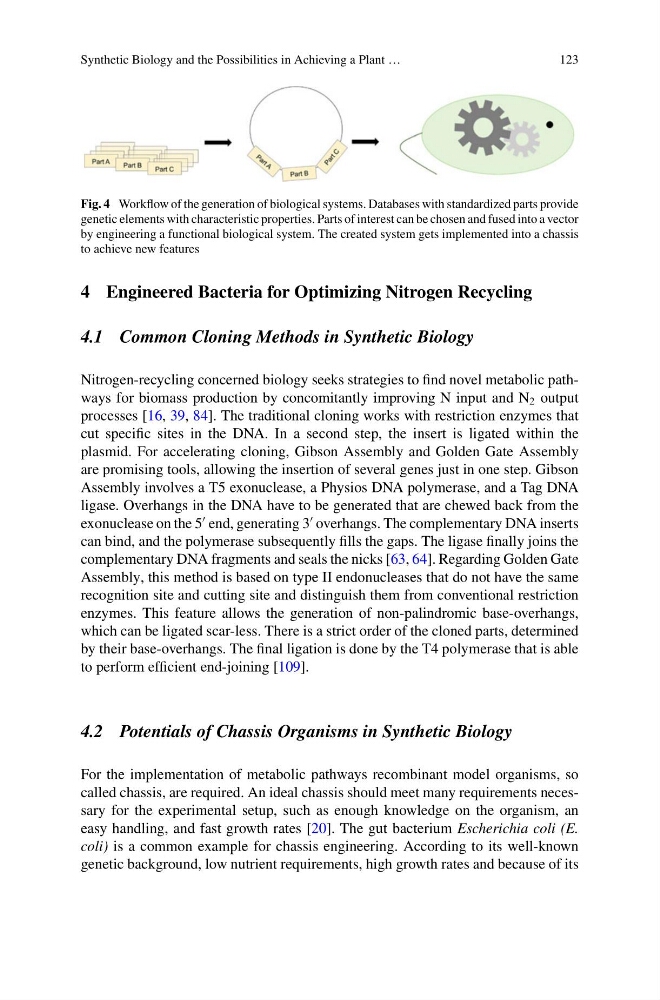
Fig. 4 Workflow of the generation of biological systems. Databases with standardized parts provide
genetic elements with characteristic properties. Parts of interest can be chosen and fused into a vector
by engineering a functional biological system. The created system gets implemented into a chassis
to achieve new features
4 Engineered Bacteria for Optimizing Nitrogen Recycling
4.1 Common Cloning Methods in Synthetic Biology
Nitrogen-recycling concerned biology seeks strategies to find novel metabolic pathways for biomass production by concomitantly improving N input and N 2 output
processes [16, 39, 84]. The traditional cloning works with restriction enzymes that
cut specific sites in the DNA. In a second step, the insert is ligated within the
plasmid. For accelerating cloning, Gibson Assembly and Golden Gate Assembly
are promising tools, allowing the insertion of several genes just in one step. Gibson
Assembly involves a T5 exonuclease, a Physios DNA polymerase, and a Tag DNA
ligase. Overhangs in the DNA have to be generated that are chewed back from the
exonuclease on the 5
end, generating 3
overhangs. The complementary DNA inserts
can bind, and the polymerase subsequently fills the gaps. The ligase finally joins the
complementary DNA fragments and seals the nicks [63, 64]. Regarding Golden Gate
Assembly, this method is based on type II endonucleases that do not have the same
recognition site and cutting site and distinguish them from conventional restriction
enzymes. This feature allows the generation of non-palindromic base-overhangs,
which can be ligated scar-less. There is a strict order of the cloned parts, determined
by their base-overhangs. The final ligation is done by the T4 polymerase that is able
to perform efficient end-joining [109].
4.2 Potentials of Chassis Organisms in Synthetic Biology
For the implementation of metabolic pathways recombinant model organisms, so
called chassis, are required. An ideal chassis should meet many requirements necessary for the experimental setup, such as enough knowledge on the organism, an
easy handling, and fast growth rates [20]. The gut bacterium Escherichia coli (E.
coli) is a common example for chassis engineering. According to its well-known
genetic background, low nutrient requirements, high growth rates and because of its
123
Fig. 4 Workflow of the generation of biological systems. Databases with standardized parts provide
genetic elements with characteristic properties. Parts of interest can be chosen and fused into a vector
by engineering a functional biological system. The created system gets implemented into a chassis
to achieve new features
4 Engineered Bacteria for Optimizing Nitrogen Recycling
4.1 Common Cloning Methods in Synthetic Biology
Nitrogen-recycling concerned biology seeks strategies to find novel metabolic pathways for biomass production by concomitantly improving N input and N 2 output
processes [16, 39, 84]. The traditional cloning works with restriction enzymes that
cut specific sites in the DNA. In a second step, the insert is ligated within the
plasmid. For accelerating cloning, Gibson Assembly and Golden Gate Assembly
are promising tools, allowing the insertion of several genes just in one step. Gibson
Assembly involves a T5 exonuclease, a Physios DNA polymerase, and a Tag DNA
ligase. Overhangs in the DNA have to be generated that are chewed back from the
exonuclease on the 5
end, generating 3
overhangs. The complementary DNA inserts
can bind, and the polymerase subsequently fills the gaps. The ligase finally joins the
complementary DNA fragments and seals the nicks [63, 64]. Regarding Golden Gate
Assembly, this method is based on type II endonucleases that do not have the same
recognition site and cutting site and distinguish them from conventional restriction
enzymes. This feature allows the generation of non-palindromic base-overhangs,
which can be ligated scar-less. There is a strict order of the cloned parts, determined
by their base-overhangs. The final ligation is done by the T4 polymerase that is able
to perform efficient end-joining [109].
4.2 Potentials of Chassis Organisms in Synthetic Biology
For the implementation of metabolic pathways recombinant model organisms, so
called chassis, are required. An ideal chassis should meet many requirements necessary for the experimental setup, such as enough knowledge on the organism, an
easy handling, and fast growth rates [20]. The gut bacterium Escherichia coli (E.
coli) is a common example for chassis engineering. According to its well-known
genetic background, low nutrient requirements, high growth rates and because of its