

Synthetic Biology and the Possibilities in Achieving a Plant …
119
Promotor
FNR/CRP
[4Fea4S]21
[2Fea2S]21
aerobic
O 2
Promotor
FNR/CRP
[4Fea4S]21
[2Fea2S]21
anaerobic
O 2
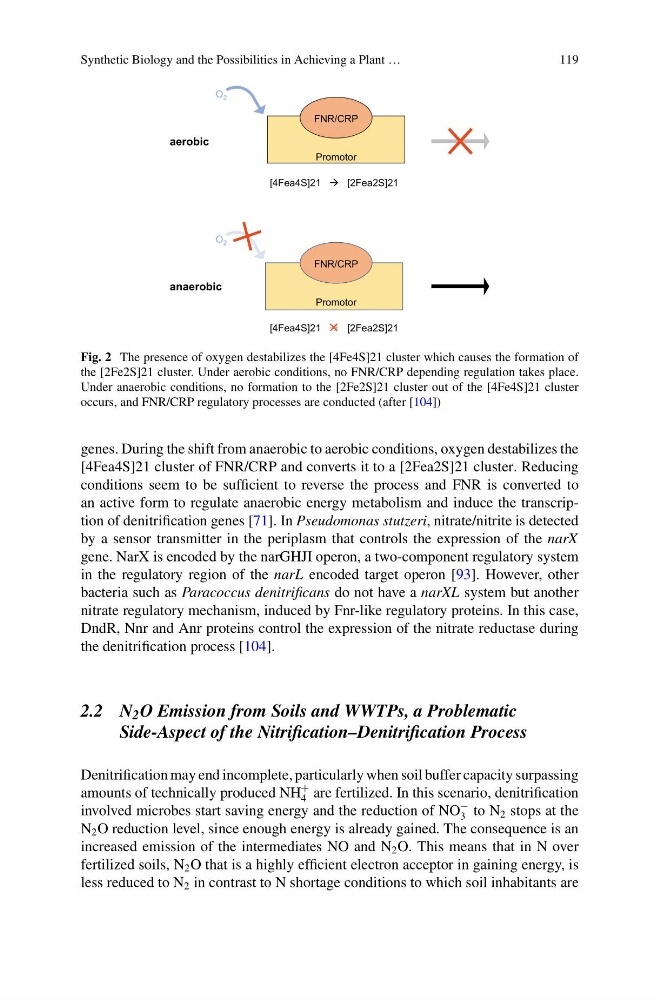
Fig. 2 The presence of oxygen destabilizes the [4Fe4S]21 cluster which causes the formation of
the [2Fe2S]21 cluster. Under aerobic conditions, no FNR/CRP depending regulation takes place.
Under anaerobic conditions, no formation to the [2Fe2S]21 cluster out of the [4Fe4S]21 cluster
occurs, and FNR/CRP regulatory processes are conducted (after [104])
genes. During the shift from anaerobic to aerobic conditions, oxygen destabilizes the
[4Fea4S]21 cluster of FNR/CRP and converts it to a [2Fea2S]21 cluster. Reducing
conditions seem to be sufficient to reverse the process and FNR is converted to
an active form to regulate anaerobic energy metabolism and induce the transcription of denitrification genes [71]. In Pseudomonas stutzeri, nitrate/nitrite is detected
by a sensor transmitter in the periplasm that controls the expression of the narX
gene. NarX is encoded by the narGHJI operon, a two-component regulatory system
in the regulatory region of the narL encoded target operon [93]. However, other
bacteria such as Paracoccus denitrificans do not have a narXL system but another
nitrate regulatory mechanism, induced by Fnr-like regulatory proteins. In this case,
DndR, Nnr and Anr proteins control the expression of the nitrate reductase during
the denitrification process [104].
2.2 N 2 O Emission from Soils and WWTPs, a Problematic
Side-Aspect of the Nitrification–Denitrification Process
Denitrification may end incomplete, particularly when soil buffer capacity surpassing
amounts of technically produced NH
+
4 are fertilized. In this scenario, denitrification
involved microbes start saving energy and the reduction of NO
−
3 to N 2 stops at the
N 2 O reduction level, since enough energy is already gained. The consequence is an
increased emission of the intermediates NO and N 2 O. This means that in N over
fertilized soils, N 2 O that is a highly efficient electron acceptor in gaining energy, is
less reduced to N 2 in contrast to N shortage conditions to which soil inhabitants are
119
Promotor
FNR/CRP
[4Fea4S]21
[2Fea2S]21
aerobic
O 2
Promotor
FNR/CRP
[4Fea4S]21
[2Fea2S]21
anaerobic
O 2
Fig. 2 The presence of oxygen destabilizes the [4Fe4S]21 cluster which causes the formation of
the [2Fe2S]21 cluster. Under aerobic conditions, no FNR/CRP depending regulation takes place.
Under anaerobic conditions, no formation to the [2Fe2S]21 cluster out of the [4Fe4S]21 cluster
occurs, and FNR/CRP regulatory processes are conducted (after [104])
genes. During the shift from anaerobic to aerobic conditions, oxygen destabilizes the
[4Fea4S]21 cluster of FNR/CRP and converts it to a [2Fea2S]21 cluster. Reducing
conditions seem to be sufficient to reverse the process and FNR is converted to
an active form to regulate anaerobic energy metabolism and induce the transcription of denitrification genes [71]. In Pseudomonas stutzeri, nitrate/nitrite is detected
by a sensor transmitter in the periplasm that controls the expression of the narX
gene. NarX is encoded by the narGHJI operon, a two-component regulatory system
in the regulatory region of the narL encoded target operon [93]. However, other
bacteria such as Paracoccus denitrificans do not have a narXL system but another
nitrate regulatory mechanism, induced by Fnr-like regulatory proteins. In this case,
DndR, Nnr and Anr proteins control the expression of the nitrate reductase during
the denitrification process [104].
2.2 N 2 O Emission from Soils and WWTPs, a Problematic
Side-Aspect of the Nitrification–Denitrification Process
Denitrification may end incomplete, particularly when soil buffer capacity surpassing
amounts of technically produced NH
+
4 are fertilized. In this scenario, denitrification
involved microbes start saving energy and the reduction of NO
−
3 to N 2 stops at the
N 2 O reduction level, since enough energy is already gained. The consequence is an
increased emission of the intermediates NO and N 2 O. This means that in N over
fertilized soils, N 2 O that is a highly efficient electron acceptor in gaining energy, is
less reduced to N 2 in contrast to N shortage conditions to which soil inhabitants are