

102
E. Vavoulidou et al.
Arable land under
conventional cultivated
organically treated vineyard
various cultivations:
vineyard
site, N fertilizations
40-120 kg N ha
-1 year
-1
40-120 kg N ha
-1 year
-1
100-200 kg N ha-1 year-1
urea, NH 4
+
, NO 3
-
?
u r e a , N H 4
+
, NO 3
-
?
a sc o m p o s t , m a n u r e ?
Tree
plantation
Conventional
N fertilization?
extensive fallow
abandoned land
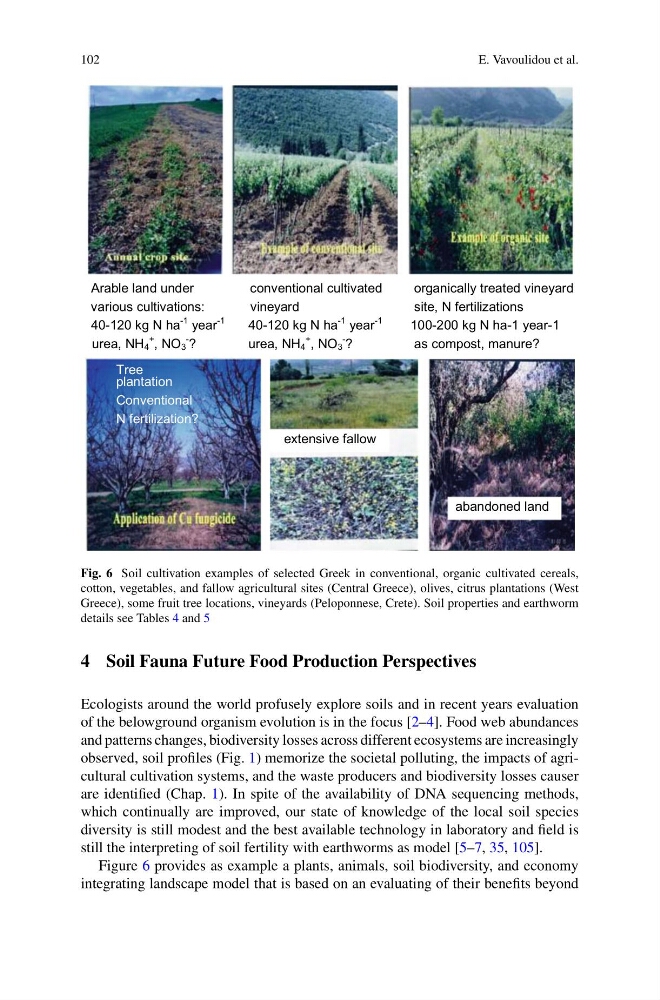
Fig. 6 Soil cultivation examples of selected Greek in conventional, organic cultivated cereals,
cotton, vegetables, and fallow agricultural sites (Central Greece), olives, citrus plantations (West
Greece), some fruit tree locations, vineyards (Peloponnese, Crete). Soil properties and earthworm
details see Tables 4 and 5
4 Soil Fauna Future Food Production Perspectives
Ecologists around the world profusely explore soils and in recent years evaluation
of the belowground organism evolution is in the focus [2–4]. Food web abundances
and patterns changes, biodiversity losses across different ecosystems are increasingly
observed, soil profiles (Fig. 1) memorize the societal polluting, the impacts of agricultural cultivation systems, and the waste producers and biodiversity losses causer
are identified (Chap. 1). In spite of the availability of DNA sequencing methods,
which continually are improved, our state of knowledge of the local soil species
diversity is still modest and the best available technology in laboratory and field is
still the interpreting of soil fertility with earthworms as model [5–7, 35, 105].
Figure 6 provides as example a plants, animals, soil biodiversity, and economy
integrating landscape model that is based on an evaluating of their benefits beyond
E. Vavoulidou et al.
Arable land under
conventional cultivated
organically treated vineyard
various cultivations:
vineyard
site, N fertilizations
40-120 kg N ha
-1 year
-1
40-120 kg N ha
-1 year
-1
100-200 kg N ha-1 year-1
urea, NH 4
+
, NO 3
-
?
u r e a , N H 4
+
, NO 3
-
?
a sc o m p o s t , m a n u r e ?
Tree
plantation
Conventional
N fertilization?
extensive fallow
abandoned land
Fig. 6 Soil cultivation examples of selected Greek in conventional, organic cultivated cereals,
cotton, vegetables, and fallow agricultural sites (Central Greece), olives, citrus plantations (West
Greece), some fruit tree locations, vineyards (Peloponnese, Crete). Soil properties and earthworm
details see Tables 4 and 5
4 Soil Fauna Future Food Production Perspectives
Ecologists around the world profusely explore soils and in recent years evaluation
of the belowground organism evolution is in the focus [2–4]. Food web abundances
and patterns changes, biodiversity losses across different ecosystems are increasingly
observed, soil profiles (Fig. 1) memorize the societal polluting, the impacts of agricultural cultivation systems, and the waste producers and biodiversity losses causer
are identified (Chap. 1). In spite of the availability of DNA sequencing methods,
which continually are improved, our state of knowledge of the local soil species
diversity is still modest and the best available technology in laboratory and field is
still the interpreting of soil fertility with earthworms as model [5–7, 35, 105].
Figure 6 provides as example a plants, animals, soil biodiversity, and economy
integrating landscape model that is based on an evaluating of their benefits beyond