

92
E. Vavoulidou et al.
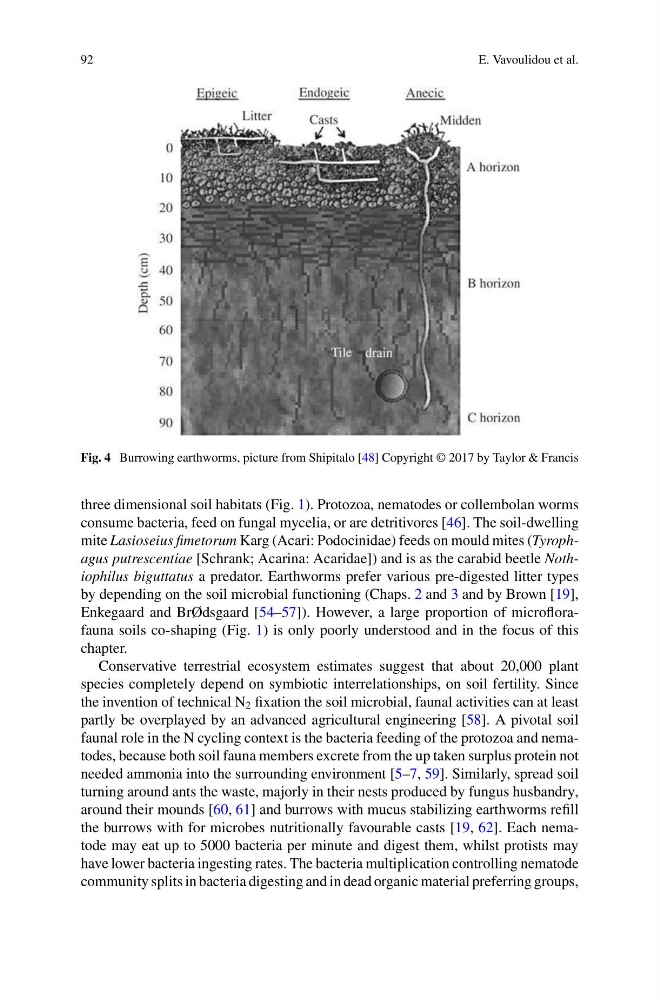
Fig. 4 Burrowing earthworms, picture from Shipitalo [48] Copyright © 2017 by Taylor & Francis
three dimensional soil habitats (Fig. 1). Protozoa, nematodes or collembolan worms
consume bacteria, feed on fungal mycelia, or are detritivores [46]. The soil-dwelling
mite Lasioseius fimetorum Karg (Acari: Podocinidae) feeds on mould mites (Tyrophagus putrescentiae [Schrank; Acarina: Acaridae]) and is as the carabid beetle Nothiophilus biguttatus a predator. Earthworms prefer various pre-digested litter types
by depending on the soil microbial functioning (Chaps. 2 and 3 and by Brown [19],
Enkegaard and BrØdsgaard [54–57]). However, a large proportion of microflorafauna soils co-shaping (Fig. 1) is only poorly understood and in the focus of this
chapter.
Conservative terrestrial ecosystem estimates suggest that about 20,000 plant
species completely depend on symbiotic interrelationships, on soil fertility. Since
the invention of technical N 2 fixation the soil microbial, faunal activities can at least
partly be overplayed by an advanced agricultural engineering [58]. A pivotal soil
faunal role in the N cycling context is the bacteria feeding of the protozoa and nematodes, because both soil fauna members excrete from the up taken surplus protein not
needed ammonia into the surrounding environment [5–7, 59]. Similarly, spread soil
turning around ants the waste, majorly in their nests produced by fungus husbandry,
around their mounds [60, 61] and burrows with mucus stabilizing earthworms refill
the burrows with for microbes nutritionally favourable casts [19, 62]. Each nematode may eat up to 5000 bacteria per minute and digest them, whilst protists may
have lower bacteria ingesting rates. The bacteria multiplication controlling nematode
community splits in bacteria digesting and in dead organic material preferring groups,
E. Vavoulidou et al.
Fig. 4 Burrowing earthworms, picture from Shipitalo [48] Copyright © 2017 by Taylor & Francis
three dimensional soil habitats (Fig. 1). Protozoa, nematodes or collembolan worms
consume bacteria, feed on fungal mycelia, or are detritivores [46]. The soil-dwelling
mite Lasioseius fimetorum Karg (Acari: Podocinidae) feeds on mould mites (Tyrophagus putrescentiae [Schrank; Acarina: Acaridae]) and is as the carabid beetle Nothiophilus biguttatus a predator. Earthworms prefer various pre-digested litter types
by depending on the soil microbial functioning (Chaps. 2 and 3 and by Brown [19],
Enkegaard and BrØdsgaard [54–57]). However, a large proportion of microflorafauna soils co-shaping (Fig. 1) is only poorly understood and in the focus of this
chapter.
Conservative terrestrial ecosystem estimates suggest that about 20,000 plant
species completely depend on symbiotic interrelationships, on soil fertility. Since
the invention of technical N 2 fixation the soil microbial, faunal activities can at least
partly be overplayed by an advanced agricultural engineering [58]. A pivotal soil
faunal role in the N cycling context is the bacteria feeding of the protozoa and nematodes, because both soil fauna members excrete from the up taken surplus protein not
needed ammonia into the surrounding environment [5–7, 59]. Similarly, spread soil
turning around ants the waste, majorly in their nests produced by fungus husbandry,
around their mounds [60, 61] and burrows with mucus stabilizing earthworms refill
the burrows with for microbes nutritionally favourable casts [19, 62]. Each nematode may eat up to 5000 bacteria per minute and digest them, whilst protists may
have lower bacteria ingesting rates. The bacteria multiplication controlling nematode
community splits in bacteria digesting and in dead organic material preferring groups,