

Underwater Concrete—Impact of Fine Particles in Cement …
131
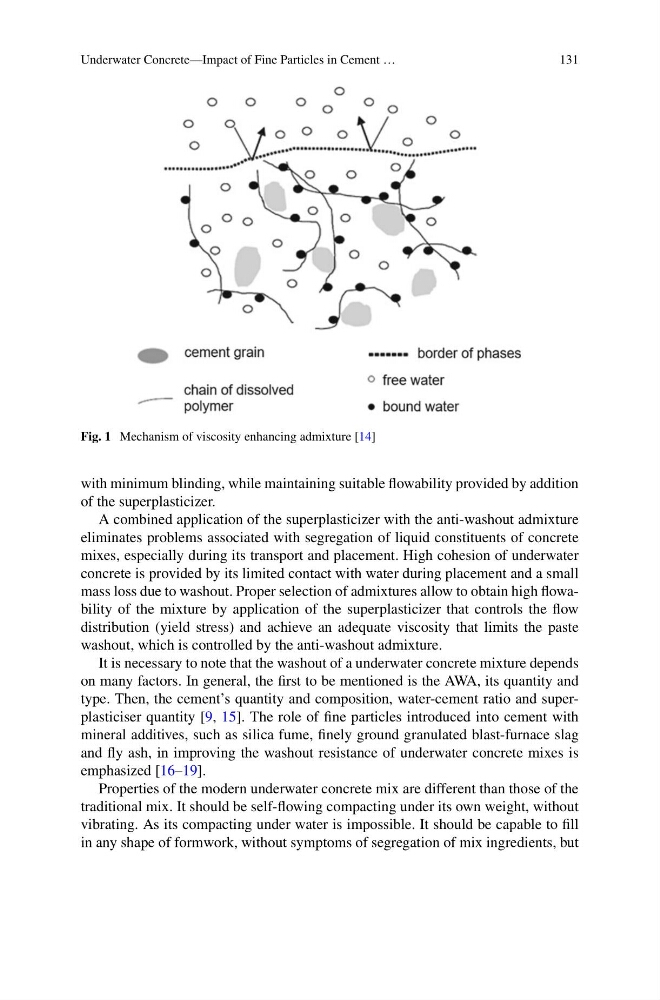
Fig. 1 Mechanism of viscosity enhancing admixture [14]
with minimum blinding, while maintaining suitable flowability provided by addition
of the superplasticizer.
A combined application of the superplasticizer with the anti-washout admixture
eliminates problems associated with segregation of liquid constituents of concrete
mixes, especially during its transport and placement. High cohesion of underwater
concrete is provided by its limited contact with water during placement and a small
mass loss due to washout. Proper selection of admixtures allow to obtain high flowability of the mixture by application of the superplasticizer that controls the flow
distribution (yield stress) and achieve an adequate viscosity that limits the paste
washout, which is controlled by the anti-washout admixture.
It is necessary to note that the washout of a underwater concrete mixture depends
on many factors. In general, the first to be mentioned is the AWA, its quantity and
type. Then, the cement’s quantity and composition, water-cement ratio and superplasticiser quantity [9, 15]. The role of fine particles introduced into cement with
mineral additives, such as silica fume, finely ground granulated blast-furnace slag
and fly ash, in improving the washout resistance of underwater concrete mixes is
emphasized [16–19].
Properties of the modern underwater concrete mix are different than those of the
traditional mix. It should be self-flowing compacting under its own weight, without
vibrating. As its compacting under water is impossible. It should be capable to fill
in any shape of formwork, without symptoms of segregation of mix ingredients, but
131
Fig. 1 Mechanism of viscosity enhancing admixture [14]
with minimum blinding, while maintaining suitable flowability provided by addition
of the superplasticizer.
A combined application of the superplasticizer with the anti-washout admixture
eliminates problems associated with segregation of liquid constituents of concrete
mixes, especially during its transport and placement. High cohesion of underwater
concrete is provided by its limited contact with water during placement and a small
mass loss due to washout. Proper selection of admixtures allow to obtain high flowability of the mixture by application of the superplasticizer that controls the flow
distribution (yield stress) and achieve an adequate viscosity that limits the paste
washout, which is controlled by the anti-washout admixture.
It is necessary to note that the washout of a underwater concrete mixture depends
on many factors. In general, the first to be mentioned is the AWA, its quantity and
type. Then, the cement’s quantity and composition, water-cement ratio and superplasticiser quantity [9, 15]. The role of fine particles introduced into cement with
mineral additives, such as silica fume, finely ground granulated blast-furnace slag
and fly ash, in improving the washout resistance of underwater concrete mixes is
emphasized [16–19].
Properties of the modern underwater concrete mix are different than those of the
traditional mix. It should be self-flowing compacting under its own weight, without
vibrating. As its compacting under water is impossible. It should be capable to fill
in any shape of formwork, without symptoms of segregation of mix ingredients, but