

The Durability of Concrete with the Participation …
125
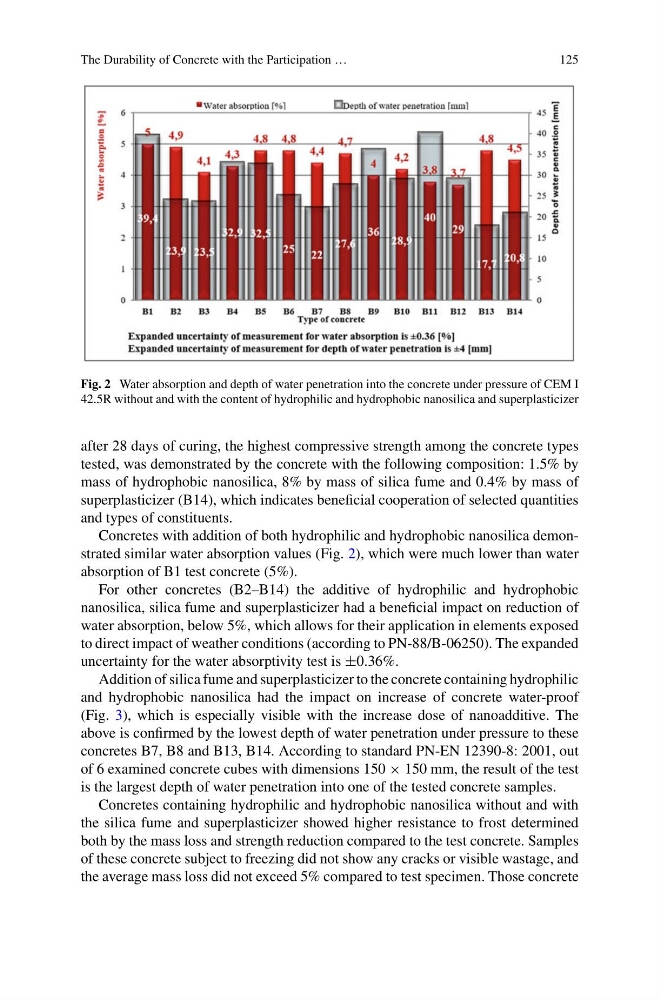
Fig. 2 Water absorption and depth of water penetration into the concrete under pressure of CEM I
42.5R without and with the content of hydrophilic and hydrophobic nanosilica and superplasticizer
after 28 days of curing, the highest compressive strength among the concrete types
tested, was demonstrated by the concrete with the following composition: 1.5% by
mass of hydrophobic nanosilica, 8% by mass of silica fume and 0.4% by mass of
superplasticizer (B14), which indicates beneficial cooperation of selected quantities
and types of constituents.
Concretes with addition of both hydrophilic and hydrophobic nanosilica demonstrated similar water absorption values (Fig. 2), which were much lower than water
absorption of B1 test concrete (5%).
For other concretes (B2–B14) the additive of hydrophilic and hydrophobic
nanosilica, silica fume and superplasticizer had a beneficial impact on reduction of
water absorption, below 5%, which allows for their application in elements exposed
to direct impact of weather conditions (according to PN-88/B-06250). The expanded
uncertainty for the water absorptivity test is ±0.36%.
Addition of silica fume and superplasticizer to the concrete containing hydrophilic
and hydrophobic nanosilica had the impact on increase of concrete water-proof
(Fig. 3), which is especially visible with the increase dose of nanoadditive. The
above is confirmed by the lowest depth of water penetration under pressure to these
concretes B7, B8 and B13, B14. According to standard PN-EN 12390-8: 2001, out
of 6 examined concrete cubes with dimensions 150 × 150 mm, the result of the test
is the largest depth of water penetration into one of the tested concrete samples.
Concretes containing hydrophilic and hydrophobic nanosilica without and with
the silica fume and superplasticizer showed higher resistance to frost determined
both by the mass loss and strength reduction compared to the test concrete. Samples
of these concrete subject to freezing did not show any cracks or visible wastage, and
the average mass loss did not exceed 5% compared to test specimen. Those concrete
125
Fig. 2 Water absorption and depth of water penetration into the concrete under pressure of CEM I
42.5R without and with the content of hydrophilic and hydrophobic nanosilica and superplasticizer
after 28 days of curing, the highest compressive strength among the concrete types
tested, was demonstrated by the concrete with the following composition: 1.5% by
mass of hydrophobic nanosilica, 8% by mass of silica fume and 0.4% by mass of
superplasticizer (B14), which indicates beneficial cooperation of selected quantities
and types of constituents.
Concretes with addition of both hydrophilic and hydrophobic nanosilica demonstrated similar water absorption values (Fig. 2), which were much lower than water
absorption of B1 test concrete (5%).
For other concretes (B2–B14) the additive of hydrophilic and hydrophobic
nanosilica, silica fume and superplasticizer had a beneficial impact on reduction of
water absorption, below 5%, which allows for their application in elements exposed
to direct impact of weather conditions (according to PN-88/B-06250). The expanded
uncertainty for the water absorptivity test is ±0.36%.
Addition of silica fume and superplasticizer to the concrete containing hydrophilic
and hydrophobic nanosilica had the impact on increase of concrete water-proof
(Fig. 3), which is especially visible with the increase dose of nanoadditive. The
above is confirmed by the lowest depth of water penetration under pressure to these
concretes B7, B8 and B13, B14. According to standard PN-EN 12390-8: 2001, out
of 6 examined concrete cubes with dimensions 150 × 150 mm, the result of the test
is the largest depth of water penetration into one of the tested concrete samples.
Concretes containing hydrophilic and hydrophobic nanosilica without and with
the silica fume and superplasticizer showed higher resistance to frost determined
both by the mass loss and strength reduction compared to the test concrete. Samples
of these concrete subject to freezing did not show any cracks or visible wastage, and
the average mass loss did not exceed 5% compared to test specimen. Those concrete